Activity
Should We Remember Christopher Columbus as a Conqueror or Explorer?
40 Min
Should Columbus' actions be viewed from a modern lens, or based on the values of his time? Mark Christensen shares two views on this question.
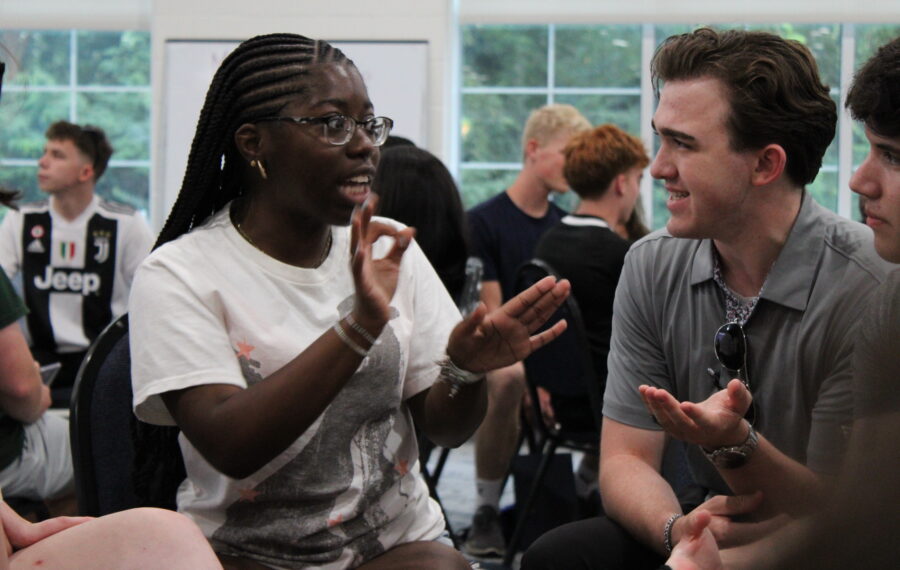
We believe the dialogic exchange between teachers and students allows students to explore their understandings and construct knowledge. The teacher, as the facilitator, encourages students to think deeply and justify their responses, and build on others’ ideas. This develops reasoning and communicative skills. Collaborative learning, in turn, emphasizes the interactions and dialogue between groups of students. Engagement in dialogic and collaborative learning exposures students to diverse perspectives and understandings. The ability to form cogent thoughts orally, share and discuss ideas, engage different perspectives, and successfully work cooperatively are essential skills in self-governance.
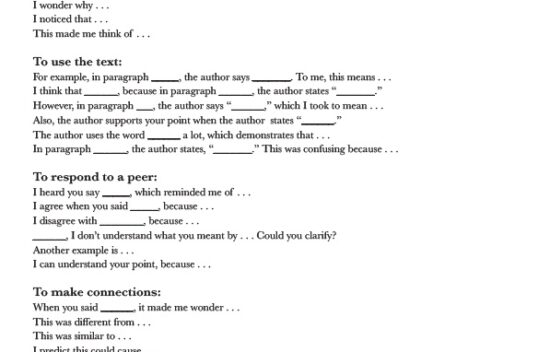
Protocols for Discussing a Reading or Text
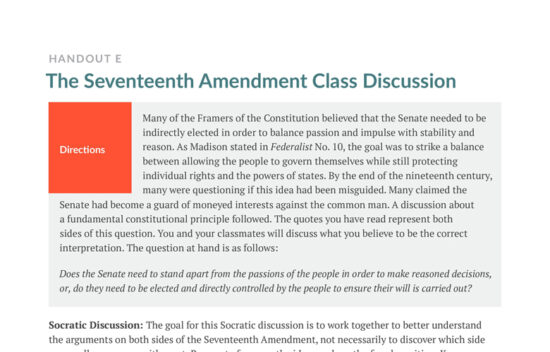
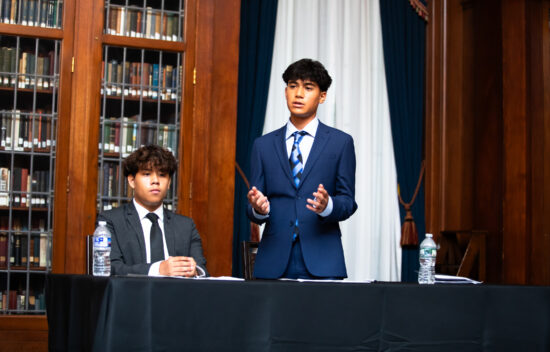
In Structured Academic Controversy, like a debate, you present and advocate an assigned position, listen to an opposing argument, and then offer a rebuttal. However, in Structured Academic Controversy, you then reverse perspectives and argue the other side.
Structured Dialogue is a technique to practice listening and reflection.
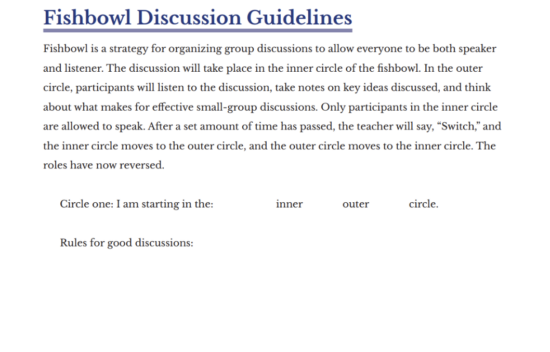
This is a modified technique for a Socratic seminar. This technique is useful for large classes because it ensures that students are in a smaller discussion group, which can encourage discussion among reluctant or shy participants.
 |
 |
 |
 |
This program is partially funded by a multi-year $750,000 grant from Carnegie Corporation of New York, whose support helps us expand opportunities for young leaders. Their investment enables us to provide a high-quality experience that enhances students’ skills in debate and civic leadership.” |