Lesson
Civil Discourse and Petitioning
Guiding question
What is the role of civil discourse as laid out by the Founding Fathers?

Debating matters of public concern is essential in a free, self-governing society. If citizens were not free to decide after listening to opposing views self-government would be distorted. At the core of the Declaration of Independence is the principle that government exists to protect individual rights for us, not that we exist to serve the government. Therefore the people are the master and the government is the servant. If the government can dictate what we can and cannot discuss, then it would imply that the servant can tell the master what to do.
Founding Principles
Guiding Questions
- What is the role of civil discourse as laid out by the Founding Fathers?
- How does it compare to the modern viewpoint of civil discourse?
Objectives
- Students will understand the concept of civil discourse and petitioning.
- Students will review primary source documents and consider events that involve civil discourse and petitioning.
Materials
Lesson Components

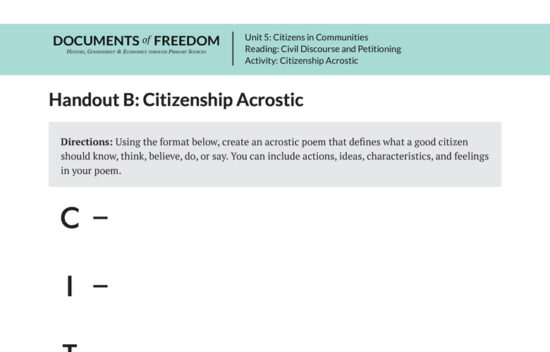
ActivityHandout B: Citizenship Acrostic
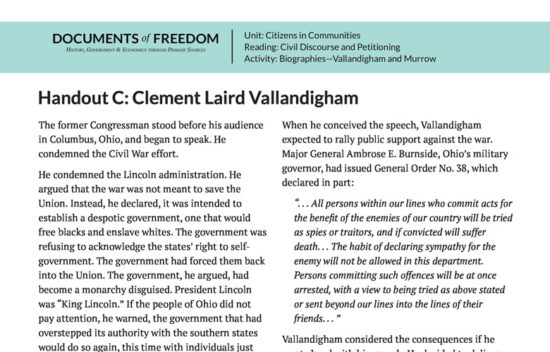
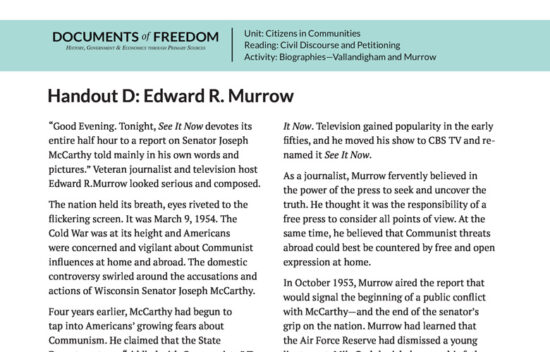
ActivityHandout D: Edward R. Murrow
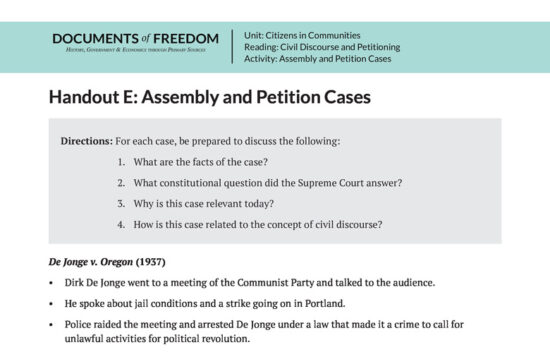
EssayEssay: Civil Discourse and Petitioning
Debating matters of public concern is essential in a free, self-governing society. If citizens were not free to decide after listening to opposing views self-government would be distorted. At the core of the Declaration of Independence is the principle that government exists to protect individual rights for us, not that we exist to serve the government. Therefore the people are the master and the government is the servant. If the government can dictate what we can and cannot discuss, then it would imply that the servant can tell the master what to do.
Lesson plan
40 minClick a phase to open it
Key Terms
- Civility
- Civil Disobedience
- Faction
- Petition
- Pluralism