Video
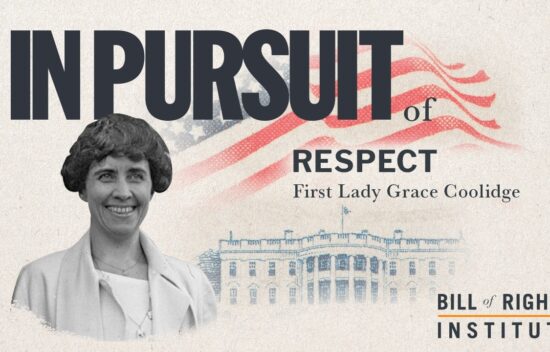
Grace Coolidge In Pursuit of Respect
Watch
Virtues
About this video
In this video, students learn how Grace Coolidge demonstrated respect through her public service, advocacy, and personal example. As First Lady, she welcomed visitors to the White House, championed educational opportunities, and promoted accessibility for people with disabilities. Her kindness, authenticity, and commitment to treating others with dignity helped her connect with Americans across the country.
This video was based on an essay for In Pursuit written by Colleen Shogan.
Check out this video and other free teaching resources on BRI or In Pursuit websites at billofrightsinstitute.org/bri-x-in-pursuit/ or inpursuit.org/educators.
This video was made in conjunction with In Pursuit. In Pursuit is a landmark initiative of More Perfect, a bipartisan alliance of 44 Presidential Centers, National Archives Foundation, American Academy of Arts and Sciences, Karsh Institute for Democracy at the University of Virginia, and more than 100 organizations working together to protect and renew our democracy as we approach the 250th anniversary of the Declaration of Independence and beyond.
0:06 Grace Goodhue Coolidge cared about a lot of things: children education animals, her family. And when her husband, Calvin Coolidge, became President of the United States, she welcomed a whole nation into her home with a genuine sense of responsibility and affection.
0:27 Her unassuming authenticity endeared her to the nation and provides a lasting lesson regarding the potency of genuine character and sincerity in public service. While her husband was characterized by reserved speech, deliberate action, and discreet ambition, Grace was authentically warm and friendly.
0:50 While Calvin tried to minimize his time in meetings and at speaking engagements, Grace welcomed her fellow citizens to take public tours of the White House. She personally greeted visitors with a charm that contrasted with her husband’s reserved manner. Her readiness to laugh, her friendliness to guests, and expressions of joy at public events
1:11 were a reminder of the importance of genuinely respecting the whole of the American people. Coolidge’s authenticity was rooted in an unwavering commitment to her personal values and religious beliefs. These qualities helped her to model civic virtue for all Americans who saw her example.
1:32 The 1920s were an era of exuberance and excess. Jazz clubs flourished, consumerism surged, and Americans were captivated by new technologies, flashy clothing, materialism, and modern lifestyles. Coolidge remained steadfast and confident in herself
1:53 despite the fleeting trends around her. This offered stability to the American people at a time when many were looking for exactly that. She was a teacher and a learner. She was the first First Lady to earn a bachelor’s degree, and she spent her adult life working to ensure that all people could have similar opportunities.
2:15 She taught at the Clarke School for the Deaf while she and her family lived in Northampton, Massachusetts. She continued these efforts at the White House, regularly inviting people with disabilities to visit the presidential home. Helen Keller visited on several occasions. Grace wanted the White House to be accessible in every sense.
2:37 Grace also made herself available, even in her hardest moments. In the summer of 1924, tragedy struck the Coolidge family when their younger son, Calvin Jr., died. Rather than closing herself off and hiding away from the public eye, Grace maintained her public appearances, showing and sharing
2:58 this maternal grief with the nation. Coolidge endeared herself to the American people in happier times, too. She was a national personality at a time when this was new. Newspaper and radio accounts took great excitement in recounting some of her more adventurous moments, like when she attended
3:18 baseball games in Washington, DC, and most notably when she made appearances with her pet raccoon, Rebecca. Rebecca had originally been sent to the White House as part of a planned Thanksgiving Day feast, but Grace bonded with the creature and adopted her as a pet instead. Rebecca joined the Coolidge’s menagerie of dogs, cats,
3:38 and even mice that they kept as pets during their lives. Grace’s kindness made appearances in all aspects of her life, and the public had a direct view into that care. Grace Coolidge was a public figure by happenstance – of marriage, and of government succession – but the authenticity
3:59 that grounded and guided her life equipped her to rise to the challenge and to be a national pillar of trust and even grace.
Standards
Related Resources

In Pursuit is a landmark initiative of More Perfect, a bipartisan alliance of 44 Presidential Centers, National Archives Foundation, American Academy of Arts and Sciences, Karsh Institute for Democracy at the University of Virginia, and more than 100 organizations working together to protect and renew our democracy as we approach the 250th anniversary of the Declaration of Independence and beyond.
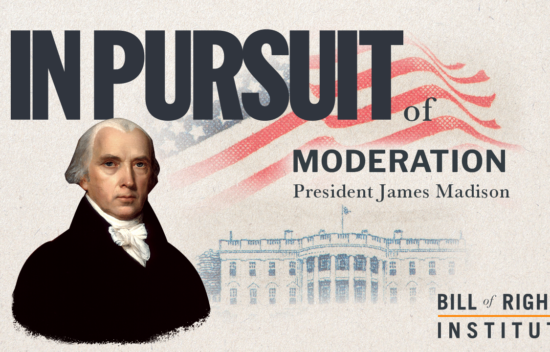
In this video, students learn how James Madison used moderation to build consensus during debates over the Constitution and the Bill of Rights. Although he initially opposed a bill of rights, Madison listened to concerns from Anti-Federalists, constituents, and fellow leaders. By seeking common ground and balancing competing viewpoints, he helped secure the Bill of Rights and strengthen confidence in the new constitutional government. This video was based on an essay for In Pursuit written by Jack Rakove: www.inpursuit.org/lessons/process-over-perfection Check out this video and other free teaching resources on BRI or In Pursuit websites at billofrightsinstitute.org/bri-x-in-pursuit/ or inpursuit.org/educators. This video was made in conjunction with In Pursuit. In Pursuit is a landmark initiative of More Perfect, a bipartisan alliance of 44 Presidential Centers, National Archives Foundation, American Academy of Arts and Sciences, Karsh Institute for Democracy at the University of Virginia, and more than 100 organizations working together to protect and renew our democracy as we approach the 250th anniversary of the Declaration of Independence and beyond.
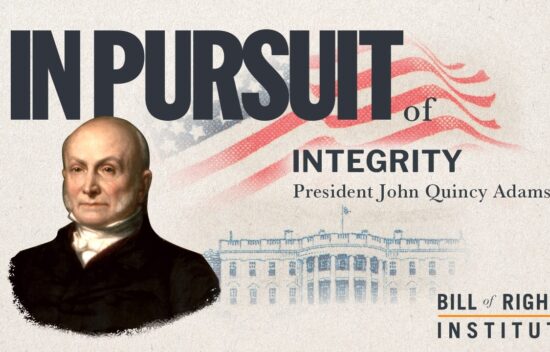
In this video, students learn how John Quincy Adams used integrity to shape American foreign policy during the nation's early years. From his diplomatic service in Europe to his role in developing the Monroe Doctrine, Adams balanced American interests with the nation's founding principles. His commitment to prudence, restraint, and self-government helped define America's place in the world. This video was based on an essay for In Pursuit written by Lindsay Chervinsky : www.inpursuit.org/lessons/short-term-defeat-does-not-end-long-term-influence Check out this video and other free teaching resources on BRI or In Pursuit websites at billofrightsinstitute.org/bri-x-in-pursuit/ or inpursuit.org/educators. This video was made in conjunction with In Pursuit. In Pursuit is a landmark initiative of More Perfect, a bipartisan alliance of 44 Presidential Centers, National Archives Foundation, American Academy of Arts and Sciences, Karsh Institute for Democracy at the University of Virginia, and more than 100 organizations working together to protect and renew our democracy as we approach the 250th anniversary of the Declaration of Independence and beyond.
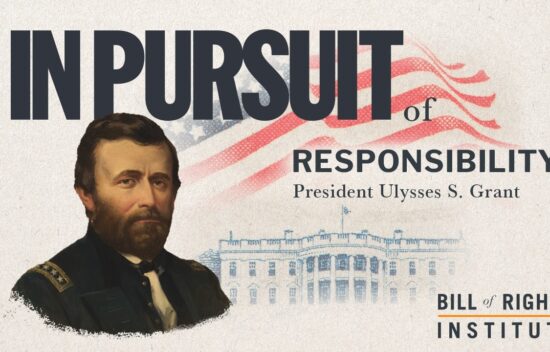
In this video, students learn how Ulysses S. Grant demonstrated responsibility during Reconstruction after the Civil War. Faced with political conflict and constitutional challenges, Grant remained committed to the rule of law and the protection of equal rights. His leadership during this pivotal period shows how civic responsibility can help preserve democratic institutions during times of national division. This video was based on an essay for In Pursuit written by General Stanley McChyrstal : www.inpursuit.org/lessons/loyalty-to-principle-is-harder-than-loyalty-to-power Check out this video and other free teaching resources on BRI or In Pursuit websites at billofrightsinstitute.org/bri-x-in-pursuit/ or inpursuit.org/educators. This video was made in conjunction with In Pursuit. In Pursuit is a landmark initiative of More Perfect, a bipartisan alliance of 44 Presidential Centers, National Archives Foundation, American Academy of Arts and Sciences, Karsh Institute for Democracy at the University of Virginia, and more than 100 organizations working together to protect and renew our democracy as we approach the 250th anniversary of the Declaration of Independence and beyond.