Video
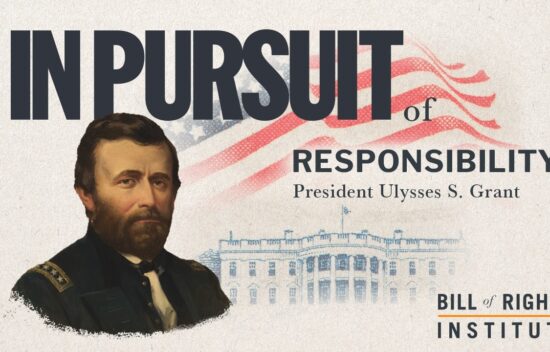
Ulysses S. Grant In Pursuit of Responsibility
Watch
Virtues
About this video
In this video, students learn how Ulysses S. Grant demonstrated responsibility during Reconstruction after the Civil War. Faced with political conflict and constitutional challenges, Grant remained committed to the rule of law and the protection of equal rights. His leadership during this pivotal period shows how civic responsibility can help preserve democratic institutions during times of national division.
This video was based on an essay for In Pursuit written by General Stanley McChyrstal
: www.inpursuit.org/lessons/loyalty-to-principle-is-harder-than-loyalty-to-power
Check out this video and other free teaching resources on BRI or In Pursuit websites at billofrightsinstitute.org/bri-x-in-pursuit/ or inpursuit.org/educators.
This video was made in conjunction with In Pursuit. In Pursuit is a landmark initiative of More Perfect, a bipartisan alliance of 44 Presidential Centers, National Archives Foundation, American Academy of Arts and Sciences, Karsh Institute for Democracy at the University of Virginia, and more than 100 organizations working together to protect and renew our democracy as we approach the 250th anniversary of the Declaration of Independence and beyond.
0:06 After leading the Union Army to victory in the Civil War, Ulysses S. Grant faced a decisive moment that tested his leadership and character. The war was over, but the country remained deeply divided and fragile. Four million newly freed people sought their promised rights as citizens,
0:26 but former Confederates resisted and worked to preserve a system of white supremacy through intimidation and violence. A period of Reconstruction was needed to repair the Union. Meanwhile, Congress and President Andrew Johnson clashed over control of Reconstruction. Grant faced a moment that
0:48 tested his character and principles. Grant practiced civic virtues while commanding the Army during the war and Reconstruction. He was a man of honor, humility, and integrity who could be trusted with power as a general in a republic. Though not a perfect man,
1:08 Grant’s unshakable character and faith in democracy would carry him through challenges in peace as they did in war. In 1867, Congress began passing the Reconstruction Acts, with the first imposing temporary military rule on the former Confederacy. Congress sought to prevent violence
1:29 against Black Americans and required states to ratify the Fourteenth Amendment, which guaranteed birthright citizenship and equal protection under the laws, and to adopt new constitutions providing Black male suffrage. President Johnson vetoed the bill, but Congress overrode it, making it law.
1:50 Congress also passed the Tenure of Office Act, which prohibited the president from removing federal officials confirmed by the Senate. Johnson believed the act unconstitutional and vetoed it. Congress once again overrode him. The battle over the Tenure of Office Act became ground zero in the struggle between the president and Congress over Reconstruction.
2:13 And, Grant was caught in the middle. As General-in-Chief of the Army, Grant was disturbed by the conflict between Congress and the president, but remained steadfast in his duty to the law. His sense of duty was tested when President Johnson suspended Secretary of War Edwin Stanton while Congress was out of session.
2:34 Grant told the president that the action defying Congress presented a “great danger to the welfare of the country.” Despite this disagreement, Johnson appointed Grant as interim Secretary of War. Grant reluctantly accepted, fearing the president would otherwise install someone who would undermine Reconstruction. However, he made clear
2:56 that he would comply with the law. When the Senate voted to reinstate Stanton at the War Department in early 1868, Grant humbly transferred control back to him. In response, President Johnson began publicly insulting Grant’s character. The general wrote to the president. “My honor as a soldier and integrity as a man
3:16 have been violently assailed.” In February 1868, the House of Representatives impeached Johnson for his attempt to remove Stanton. The Senate fell one vote short of the two-thirds majority required for conviction, and Johnson remained in office. For his part, Grant remained true to his principles by respecting Congress
3:37 and the Constitution. Later that year, Grant was elected president, promising to fulfill the constitutional duties of the office. In his inaugural address, he pledged to protect the rights, lives, and property of all Americans. As president, Ulysses Grant vigorously opposed the Ku Klux Klan
3:58 and did much to stop their violence. He used Reconstruction to restore national unity by preserving democratic self-governance and free institutions, demonstrating responsibility, prudence and the civic virtues of the Declaration of Independence and the Constitution.
Standards
Related Resources
In Pursuit is a landmark initiative of More Perfect, a bipartisan alliance of 44 Presidential Centers, National Archives Foundation, American Academy of Arts and Sciences, Karsh Institute for Democracy at the University of Virginia, and more than 100 organizations working together to protect and renew our democracy as we approach the 250th anniversary of the Declaration of Independence and beyond.
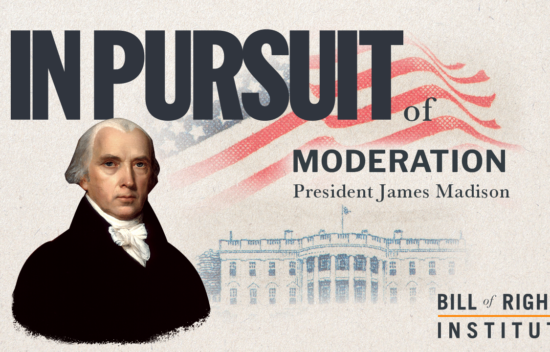
In this video, students learn how James Madison used moderation to build consensus during debates over the Constitution and the Bill of Rights. Although he initially opposed a bill of rights, Madison listened to concerns from Anti-Federalists, constituents, and fellow leaders. By seeking common ground and balancing competing viewpoints, he helped secure the Bill of Rights and strengthen confidence in the new constitutional government. This video was based on an essay for In Pursuit written by Jack Rakove: www.inpursuit.org/lessons/process-over-perfection Check out this video and other free teaching resources on BRI or In Pursuit websites at billofrightsinstitute.org/bri-x-in-pursuit/ or inpursuit.org/educators. This video was made in conjunction with In Pursuit. In Pursuit is a landmark initiative of More Perfect, a bipartisan alliance of 44 Presidential Centers, National Archives Foundation, American Academy of Arts and Sciences, Karsh Institute for Democracy at the University of Virginia, and more than 100 organizations working together to protect and renew our democracy as we approach the 250th anniversary of the Declaration of Independence and beyond.
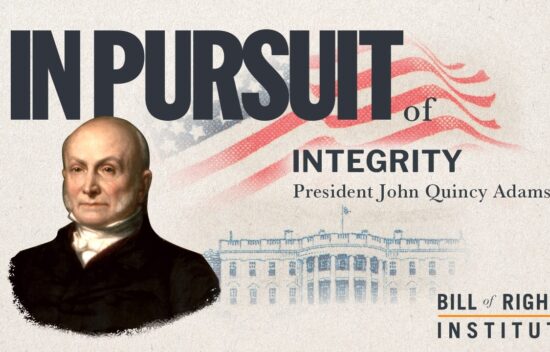
In this video, students learn how John Quincy Adams used integrity to shape American foreign policy during the nation's early years. From his diplomatic service in Europe to his role in developing the Monroe Doctrine, Adams balanced American interests with the nation's founding principles. His commitment to prudence, restraint, and self-government helped define America's place in the world. This video was based on an essay for In Pursuit written by Lindsay Chervinsky : www.inpursuit.org/lessons/short-term-defeat-does-not-end-long-term-influence Check out this video and other free teaching resources on BRI or In Pursuit websites at billofrightsinstitute.org/bri-x-in-pursuit/ or inpursuit.org/educators. This video was made in conjunction with In Pursuit. In Pursuit is a landmark initiative of More Perfect, a bipartisan alliance of 44 Presidential Centers, National Archives Foundation, American Academy of Arts and Sciences, Karsh Institute for Democracy at the University of Virginia, and more than 100 organizations working together to protect and renew our democracy as we approach the 250th anniversary of the Declaration of Independence and beyond.