Video
Grievance #20 of the Declaration of Independence

Watch
Founding Principles
About this video
Why were colonists so alarmed by a law passed in Canada?
In Grievance #20 of the Declaration of Independence, Dallas Terry from the Kinder Institute at the University of Missouri explains why the Quebec Act of 1774 deeply worried many Americans.
The act expanded Quebec’s territory, replaced English common law with French civil law, and created a government that colonists believed lacked meaningful representation.
For many Americans, the biggest issue was proximity. Arbitrary government felt far more dangerous when it existed right next door.
Colonial leaders feared that if Parliament could establish this kind of system in Quebec, similar policies could eventually spread into the American colonies themselves.
The grievance also reflected anxieties over westward expansion, political power, and the future direction of liberty in North America.
This is Part 20 of our 27-part series breaking down every grievance that led to the American Revolution, building toward Independence Day.
Standards
Related Resources
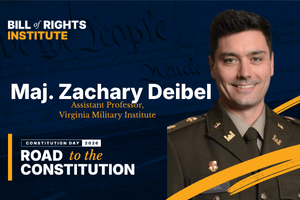
Everyone knows the phrase “no taxation without representation.” But what did it actually mean? In Grievance 17 of the Declaration of Independence, Zachary Deibel, Assistant Professor at Virginia Military Institute, explains why representation, not just taxes, was the real issue. British officials argued that colonists were “virtually represented” in Parliament, meaning lawmakers acted in the best interest of the entire empire. But for Americans, that wasn’t enough. They were used to having a direct voice through their own colonial legislatures. Colonists didn’t reject all taxes. What they rejected was being taxed by a government where they had no real representation or consent. As thinkers like John Locke argued, legitimate government depends on the consent of the governed. Without that, political power loses its authority.
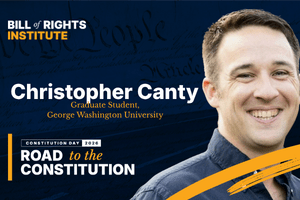
What if you didn’t get a jury at your trial? In Grievance 18 of the Declaration of Independence, Chris Canty, student at George Washington University, explains how colonists were denied the right to trial by jury in certain cases. Instead, cases like smuggling were sent to admiralty courts, where a single judge decided the outcome. No jury. No peers. Just a ruling from a magistrate. For colonists, this was a serious violation of their rights. Trial by jury had been a core part of English law since the Magna Carta, and losing it felt like losing a key protection against government power. This wasn’t just about one case or one court. It was about a bigger issue: if the government can control the courts, can it also control justice?

What if you could be arrested and sent away without even seeing a judge? In Grievance 19 of the Declaration of Independence, Garrett Jones, Postdoc Fellow at the Thomas Jefferson Center at University of Texas at Austin, explains how colonists were detained and transported far from home without due process. This violated a key legal protection known as habeas corpus, the right to appear before a judge and hear the charges against you. Rooted in traditions going back to the Magna Carta, this right was meant to protect individuals from arbitrary imprisonment. For colonists, losing that protection was a serious warning sign. If the government could detain people without explanation and move them far away, it meant basic legal rights were no longer secure. This grievance highlights a tension that still exists today: how to balance liberty and security, especially during times of conflict. This is Part 19 of our 27-part series breaking down every grievance that led to the American Revolution, building toward Independence Day.

Primary sources, videos, essays, lessons, and more about what led to the Declaration of Independence
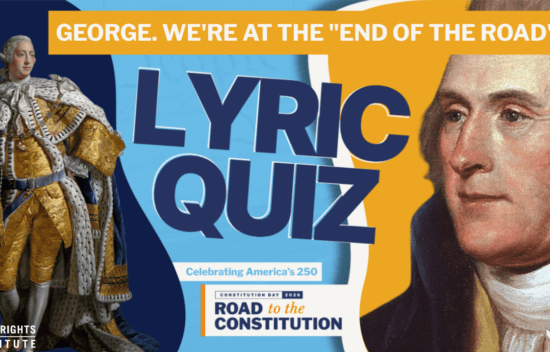
What were the grievances laid out in the Declaration of Independence? Help students define each grievance through modern song lyrics in our interactive quiz leading up to Constitution Day. This Constitution Day, BRI is highlighting the years between the signing of the Declaration of Independence in 1776 and the Constitution in 1787.