Curriculum
Preserving the Bill of Rights
Essential Question
Preserving the Bill of Rights teaches students Constitutional principles by examining primary source documents and significant Supreme Court cases. In addition, each unit features expanded classroom activities engaging students with the Bill of Rights and the responsibilities of citizenship. Students will understand the connection between current events and the Bill of Rights when they participate in activities such as writing letters to their elected representatives; serving in a mock jury; creating public service announcements; and writing model laws.

Units
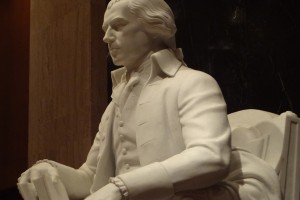
Provides an introduction and overview of the Bill of Rights, including the Founders’ understanding of the “rights of Englishmen,” British law, and natural rights philosophy. This unit also examines the Federalist and Anti-Federalist debate about a bill of rights.

Explores the First Amendment’s Establishment Clause and Free Exercise Clause, including studies of the Founders’ understanding of both. The unit explores the constitutionality of government action relating to religion as well as the relationship between the government and religious institutions. The unit also investigates instances where “free exercise” and “establishment” might conflict.
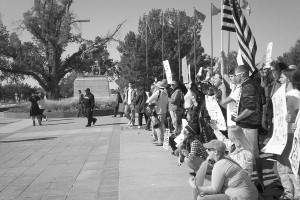
Focuses on First Amendment protection of free speech, free assembly, and petition of government. The unit also examines the evolution of the definitions of protected expression in speech, petition, assembly, art, and demonstration.

First Amendment freedoms like press, assembly, and petition are essential to self-government. The Founders saw these freedoms as a bulwark of free, republican government and a means of assuring justice.

Spotlights safeguards to property in the Bill of Rights, explores various types of property, and examines the concepts of takings, just compensation, and eminent domain.

Covers search and seizure, rights of the accused, due process of law, jury trials, and protection from cruel and unusual punishment guaranteed in the Fourth, Fifth, Sixth, and Eighth Amendments.

Explores the unenumerated rights reserved to the people with reference to the Ninth and Fourteenth Amendments, with a focus on rights including travel, political affiliation, and privacy. Probes the ways the Ninth and Fourteenth Amendments have been used to claim rights to personal liberty.

Explores the powers reserved to the states as provided by the Tenth Amendment. Explains the Founders’ understanding of a federalist system and the expansion and contraction of the federal government’s power.
Curriculum resources
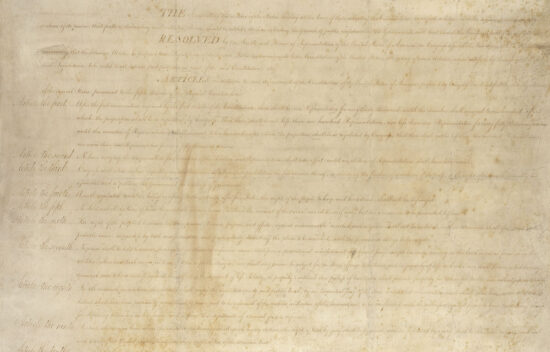
The debate over the Bill of Rights at the Founding was not an argument over whether rights exist, but about how best to protect those rights. The Founders disagreed about whether a bill of rights was necessary, and whether it would be effective. Later generations continue to face the challenge of finding the best way to safeguard individual rights. This lesson explores these debates and discussions.

How did the the events and philosophies from British and colonial history shape the Founders' ideas about natural rights as well as the rights of Englishmen? How do these rights affect our daily lives in a free society?

The original thirteen states that formed the United States included individuals from a variety of religious traditions. To ensure that the national government respected freedom of belief, freedom of conscience, and freedom of religious practice, the First Amendment prohibited the federal government from either establishing a national church or interfering with existing state religions. Since then the Supreme Court has created various "tests" to determine if government practices violate the Establishment Clause of the First Amendment. This lesson explores the history and principles behind this clause.

One of America's most cherished freedoms is the free exercise of religion. In a nation where people of many faiths live side-by-side, the First Amendment's Free Exercise Clause protects individuals from government interference in the practice of their faith. The government cannot target laws at specific religious practices or place undue burdens on its citizens' worship. This lesson explores the free exercise clause and the many questions that arise from its enforcement.

America's Founders recognized the necessity of vigorous public debate and enshrined the right to speak freely in the Bill of Rights. This component of the Constitution protects a wide range of speech, including speech we might find disagreeable. While the First Amendment's primary purpose was to protect political speech, its protections do have limits. This lesson explores this essential principle of free speech.

The Founders meant for the First Amendment to protect a wide array of expressive activities. The Supreme Court, recognizing changes in society and technology, has applied the First Amendment's protections in some ways that are broader than ever. Student speech in public schools, however, poses unique questions. This lesson will help students to understand the operation of the First Amendment in both their school and in the wider context of society, and it will help foster students' appreciation of their rights, preparing them for responsible and effective participation in their school, community, and nation.

How does a free press make self-government possible? Examine the history and importance of press freedom and encourage students to seek out information on constitutional issues from multiple sources.

The Founders knew that an individual's voice is at its most powerful when he can freely come together with citizens of like mind and speak as one. People in the United States have organized, demonstrated, petitioned, and protested in a variety of ways and on a variety of topics, many controversial, since our very beginnings. These rights, however, are not unlimited and must find balance with the rights and safety of others. This lesson explores this balance.

The Founders wanted to be sure they preserved the right to keep and bear arms as they established their new sovereign government. Americans asserted a natural right to defend themselves and their property against all threats, including tyranny of any kind, foreign or domestic. The Second Amendment in the Bill of Rights was included to reflect the concerns of many citizens in a number of states. This lesson explores the origins of this amendment.

For much of American history, the Supreme Court had very little to say about the Second Amendment until 2008 when the Court heard arguments in the case of District of Columbia v. Heller. Richard Heller challenged the city's total ban on handguns on Second Amendment grounds. The Court agreed with Heller finding the ban unconstitutional.

The Founders were extremely concerned with protecting private property as a cornerstone of a free society. Property is not only physical possessions but also ideas, works, and even what someone has been promised in wages. This lesson explores the idea of property, its origins and the reasons it is protected.

The Founders believed that property is among the natural rights governments exist to protect. One of the ways the Founders protected property rights was in the Fifth Amendment. This amendment restricts the government's ability to take property and ensures that when it does take property, it must pay for it. This lesson explores the Fifth Amendment and its applications.