Video
State Constitutions on the Road to the Constitution
Watch
About this video
Welcome back to the museum! Before there was a U.S. Constitution, there were state constitutions, and two of the earliest reveal ideas that would later shape our national government. This video looks at New Jersey's 1776 Constitution and the Massachusetts Constitution of 1780, and the surprising ways each one experimented with rights and power.
As part of our Constitution Day Live programming, celebrating "Road to the Constitution," this video dives into how state constitutions like New Jersey's and Massachusetts's weren't just local documents. They were the first step toward shaping the nation, laying groundwork the framers would build on seven years later.
0:00 Welcome back to the museum. Today we’re taking a look at two state constitutions from very early in our nation’s history. State constitutions explained how governments would work in the state. How power was divided and what rights citizens had. They also include influential ideas
0:21 that later informed the United States Constitution. In 1776, new Jersey created a constitution granting voting rights in a surprising way. For the time, it allowed not only property owning men, but also some women and free black individuals to vote.
0:41 From this text, from the 1776 new Jersey Constitution, we can see that anyone old enough who owned property with a certain amount and owned it for at least a year could vote in elections for representatives. Notice that the text does not include restrictions on race or gender.
1:02 Although these rights were later restricted, New Jersey’s example expanded opportunities for participation and helped inspire later movements for voting rights. Now let’s look at the Massachusetts Constitution from 1780. It was a model of representative government and separation of powers and different branches of government.
1:24 It strengthened the idea of separating powers among three branches legislative, executive, and judicial. This helped prevent any one branch from becoming too powerful. It also established a stronger system of checks and balances, ensuring each branch could limit the others. This created a system where the governor executive could not become too powerful,
1:49 but neither could the legislative or judicial branches. Balancing power and preserving liberty. This separation of power and system of checks and balances became major influences on the US Constitution. That would be framed seven years later. State constitutions weren’t just local documents.
2:09 They were the first step towards shaping the nation.
Standards
Related Resources
During the American Revolution, printers like Mary Katharine Goddard and authors like Mercy Otis Warren helped Americans understand the arguments for independence and make informed decisions. This video tells the story of Goddard's courageous decision to print the signers' names, including her own, on the Declaration of Independence, and of Warren's plays, poems, and later histories that brought political ideas into everyday homes. As part of our Constitution Day Live programming, celebrating "Road to the Constitution," this video dives into how printers and authors like Mary Katharine Goddard and Mercy Otis Warren helped everyday Americans access the information they needed to participate in self-government.
Welcome back to the Treehouse! In this episode, our friends plan a summer road trip to celebrate America's birthday, six stops from the Declaration of Independence all the way to the Constitution. Join them as they travel from Exit 1776 to Exit 1787, exploring the Declaration of Independence, the Articles of Confederation, the Battle of Yorktown, the Treaty of Paris, the Northwest Ordinance, and the writing of the Constitution. As part of our Constitution Day Live programming, celebrating "Road to the Constitution," this video takes young learners on a road trip through the key events between 1776 and 1787, showing how America went from declaring independence to establishing the government we still live under today.

Primary sources, videos, essays, lessons, and more about what led to the Declaration of Independence
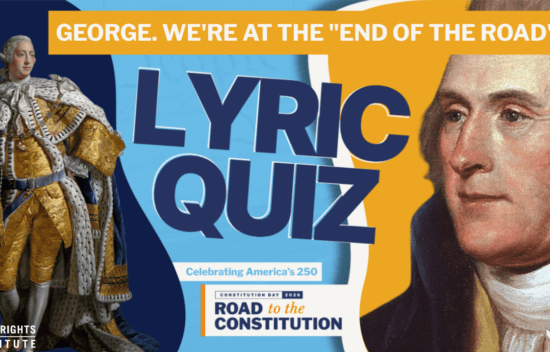
What were the grievances laid out in the Declaration of Independence? Help students define each grievance through modern song lyrics in our interactive quiz leading up to Constitution Day. This Constitution Day, BRI is highlighting the years between the signing of the Declaration of Independence in 1776 and the Constitution in 1787.
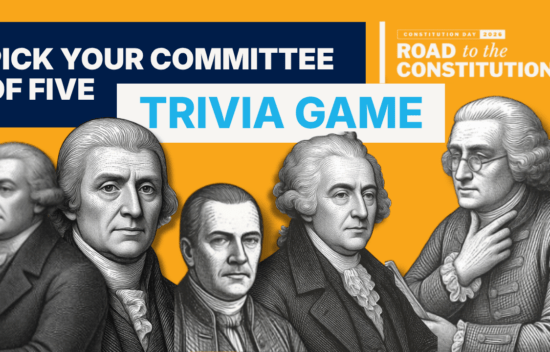
On June 11, 1776, Congress appointed a Committee of Five to draft a Declaration of Independence. Create your own committee with our interactive jeopardy quiz leading up to Constitution Day. This Constitution Day, BRI is highlighting the years between the signing of the Declaration of Independence in 1776 and the Constitution in 1787.