Video
Printing the American Revolution
Watch
About this video
During the American Revolution, printers like Mary Katharine Goddard and authors like Mercy Otis Warren helped Americans understand the arguments for independence and make informed decisions. This video tells the story of Goddard's courageous decision to print the signers' names, including her own, on the Declaration of Independence, and of Warren's plays, poems, and later histories that brought political ideas into everyday homes.
As part of our Constitution Day Live programming, celebrating "Road to the Constitution," this video dives into how printers and authors like Mary Katharine Goddard and Mercy Otis Warren helped everyday Americans access the information they needed to participate in self-government.
0:05 During the American Revolution. Printers like Mary Katharine Goddard and authors like Mercy Otis Warren. Helped Americans understand the arguments for independence and make informed decisions. In a self-governing society where the citizens have a voice in important decisions. Accurate information is an essential piece of the puzzle. Making that information available to all is no small task.
0:29 In the summer of 1776, the Continental Congress boldly declared, These united colonies are and of right ought to be free and independent states. Then they needed to tell the world and the American people why. Printer John Dunlap made the first few hundred official copies of the Declaration of Independence, but it only included
0:51 the text of the document, leaving off the names of the signers. It wasn’t until early 1777, when Baltimore, Maryland, printer Mary Katharine Goddard published the names of the signers on the document. She included John Hancock’s famous signature front and center, and the names of each delegation’s
1:12 representatives who signed on to independence. But she didn’t stop there. She also made a courageous choice, and she added her own name to the bottom of the document. She was claiming her role in the revolutionary effort as a printer of these important words, and in agreement with what they meant for the United States.
1:37 Signing the declaration was an act of treason against the British Empire. Every member of the Continental Congress and Goddard herself, would have faced severe consequences if the British had won the war. Establishing a new nation brought a new set of challenges with a republican government. It was up to the people to vote for their own representatives,
2:01 determining the best candidates, and what issues mattered most meant that citizens needed to be informed about their communities. Goddard helped inform these citizens by publishing a newspaper that carried local, national and global news to subscribers near and far. Citizens could also stay informed by reading the plays
2:22 and poems of author Mercy Otis Warren. Warren had a unique perspective on the war. Her father, brother, and husband were all key players in Massachusetts politics, and she was a close friend of John and Abigail Adams. During the Revolution. With those experiences and her talent for writing, Warren argued
2:43 for the Patriot cause and challenged the royal governor of Massachusetts. Her words brought big political ideas into the homes and discussions of everyday people, helping them to make sense of just how important it was to have a government based on equality, liberty and justice for all people.
3:05 Mercy Otis Warren thought the changes around her were truly revolutionary for the American people. She wrote in 1778, awestruck that such a total change of manners in so short a period, I believe, was never known in the history of man. Like Goddard, Warren knew that people needed
3:27 enough information to maintain the new nation virtuously. Both women took responsibility to help spread knowledge throughout society. Warren kept writing about politics for the rest of her life, including in A history of the American Revolution that she published in 1805. The declaration officially started the Revolutionary War,
3:51 and it also marked a new era in American politics that featured the people as active participants in their government. Knowing what was going on around them was essential for them to make wise decisions.
Standards
Related Resources

Primary sources, videos, essays, lessons, and more about what led to the Declaration of Independence
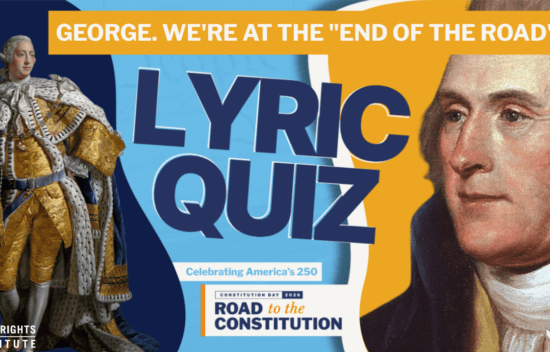
What were the grievances laid out in the Declaration of Independence? Help students define each grievance through modern song lyrics in our interactive quiz leading up to Constitution Day. This Constitution Day, BRI is highlighting the years between the signing of the Declaration of Independence in 1776 and the Constitution in 1787.
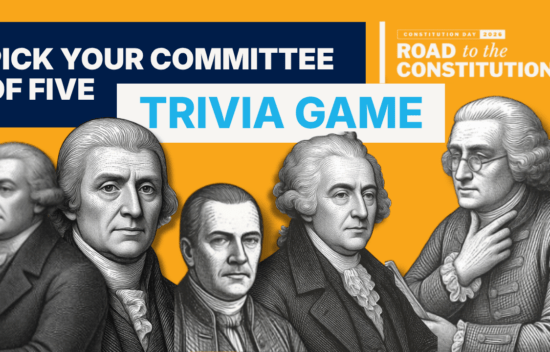
On June 11, 1776, Congress appointed a Committee of Five to draft a Declaration of Independence. Create your own committee with our interactive jeopardy quiz leading up to Constitution Day. This Constitution Day, BRI is highlighting the years between the signing of the Declaration of Independence in 1776 and the Constitution in 1787.