Video
Grievance #26 of the Declaration of Independence
Watch
Founding Principles
About this video
What if you were forced to fight against your own country?
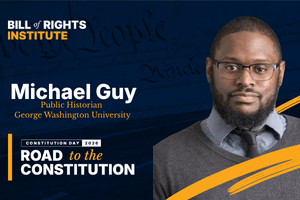
In Grievance 26 of the Declaration of Independence, Michael Guy, Public Historian at George Washington University, explains how British forces captured American sailors and forced them to serve in the Royal Navy.
This practice, known as impressment, meant colonists taken at sea could be compelled to fight against their own people. What had once been a protected right for colonial sailors disappeared as the Revolution began.
For many colonists, this crossed a serious line. It wasn’t just about war, it was about loyalty, identity, and basic rights. Being forced into service against your own country felt like a direct betrayal.
This grievance captured a growing belief: Britain no longer saw Americans as subjects to protect, but as enemies to control.
This is Part 26 of our 27-part series breaking down every grievance that led to the American Revolution, building toward Independence Day.
0:00 Grievance 26 states, "He has constrained our fellow citizens taken captive on the high seas to bear arms against their country, to become the executioners of their friends and brethren, or to fall themselves by their hand." It accused the British government of forcing captured American sailors to fight against their own country. The issue was
0:21 something called impressment. For most of the 1700s, American colonial sailors were protected from this practice. However, in 1775, that protection disappeared. As the American Revolution began, Parliament repealed the law and passed new wartime legislation. The most important was the Prohibitory Act of
0:43 1775, which declared American ships to be enemy vessels. This meant British naval officers could capture American ships, and instead of treating the crews as prisoners of war, they would force them into service for the Royal Navy. Colonial supporters in Parliament saw the act as having no other purpose but to be cruel and vengeful. Many colonists
1:05 saw it as a betrayal of their rights they believed they had as British subjects. John Adams called the policy a piratical act. To him, it was proof that Britain no longer viewed Americans as subjects but as enemies. This is why the issue made it into the Declaration of Independence. It symbolized the idea that the British government had abandoned its responsibility to protect
1:27 its own people. So, while Grievance 26 may not be the most famous in the Declaration, it captured a deep emotion. The fear that Britain had gone so far that it was willing to make Americans the executioners of their own countrymen.
Standards
Related Resources
Did the colonists declare independence, or did Britain force their hand? In Grievance 23 of the Declaration of Independence, Dr. Mathew Goetz of the @WhiteHouseHistoricalAssociation, explains how colonists accused King George III of waging war against them and failing to protect them. At the center of this grievance is the idea of the social contract. Colonists believed government existed to protect the people. But when Britain passed the Prohibitory Act and withdrew protection from American ships, that agreement was broken. By this point, fighting had already begun. What started as a conflict over rights was turning into something much bigger. Some, like John Adams, believed British actions had already made the colonies independent. The Declaration didn’t start independence, it made it official. This is Part 23 of our 27-part series breaking down every grievance that led to the American Revolution, building toward Independence Day.
What happens when your own government starts treating you like the enemy? In Grievance #24 of the Declaration of Independence, Hannah Nolan, PhD Candidate at the University of Maryland, explains how Britain cut off trade, seized American ships, and removed protection from the colonies. For years, colonists had benefited from being part of the British Empire, especially protection from the Royal Navy. But after tensions escalated, Parliament passed the Prohibitory Act, ending trade with the colonies and declaring American ships fair game. To many colonists, this felt like a complete reversal. Instead of protecting them, the British government was now targeting them. Leaders like John Adams argued that this move effectively made the colonies independent before the Declaration was even signed. What was meant as punishment only pushed colonists further toward separation. This is Part 24 of our 27-part series breaking down every grievance that led to the American Revolution, building toward Independence Day.
What happens when a government brings in outsiders to fight its own people? In Grievance #25 of the Declaration of Independence, Savannah Johnston @SavyPolitics from Utah Valley University explains how King George III hired foreign mercenaries to fight in the colonies. These troops, often called Hessians, were brought in from German states to support the British war effort. For colonists, this crossed a line. It wasn’t just about military strategy, it felt like a ruler turning against his own people. The presence of foreign soldiers made the conflict more intense and more personal. It pushed many colonists who were still undecided to take a side. At its core, this grievance raised a serious question: if a king is willing to use foreign forces against his own subjects, can he still claim their loyalty? This is Part 25 of our 27-part series breaking down every grievance that led to the American Revolution, building toward Independence Day.

Primary sources, videos, essays, lessons, and more about what led to the Declaration of Independence
What were the grievances laid out in the Declaration of Independence? Help students define each grievance through modern song lyrics in our interactive quiz leading up to Constitution Day. This Constitution Day, BRI is highlighting the years between the signing of the Declaration of Independence in 1776 and the Constitution in 1787.