Video
Grievance #24 of the Declaration of Independence
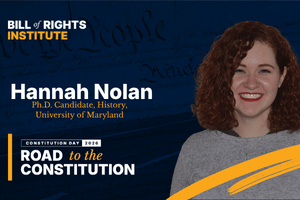
Watch
Founding Principles
About this video
What happens when your own government starts treating you like the enemy?
In Grievance #24 of the Declaration of Independence, Hannah Nolan, PhD Candidate at the University of Maryland, explains how Britain cut off trade, seized American ships, and removed protection from the colonies.
For years, colonists had benefited from being part of the British Empire, especially protection from the Royal Navy. But after tensions escalated, Parliament passed the Prohibitory Act, ending trade with the colonies and declaring American ships fair game.
To many colonists, this felt like a complete reversal. Instead of protecting them, the British government was now targeting them.
Leaders like John Adams argued that this move effectively made the colonies independent before the Declaration was even signed. What was meant as punishment only pushed colonists further toward separation.
This is Part 24 of our 27-part series breaking down every grievance that led to the American Revolution, building toward Independence Day.
0:04 Americans had really enjoyed being British in part because there were a lot of benefits that came with being members of the Empire. So, for example, as British subjects, Americans were protected by the Royal Navy. So, wanting to preserve that and other benefits, the Continental Congress wrote the Olive Branch Petition and submitted it to George III in the summer of 1775.
0:24 It did not go over super well. So, all the delegates had repeatedly emphasized their loyalty to the King, George III declared the colonies to be in open rebellion. So, as punishment for the rebellion, George III proposed and Parliament approved the Prohibitory Act in December. The Act prohibited all commerce with the colonies and it also declared all American ships enemy property. The Act revoked the Royal
0:46 Navy’s protection of American ships and made it lawful to attack and raid them. But, like so many other moves meant to bring the colonists to heel, it backfired tremendously and soured public opinion of both Parliament and the King. So, stating the obvious, John Hancock noted, quote, "The making all our vessels lawful prize doesn’t look like a reconciliation."
1:07 And it sure did not. For many colonists, but certainly for merchants, it felt like the Empire that they had been so proud to be a part of was abandoning them as opposed to the other way around. John Adams went further, stating the Prohibitory Act should be called, quote, "The Act of Independency because it makes us independent in spite of our supplications and entreaties." When the
1:29 United States declared independence on July 4th, 1775, the Prohibitory Act was obliquely referred to as proof that George III and Britain more generally had forsaken their duty to protect their subjects by embracing collective punishment. In doing so, the patriots asserted that governments owed their citizens the ability to move freely and to criticize
1:50 their leaders without fear of reprisal.
Standards
Related Resources
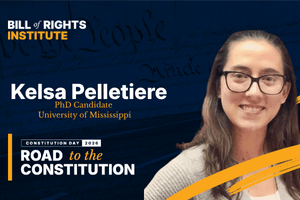
What happens when a government rewrites the rules without your consent? In Grievance #21 of the Declaration of Independence, Kelsa Pelletiere, PhD Candidate at the University of Mississippi, explains why colonists were furious when Britain altered colonial governments and revoked key charter rights. Colonial charters acted like agreements between the colonies and the British Crown, helping define how colonial governments operated and what rights colonists expected to have. But in 1774, Parliament passed the Massachusetts Government Act and changed those rules unilaterally, without colonial approval. For colonists, this violated a core principle of self-government: the consent of the governed. If Britain could change colonial governments whenever it wanted, then colonial rights and representation were never truly secure. This grievance reflected a growing fear that Britain was no longer governing with consent, but through direct control. This is Part 21 of our 27-part series breaking down every grievance that led to the American Revolution, building toward Independence Day.
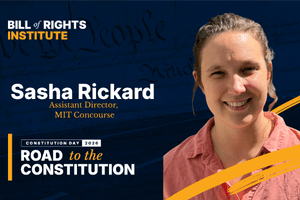
What happens when a government gives itself total power? In Grievance 22 of the Declaration of Independence, Sasha Rickard, Assistant Director at MIT Concourse, explains how Parliament suspended colonial legislatures and claimed the right to make laws for the colonies in all cases whatsoever. For colonists, this crossed a line. Laws were supposed to come from representatives chosen by the people, not imposed by a distant government with no input. Drawing on the ideas of John Locke, this wasn’t just unfair, it was dangerous. Claiming absolute power over the colonies was seen as an act of aggression and a violation of the social contract. By dissolving local governments and taking full control, Britain wasn’t just changing policy. Colonists believed it was destroying their right to self-government and putting them under unchecked authority. This is Part 22 of our 27-part series breaking down every grievance that led to the American Revolution, building toward Independence Day.
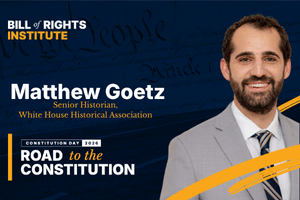
Did the colonists declare independence, or did Britain force their hand? In Grievance 23 of the Declaration of Independence, Dr. Mathew Goetz of the @WhiteHouseHistoricalAssociation, explains how colonists accused King George III of waging war against them and failing to protect them. At the center of this grievance is the idea of the social contract. Colonists believed government existed to protect the people. But when Britain passed the Prohibitory Act and withdrew protection from American ships, that agreement was broken. By this point, fighting had already begun. What started as a conflict over rights was turning into something much bigger. Some, like John Adams, believed British actions had already made the colonies independent. The Declaration didn’t start independence, it made it official. This is Part 23 of our 27-part series breaking down every grievance that led to the American Revolution, building toward Independence Day.

Primary sources, videos, essays, lessons, and more about what led to the Declaration of Independence
What were the grievances laid out in the Declaration of Independence? Help students define each grievance through modern song lyrics in our interactive quiz leading up to Constitution Day. This Constitution Day, BRI is highlighting the years between the signing of the Declaration of Independence in 1776 and the Constitution in 1787.