Video
Grievance #11 of the Declaration of Independence
Watch
Founding Principles
About this video
Why were British troops stationed throughout the colonies during peacetime?
In Grievance #11 of the Declaration of Independence, JJ Nattrass from George Washington University explains why colonists grew increasingly suspicious of the British military presence in America.
After the Seven Years’ War, Britain kept standing armies in the colonies, claiming the troops were there to maintain stability and prevent further conflict. But many colonists saw something very different.
Redcoats appeared not just on the frontier, but in major cities, where their presence began to feel less like protection and more like surveillance and intimidation.
Events like the Boston Massacre only deepened those fears. To many Americans, the presence of standing armies without local consent looked like a direct threat to liberty and self-government.
This is Part 11 of our 27-part series breaking down every grievance that led to the American Revolution, building toward Independence Day.
0:00 He has kept among us, in times of peace,
0:02 standing armies without the consent of
0:04 our legislatures. Now, on the surface,
0:06 this is a legitimate grievance, but with
0:09 everything in life, it’s a bit more
0:11 complicated than the signers of the
0:12 Declaration alluded to. Indeed, the
0:14 colonists had reason to feel salty and
0:17 kind of sour about the presence of
0:18 troops in their hometowns, but the Crown
0:20 also did have a point in placing troops
0:22 in the colonies, one that would actually
0:24 benefit most colonists. Following the
0:26 Seven Years’ War and the Treaty of Paris
0:28 in 1763, most British colonists in the
0:30 Americas thought that having won the
0:32 Great War against the French and taking
0:33 Canada, they and their motherland would
0:35 turn their muskets and swords on native
0:37 peoples who occupied rich and untapped
0:39 lands. However, the British Crown had
0:42 absolutely no interest in engaging in
0:44 another ruinous and costly war in its
0:46 colonies at this specific time. Native
0:48 people were seen as both subjects and as
0:50 foreign allies, depending on their
0:52 proximity to colonial boundaries.
0:54 However, increasing colonial pressure
0:56 against Proclamation Line resulted in
0:58 conflict with native peoples. The
1:00 colonial governments had to do something
1:02 to protect their colonists. Hence,
1:03 Britain sent a number of troops, the red
1:05 coats, to the colonies. These troops
1:08 ended up on the frontiers as well as in
1:10 major cities, but the men were never
1:12 actually sent forth to attack native
1:13 people.
1:14 From the colonists’ point of view, a
1:16 number of issues, plus the troops’
1:18 actions on the ground, seemed not only
1:20 to contradict the British claims that
1:22 the troops were there for their safety.
1:23 Their actions categorically spoke of a
1:26 plot to suppress them and even aid
1:28 enemies. The stationing of so many who
1:31 were seen as taking it upon themselves
1:32 to police and intimidate the king’s own
1:33 people went down pretty badly. The fears
1:36 of every citizen of the colonies seemed
1:38 to prove justified in 1770 with the
1:40 Boston Massacre. This was but an ounce
1:42 of the proof colonists actually needed,
1:44 even as early as 1770, to argue these
1:47 soldiers were not to protect colonists,
1:50 but to oppress them in breach of their
1:52 own laws and wants.
Standards
Related Resources
Can justice really be fair if judges answer to the king? In Grievance #8 of the Declaration of Independence, Chris Canty, graduate student at George Washington University, explains how King George III blocked laws that would establish independent courts in the colonies. Colonists wanted judges to serve independently, protected from political pressure. In England, judges could hold office during “good behavior,” helping ensure fair decisions. But the king repeatedly rejected similar protections in the colonies and kept judges dependent on the Crown. For colonists, this wasn’t just a legal issue. It was proof that they were being treated differently than subjects living in England and denied the same protections under the law. The fight over independent courts became so important that the principle later appeared in Article III of the U.S. Constitution. This is Part 8 of our 27-part series breaking down every grievance that led to the American Revolution, building toward Independence Day.
Can you trust the courts if judges answer to the king? In Grievance #9 of the Declaration of Independence, Dr. Melissa Dow, professor at the University of West Florida, explains how King George III made colonial judges dependent on him for their jobs and salaries. Instead of being paid by local legislatures, judges were paid by the Crown. That meant their loyalty could shift away from the people and toward the king, raising serious concerns about fairness and bias in the legal system. This grievance connects to a bigger idea: separation of powers. Political thinkers like Montesquieu argued that liberty depends on keeping government powers separate, especially the courts from political control. By influencing the judiciary, colonists believed the king was undermining one of the key protections of freedom: independent courts. This is Part 9 of our 27-part series breaking down every grievance that led to the American Revolution, building toward Independence Day.
What happens when the government suddenly floods your town with officials and new rules? In Grievance #10 of the Declaration of Independence, JJ Nattrass from George Washington University explains why colonists were frustrated by the growing number of British offices and officers sent to enforce imperial laws. As Britain passed new measures like the Stamp Act and the Intolerable Acts, enforcement expanded across the colonies. More offices. More officials. More oversight. To colonists, these “swarms of officers” felt intrusive and overwhelming. They collected taxes, enforced regulations, and inserted themselves into everyday life in ways many Americans had never experienced before. This grievance wasn’t just about bureaucracy. Colonists believed British policies were threatening their livelihoods, freedoms, and ability to build lives on their own terms. This is Part 10 of our 27-part series breaking down every grievance that led to the American Revolution, building toward Independence Day.

Primary sources, videos, essays, lessons, and more about what led to the Declaration of Independence
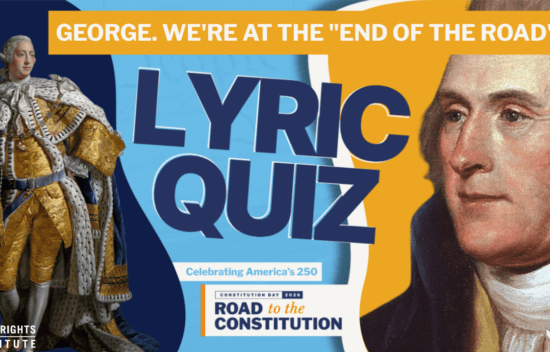
What were the grievances laid out in the Declaration of Independence? Help students define each grievance through modern song lyrics in our interactive quiz leading up to Constitution Day. This Constitution Day, BRI is highlighting the years between the signing of the Declaration of Independence in 1776 and the Constitution in 1787.