Unit
Justice
Guiding question
Justice is upholding of what is fair, just, and right. To stand for equally applied rules that respect the rights and dignity of all, and make sure everyone obeys them.
- 16 Lessons
- 16 Activities

Lessons:
All lessons can be found below!
- John Adams and the Boston Massacre Trial
- Justice: John Quincy Adams and The Amistad
- Abraham Lincoln, the Emancipation Proclamation, and Justice
- John Quincy Adams and His Struggle Against Slavery and the Gag Rule
- An Atrocious Debasement of Human Nature: Benjamin Franklin, the First Abolitionist Petitions, and Justice
- Elizabeth Cady Stanton’s Stand for Justice
- Conscience is the Most Sacred Property: James Madison, Virginia Statute for Religious Freedom, and Justice
- A Self-Evident Truth: Angelina Grimké and Justice
- Lee Yick: Equal Justice Under Law
- A Deep Stain on the American Character: John Marshall and Justice for Native Americans
- Bertrand DeBlanc’s Pursuit of Justice
- Barbara Jordan, Watergate, and Justice
- Justice Frank Murphy and Racial Prejudice: No Justifiable Part
- Activism through Literature: Harriet Beecher Stowe, Slavery, and Justice
- Oliver Otis Howard: Crusader for Justice
- Theodore Roosevelt: Warrior for Public Justice
Lessons
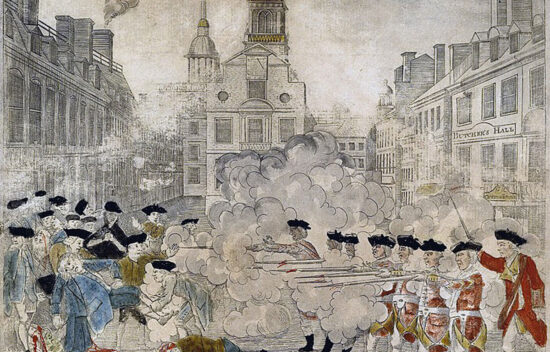
How did John Adams' defense of the British troops during the Boston Massacre Trial demonstrate his commitment to justice?

Why did John Quincy Adams act as the defense attorney for the Africans on The Amistad? Discuss Adams’ role in the case and determine ways students can protect justice themselves.

In this lesson, students will learn about Abraham Lincoln’s Emancipation Proclamation. Students will specifically learn about how Lincoln’s actions conform to the idea of justice and how they can apply this idea into actions in their own lives.

How did John Quincy Adams fight against the injustice of the gag rule in the House of Representatives? How can students fight for justice in their own lives?

How did Benjamin Franklin action to abolish slavery in the early republic? Use his example to think about how students can promote justice for themselves and others.

In this lesson, students will learn about Elizabeth Cady Stanton’s role in the women’s suffrage movement. They will explore how her actions conformed to the ideas of justice and the many obstacles she had to overcome in achieving her purpose. Through her example, they will learn how they can pursue justice in their own lives.

In this lesson, students will learn about James Madison's fight to promote and advance religious freedom in the State of Virginia. They will explore how his actions conformed to the idea of justice and through his example, learn how they can pursue justice in their own lives.

How can the example of Angelina Grimké's actions regarding the injustices of slavery encourage students to fight for justice in their lives?

In this lesson, students will consider the actions of Lee Yick regarding the injustices of a discriminatory city ordinance in San Francisco. They will consider ways in which they can promote or fight for justice in their own lives.

In this lesson, students will learn about the actions of John Marshall concerning the Cherokee nation. They will explore how his actions helped to advance justice and, through his example, learn how they can advance justice in their own lives.

In this lesson, students will learn about the case of the trial and execution of Willie Francis, and will analyze the determined efforts of his attorney, Bertrand DeBlanc, to protect due process for Francis.

In this lesson, students will learn how Barbara Jordan sought justice during the Watergate scandal. They will also learn how they can protect justice in their lives.

In this lesson, students will learn about Supreme Court Justice Frank Murphy and his stand for justice in three World War II cases related to restrictions on Japanese Americans.

In this lesson, students will learn about how Harriet Beecher Stowe fought against the injustice of slavery. They will also consider ways in which they can fight injustices in their own lives.

In this lesson, students will learn how Oliver Otis Howard fought for justice for recently freed African-Americans following the Civil War. They will also discuss ways that they can promote justice in their lives.

How did Theodore Roosevelt seek justice by reforming the meat packing industry? Explore Roosevelt’s dedication to justice and the general welfare of the nation and inspire students to be more focused on justice in their own lives.