Unit
Benjamin Franklin’s Fantastic Civic Virtues for K-3
Guiding question
Bring Franklin’s Fantastic Virtues to life in your K–3 classroom.
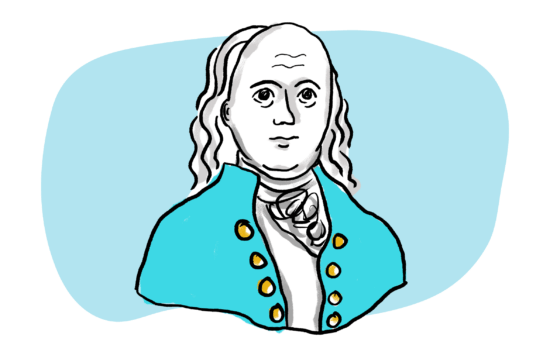
Essential Questions:
- What are civic virtues?
- How did Benjamin Franklin practice civic virtues to improve himself, his community, and his country?
Unit Overview and Pathways
Discover three flexible ways to bring Franklin’s Fantastic Virtues to life in your K–3 classroom. Choose from a week‑long knowledge‑building lesson plan, a social studies skill mini‑lesson, a reading skill mini‑lesson, and a collection of additional resources designed to inspire civic virtue and support your goals. Mix and match to create a pathway that fits your schedule, whether you have 10 minutes or 45 minutes a day for social studies instruction.
| Franklin’s Fantastic Civic Virtues | Week-long Lesson Plan (3-5 class sessions) | (K-3) Week-long Lesson Plan – Franklin’s Fantastic Civic Virtues
|
| Social Studies Mini- Lesson (1 class session) | (K-3) Social Studies Mini Lesson – Benjamin Franklin’s Own Words | |
| Reading Skill Mini-Lesson (1 class session) | (K-3) Reading Skill Mini-Lesson – Comprehension and Civic Virtue | |
| Additional Resources (Add to any lesson) |
Lessons
Lesson Plan. Franklin, Virtue, Community. A multi-day lesson where students read a mini-book, learn a Civic Virtue Song, and rotate through hands-on stations. Activities include role play, sorting, and primary sources, with an optional assessment at the end.
Mini-Lesson. Primary Sources, Franklin, Social Studies Skills. A short lesson using age-appropriate excerpts from Franklin's written works. Students practice observing, sourcing, and interpreting while learning about good habits and character.
Mini-Lesson. Reading Comprehension, Main Idea, Virtue. Students use the Franklin mini-book to practice identifying main ideas, making connections, and using text evidence while learning about civic virtue.
Unit resources
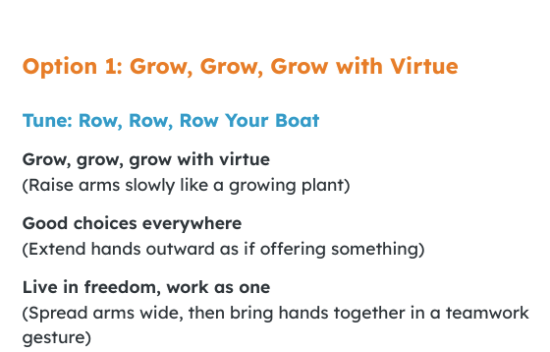
Song Lyrics and MP3 Audio Files. Vocabulary, Movement. Two classroom-ready songs that introduce civic virtue and vocabulary. Each song uses simple movements, so students remember key ideas through actions and fun repetition.
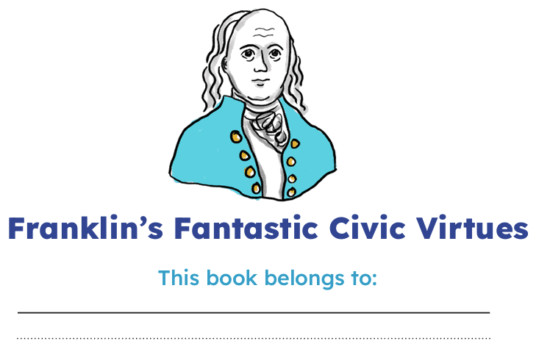
Mini-Book. Early Readers, Virtue, Benjamin Franklin. This K-1 mini-book introduces Benjamin Franklin and civic virtue using simple sentences, supportive illustrations, and predictable text patterns. Students practice early literacy skills and learn how Franklin's daily habits connect to contributing to one's community.
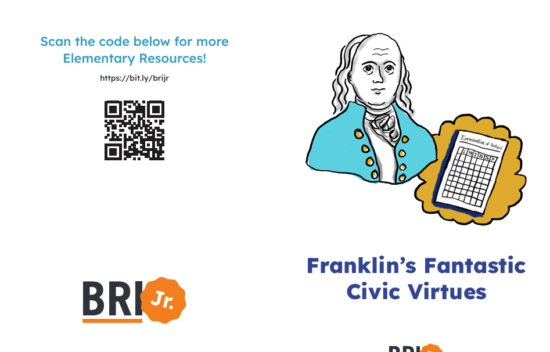
Mini-Book. Grades 2-3, Franklin, Virtue, Character. Use this version if you are printing mini-books for student use. This mini-book helps growing readers explore Benjamin Franklin's civic virtues with richer vocabulary and historical detail. Students see how Franklin's habits and choices strengthened his community.
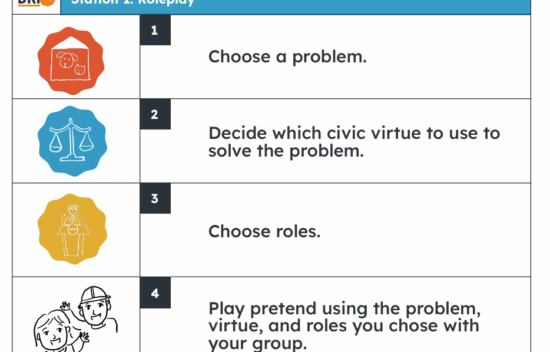
Stations. Hands-On Learning, Exploration, Skill Practice. Station cards guide students through activities exploring Franklin's virtues using role play, reading practice, and primary sources.
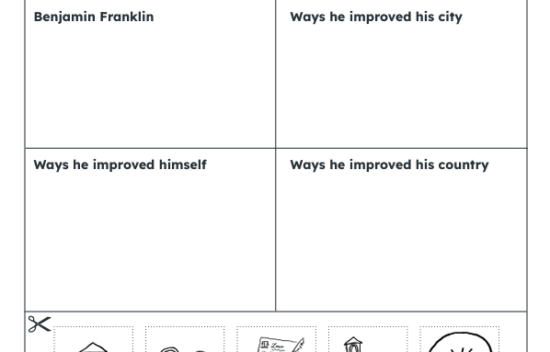
Student Handout. Sorting, Fine-Motor Practice, Concept Reinforcement. Students cut and sort images into four parts of Franklin's story: who he was, how he improved himself, how he helped his community, and how he helped his country.
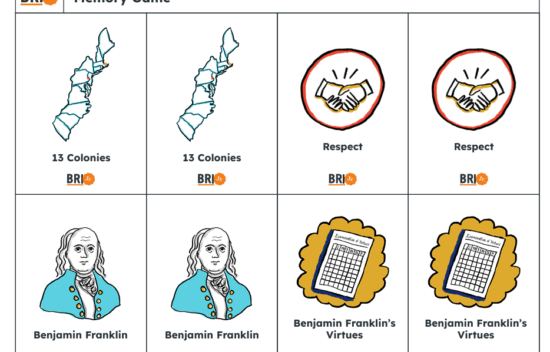
Game. Matching, Vocabulary, Concept Review. A card-matching game that reviews Franklin's virtues, vocabulary, and simple scenarios. Great for stations, early finishers, or small-group review.
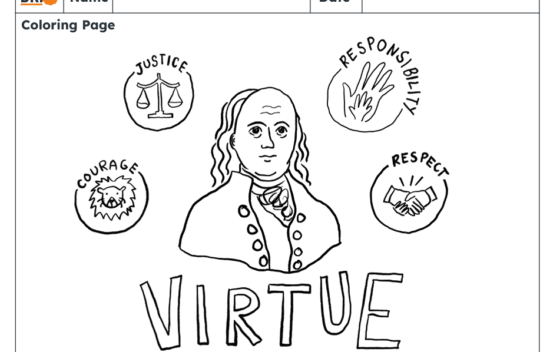
Coloring Page. Creativity, Vocabulary, Visual Reinforcement. A simple coloring sheet featuring Franklin and civic virtue imagery. Supports vocabulary and calm, focused work time.
Mini-Book. Grades 2-3, Franklin, Virtue, Character. This mini-book helps growing readers explore Benjamin Franklin's civic virtues with richer vocabulary and historical detail. Students see how Franklin's habits and choices strengthened his community.
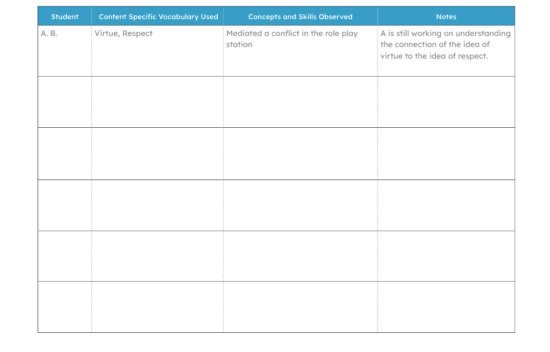
Assessment Tool. Observation, Assessment Indicators, Easy Tracking. Simple checklists help teachers record student participation, understanding, and collaboration during lessons and stations.
Standards
Related content
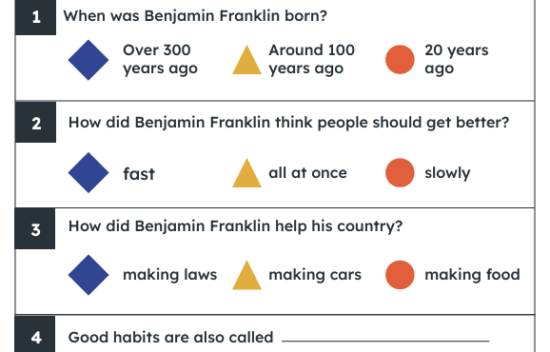
Assessment. K-1, Virtue and Benjamin Franklin. A whole-group assessment using visuals and teacher read-aloud to help teachers quickly check students' understanding of Franklin's virtues.
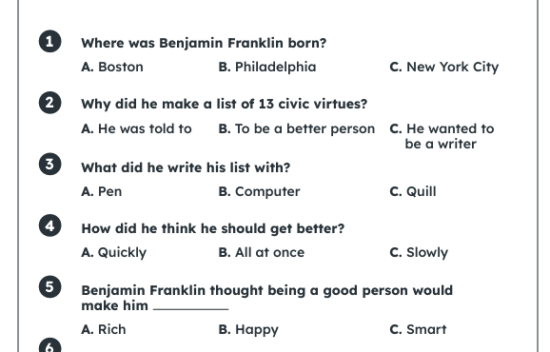
Assessment. Grades 2-3, Virtue and Benjamin Franklin. A short 10-question quiz that measures students' understanding of Franklin's civic virtues. Teachers can get a clearer picture of students' historical comprehension and vocabulary.