Unit
Chapter 4: The Early Republic 1789-1800
Guiding question
Invites students to explore how a nation can stay unified despite divisions.
Chapter 4 of Life, Liberty, and the Pursuit of Happiness, BRI’s U.S. History Curriculum Resource, invites students to explore how a nation can stay unified despite divisions. Discover our suggested sequence for Chapter 4.
Teacher resource
Chapter 4 The Early Republic: 1789-1800 Inquiry Organizer
How can a nation stay unified despite divisions?
Lessons

This Lesson can be used at the beginning of Chapter 4 to reinforce and review the key events of the American Revolution covered in Chapter 3. This activity will also introduce students to the effects the Revolution had on the world stage in the late eighteenth and early nineteenth centuries.

Students should have a solid foundation of the regional differences in the former colonies, now states, as well as an understanding of the ratification of the Constitution. This Lesson is best used after students have read The Constitutional Convention and The Ratification Debate on the Constitution Narratives in Chapter 3. The James Madison and the Bill of Rights Narrative in Chapter 4 can be used as background for the Lesson or can be assigned as homework after the Lesson to reinforce main ideas.

This activity should be completed after students have completed the Actions of the First Congress Lesson, The Compromise of 1790 Decision Point, and George Washington, First Inaugural Address, 1789 Primary Source Activity. This Lesson should be followed by the Alexander Hamilton and the National Bank Narrative or the "Strict" or "Loose": Was the National Bank Constitutional? Point-Counterpoint, either of which can be completed as a homework assignment to follow this Lesson.

Use this Lesson to have students examine how enslaved men and women resisted slavery during the late 1700s and early 1800s.

This Lesson is best used at the end of the unit, after students have studied Washington's leadership during the Revolutionary War in Chapter 3 and the major events of his presidency in Chapter 4.

Before completing this Lesson, students should be familiar with the societal, cultural, and economic conditions of eighteenth-century American life that sustained the institution of slavery. Anti-slavery sentiment can be explored in the Benjamin Franklin and the First Abolitionist Petitions Narrative.
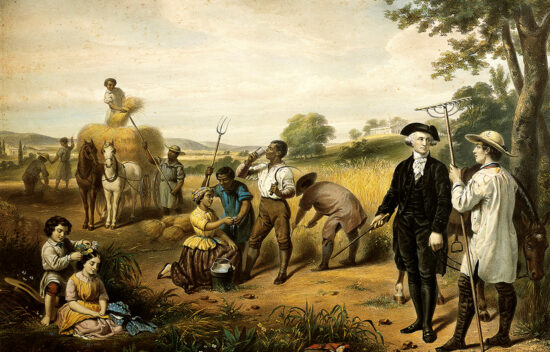
Students should be familiar with the debates surrounding slavery in the Constitutional Convention in Chapter 3. Students should read the James Madison and the Bill of Rights Narrative and Benjamin Franklin and the First Abolitionist Petitions Narrative for context before reading this Lesson.

Students can further explore the context surrounding the Jay Treaty in the George Washington and the Proclamation of Neutrality Decision Point, The Jay Treaty Narrative, and in the excerpt from the treaty itself in The Jay Treaty, 1795 Primary Source. The Alexander Hamilton and the National Bank Narrative and The National Bank Debate Lesson provide more context on the founding of the bank.

Use this Lesson as a supplement to The Whiskey Rebellion: Unjust Taxation or Enforcing the Rule of Law? Point-Counterpoint.
Unit resources

The Whiskey Rebellion was one of the first significant challenges to the new government under the Constitution. How valid were the complaints of the rebels who opposed the new taxation on whiskey? Frank W. Garmon, Jr. and Rebecca Brannon debate this question.

Jefferson and Hamilton's debates over the constitutionality of a national bank was one of the major debates in the early republic. Which Founder had the better interpretation of the Constitution on the issue? Adam Tate and Jack Rakove debate this question.

Use this primary source text to explore key historical events.


Use this primary source text to explore key historical events.

Use this primary source text to explore key historical events.
Use this primary source text to explore key historical events.


Use this primary source text to explore key historical events.

Use this primary source imagery to analyze major events in history.

Use this primary source text to explore key historical events.