Lesson
The Women’s Suffrage Movement

The emergence of a true women’s movement for equality and suffrage (the right to vote) developed after the religious revivals of the Second Great Awakening and the rise of several antebellum (before the Civil War) reform movements in the 1830s and 1840s. This lesson explores the birth of the Women’s Rights movement, as well as its goals and the historical context of the movement.
Founding Principles
Virtues
Guiding Questions
- Evaluate the relationship between women’s efforts to gain suffrage and the constitutional principles of inalienable rights, equality, and consent of the governed.
Objectives
- Students will trace the contributions of leaders in the women’s suffrage movement.
- Students will assess the effects of the women’s movement for equality and suffrage and the constitutionality of the movement’s goals.
Materials
Educator Resources
Student Handouts
Lesson Components

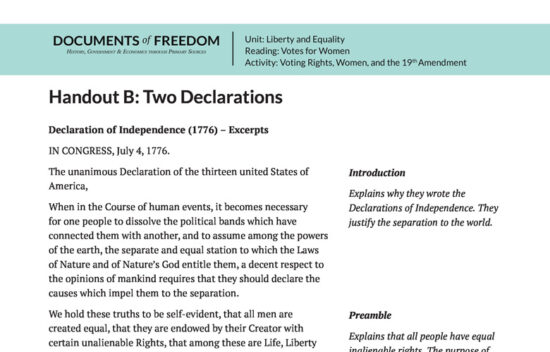
ActivityHandout B: Two Declarations

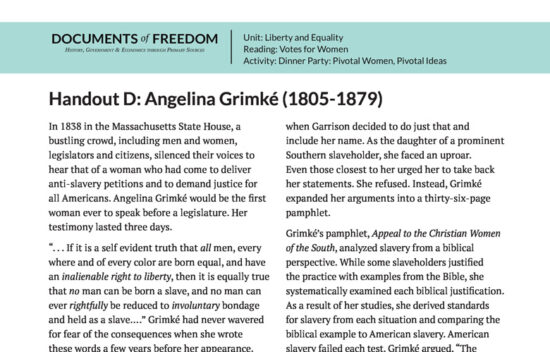
ActivityHandout D: Angelina Grimké
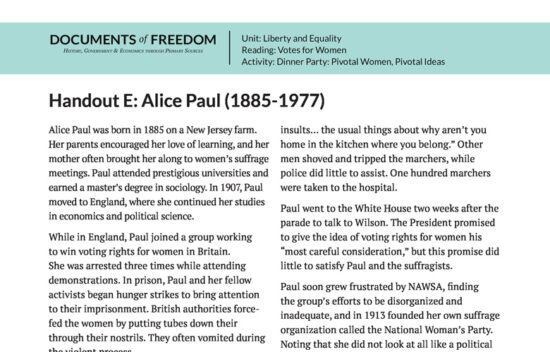
ActivityHandout E: Alice Paul
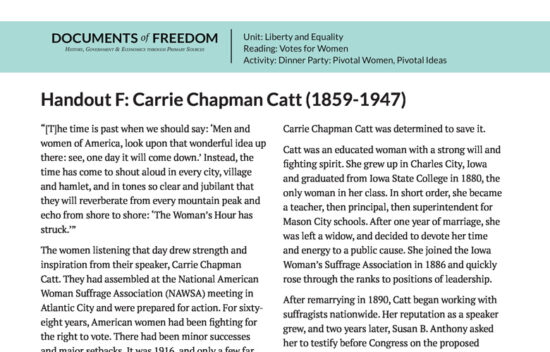
ActivityHandout F: Carrie Chapman Catt
EssayEssay: The Women’s Suffrage Movement
The emergence of a true women’s movement for equality and suffrage (the right to vote) developed after the religious revivals of the Second Great Awakening and the rise of several antebellum (before the Civil War) reform movements in the 1830s and 1840s.
Lesson plan
70 minClick a phase to open it
Key Terms
- republican government
- suffrage
- virtue
- property
- republic
Standards
Related materials

CurriculumVotes for Women
How did the suffragists map out a pathway for change to achieve the vote through the Nineteenth Amendment?