Lesson
Voluntarism and Public Servants
Guiding question
Who can be considered public servants, in addition to elected officials?

Virtues
Guiding Questions
- Who can be considered public servants, in addition to elected officials?
- What is considered voluntarism?
- To what extent does Tocqueville see voluntarism as necessary for building a nation?
Objectives
- Students will define and explain the benefits of voluntarism.
- Students will describe multiple ways in which citizens participate in public life.
- Students will identify who can be a public servant.
Materials
Lesson Components
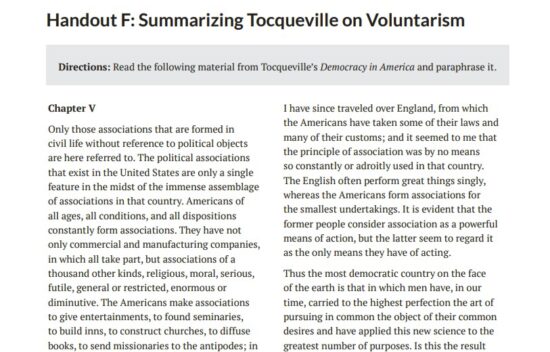
Americans celebrate volunteers and public servants, intuitively recognizing that there is something of great value in helping your community. But often we have arrived at distorted understandings of voluntarism and public service: definitions that emphasize trivial engagement and exclude important forms of public service. Exploring the benefits of service, the rules and norms that support and promote it, and the virtues that volunteers display will provide us will a more accurate understanding of what it means to serve.
Lesson plan
Key Terms
- checks and balances
- Framers
- Constitution
- James Madison
- separation of powers
Standards
Related materials

How can students practice the skills of citizenship now? By working through this curriculum that fosters a robust understanding of citizenship and gets them active in their communities as young people!