Lesson
The Rise of Reform Politics

Founding Principles
Objectives
- Students will examine the problems associated with the political machines that controlled many urban areas during the late nineteenth century.
- Students will understand the vast array of reforms that took place between 1870 and 1920 that granted expanding power to the federal government and challenged the constitutional principles of the American Founding.
- Students will identify several progressive reforms and analyze the impact that each reform had on the lives of American citizens.
- Students will explore the debates on civil service reform and analyze primary sources to better understand the motivations of reformers in the early twentieth century.
Materials
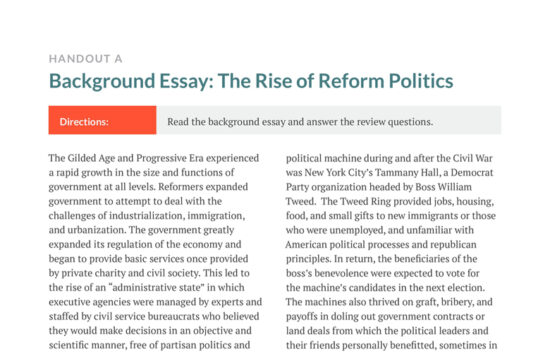
- Handout A: Background Essay: The Rise of Reform Politics
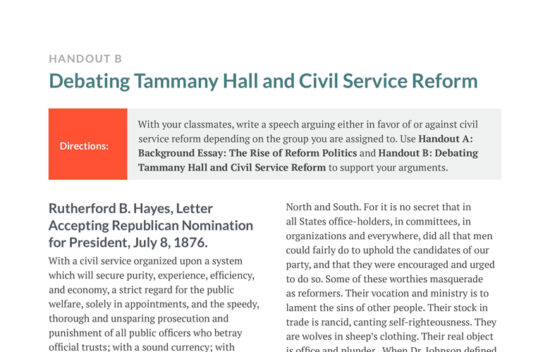
- Handout B: Debating Tammany Hall and Civil Service Reform
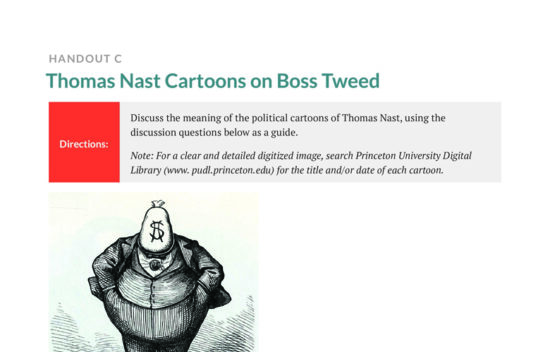
- Handout C: Thomas Nast Cartoons on Boss Tweed
- Handout D: The New Nationalism and the New Freedom
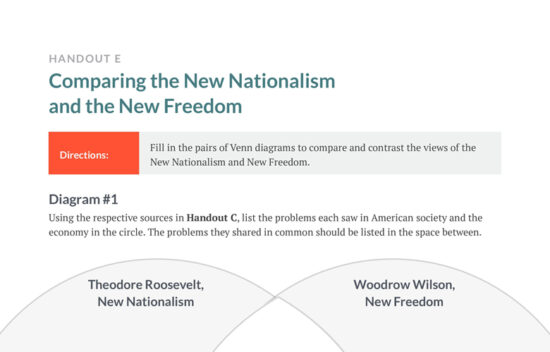
- Handout E: Comparing the New Nationalism and the New Freedom
Lesson Components

Lesson plan
Key Terms
- Urbanization
- Machine politics
- Boss
- Boss Tweed
- Tammany Hall
Standards
Advanced Placement
- National
Check whether this resource aligns with your state’s standards →
Related materials

By the end of this section, you will explain the similarities and differences between the political parties during the Gilded Age.

Use this primary source imagery to analyze major events in history.

This first in our new Homework Help Evidence of History series tells the story of William "Boss" Tweed. Tracing his rise to political power in post Civil War New York City, a metropolis whose population was booming from an influx of European immigrants, this video explores the question of whether Tweed was a hero, a villain, or something in between. Examine the evidence and decide for yourself.

What should the balance of government intervention and economic liberty be in a capitalist society? BRI Senior Teaching Fellow Tony Williams and guest Stephen Tootle, Professor of History at the College of the Sequoias, examine this question by looking through the eyes of Theodore Roosevelt in his speech, "The New Nationalism" (1910). They break down Roosevelt's views on government regulation of the economy and society against a backdrop of American industrialization, progressivism, and the rise of big business.

By the end of this section, you will compare the goals and effects of the Progressive reform movement.