Lesson
The Rise of Big Business

Founding Principles
Objectives
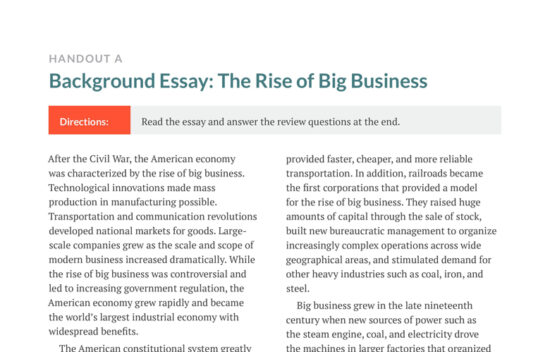
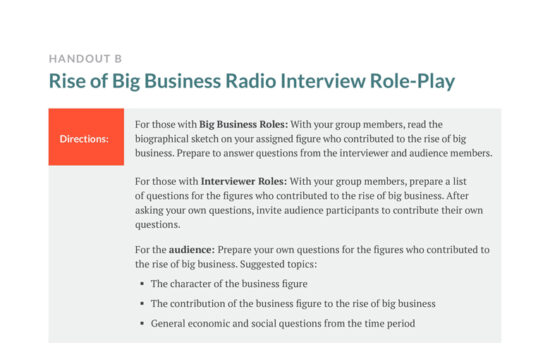
- Students will examine the causes of the rise of big business and its characteristics in the Gilded Age.
- Students will understand the effects of big business on the American economy, politics, and civil society, as well as the debates related to those effects.
- Students will analyze the constitutional principles associated with government regulation of business in a system of private enterprise, and compare and contrast the regulatory approaches of different presidential administrations toward big business during the Gilded Age and Progressive Era.
Materials
Lesson Components



Lesson plan
Key Terms
- Mass production
- Mass marketing
- Regulation
- Corporation
- Capital
Standards
Advanced Placement
- National
Check whether this resource aligns with your state’s standards →
Related materials

"Entrepreneurs" is our latest Evidence of History Homework Help video focusing on the so-called "Robber Barons" or "Captains of Industry" of the late 19th and early 20th century, including Andrew Carnegie, John D. Rockefeller, J.P. Morgan, and Henry Ford. How did these men and those like them transform the U.S. economy during the Gilded Age, and what, if any, lessons do their stories have for us today? Watch and find out!

What strengths does the free market economy have and how does it affects development and production of goods?

Was the economic growth in the country during the Gilded Age justified if it was built on the backs of American workers? Mark Summers and John Steele Gordon debate this question.

Explore how Carnegie became one of the richest men in the U.S.