Lesson
What Is a Reasonable Expectation of Privacy?

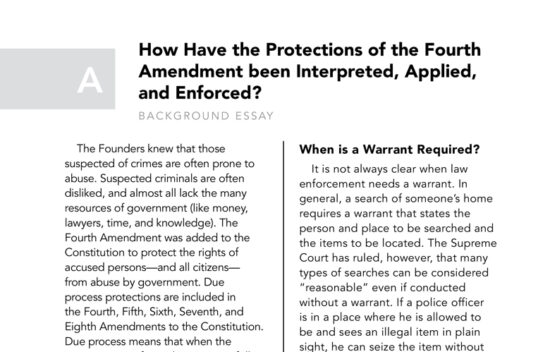
The Constitutional principle of due process, which holds that government must interact with citizens according to duly-enacted laws, balances the rights of suspects with public safety. This lesson explores the protections provided by the Fourth Amendment and how the Supreme Court has interpreted it over time.
Founding Principles
Virtues
Objectives
- Students will understand the principle of due process, which holds that the government must interact with all citizens according to the tenets of the law; applying these rules equally among all citizens.
- Students will understand ways the Supreme Court has interpreted the Fourth Amendment.
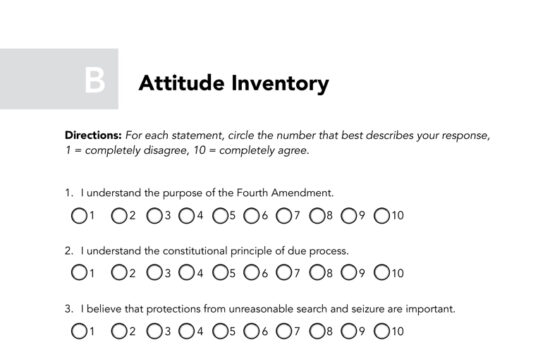
- Students will evaluate whether the Fourth Amendment is effectively protecting citizens from unreasonable search and seizure.
Materials
Lesson Components


Lesson plan
45 minClick a phase to open it
Standards
Advanced Placement
- NCHS
Check whether this resource aligns with your state’s standards →