Lesson
What is Incorporation?

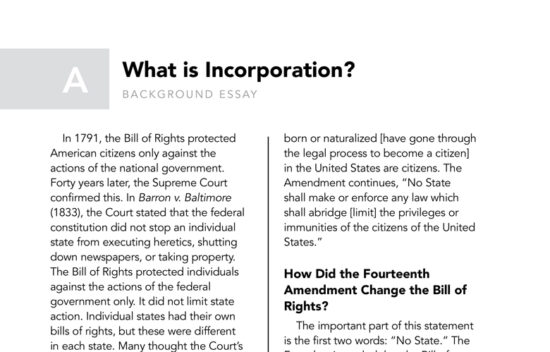
The Fourteenth Amendment was originally written to ensure that freed slaves would be treated as citizens, but, in the twentieth century, the Supreme Court used the amendment's Equal Protection and Due Process Clauses to expand the protections provided in the Bill of Rights to the states. This concept of extending, called incorporation, means that the federal government uses the Fourteenth Amendment and the Bill of Rights to address limitations on liberty by states against their citizens. This lesson explores the significance of this amendment and incorporation and its effects on our constitutional structure.
Founding Principles
Virtues
Objectives
- Students will explain the constitutional significance of the Fourteenth Amendment
- Students will contrast the Founders’ divergent views about which level of government might best protect individual liberty
- Students will analyze the constitutional implications of incorporation
- Students will evaluate how the Fourteenth Amendment has been used to protect individual rights
Materials
Student Handouts
- Handout A: Background Essay – What Is Incorporation?
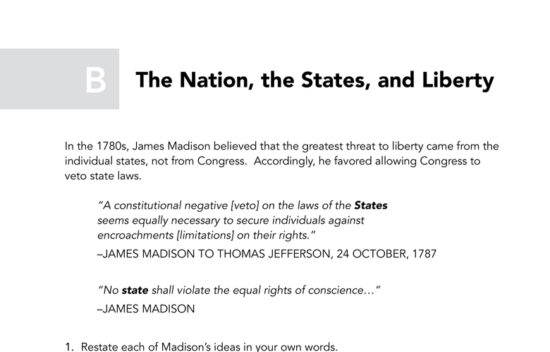
- Handout B: The Nation, the States, and Liberty
- Handout C: Consequences of Incorporation (5 copies needed)
Teacher Resources
Lesson Components

Lesson plan
60 minClick a phase to open it
Standards
Advanced Placement
- NCHS
Check whether this resource aligns with your state’s standards →