Lesson
Farmers in the Gilded Age

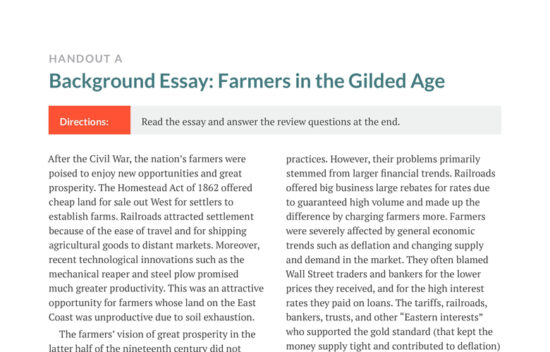
After the Civil War, the nation’s farmers were poised to enjoy new opportunities and great prosperity. Cheap land in the west, a rapidly growing railroad network, technological advances such as the mechanical reaper and steel plow to increase productivity—all seemed to inspire confidence in the future. However, declining incomes over the next several decades caused them to turn to various methods of cooperative action to try to increase their political voice. They demanded that government act to address their grievances. They charged that monopolistic railroad practices, mortgage interest rates, and other factors beyond their control caused their incomes to fall, regardless of how hard they worked to achieve the American dream in the inherently uncertain work of farming.
Founding Principles
Objectives
- Students will trace factors contributing to the farmers’ unrest in the period following the Civil War
- Students will evaluate and compare primary source documents relating the concerns and objectives of farmers in the Gilded Age and Progressive Era.
- Students will understand the farmers’ sense of disempowerment and what they did about it.
- Students will identify constitutional principles and essential virtues at issue in the controversies related to farmers in the Gilded Age and Progressive Era.
Materials
- Handout A: Background Essay: Farmers in the Gilded Age
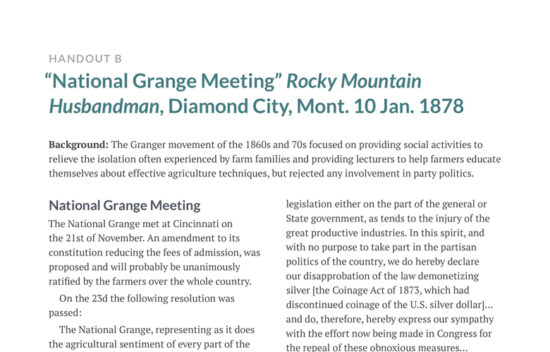
- Handout B: “National Grange Meeting” Rocky Mountain Husbandman, Diamond City, Mont. 10 Jan. 1878
- Handout C: Farmers Alliance platform, Texas (1886)
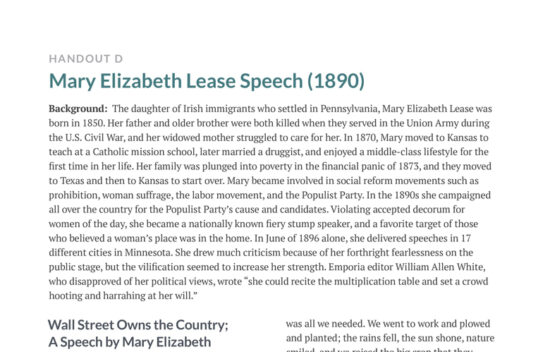
- Handout D: Mary Elizabeth Lease Speech (1890)
- Handout E: The Populist Party Omaha Platform (1892)
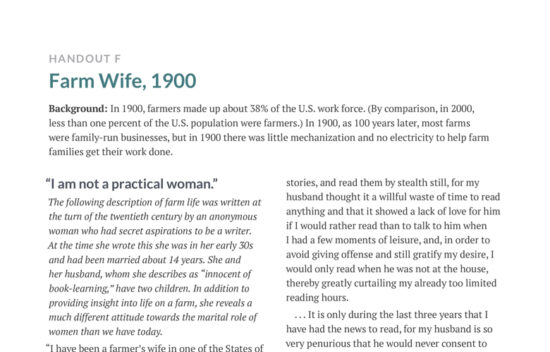
- Handout F: Farm Wife (1900)
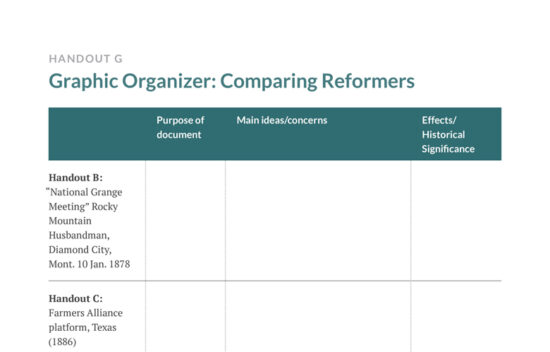
- Handout G: Graphic Organizer: Comparing Reformers
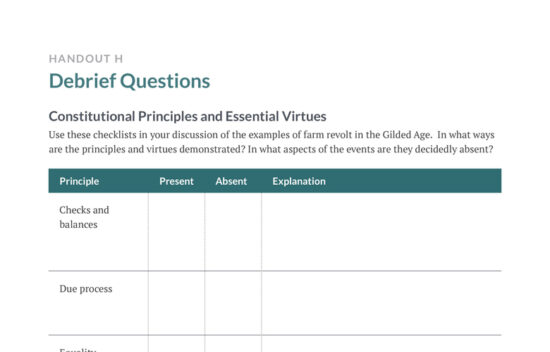
- Handout H: Debrief Questions
Lesson Components


ActivityHandout F: Farm Wife 1900
ActivityHandout H: Debrief Questions
Lesson plan
120 minClick a phase to open it
Key Terms
- Homestead Act of 1862
- Deflation
- Rebate
- Wall Street
- Interest rates
Standards
Advanced Placement
- National
Check whether this resource aligns with your state’s standards →
Related materials

EssayIgnatius Donnelly and the 1892 Populist Platform
What sparked the rise of the Populist movement?

LessonPopulists and Socialists in the Gilded Age
Use this Lesson with the Ignatius Donnelly and the 1892 Populist Platform Narrative and the William Jennings Bryan, "Cross of Gold," speech 1896 speech Primary Source to give students a deeper understanding of Gilded Age political platforms.

ActivityWilliam Jennings Bryan, “Cross of Gold” Speech, 1896
Use this primary source text to explore key historical events.