Lesson · Elementary (BRI Jr)
(K-3) Week-long Lesson Plan – Eckford’s Epic Courage
Guiding question
What is the civic virtue of courage?
Founding Principles
About this lesson
How this lesson flows
Every stage is laid out below, so you can see the whole lesson at a glance. Nothing is hidden.
Guiding questions
- What is the civic virtue of courage?
- How do people show courage?
- How did Elizabeth Eckford show courage in going to a new school?
Objectives
- Students will…
- Define and identify the civic virtue of courage.
- Describe how Elizabeth Eckford showed courage.
- Demonstrate understanding of courage and civic virtue through discussion, art, and roleplay.
Facilitation Notes
- This lesson is intended to be implemented over several days or class periods. 3-5 days are likely, flex the activities to fit your class time. For example:
- Day 1: Anticipate and Engage
- Day 2: Explore
- Day 3: Apply and Assess
- This lesson is intended to follow Franklin’s Fantastic Civic Virtues lesson. It can follow or precede any version of Armstrong’s Amazing Courage.
- Armstrong’s Amazing Courage also focuses on the civic virtue of courage. This is intentional to allow comparison of how two different people manifested courage in different situations. Scaffolding notes are included throughout the lesson to help you create these connections for students.
- This lesson is intended for younger learners, from kindergarten to 3rd grade. Several modifications, such as different levels of texts and scaffolding notes, are available to span this large range of ages and developments.
- This lesson requires advance preparation, including collecting and printing materials. See the Teacher and Student Materials list.
Lesson components
Everything you need, in the version that fits your class.
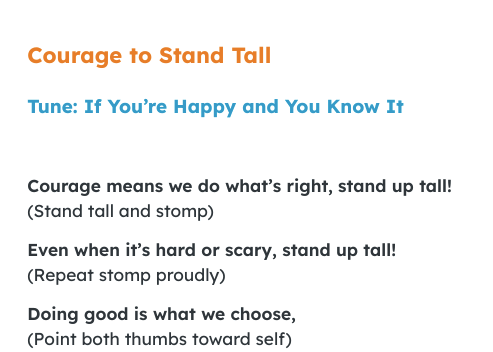 ActivityK–3Courage Song – Eckford’s Epic Courage
Song. Courage, Vocabulary, Joyful Learning. A classroom-friendly song that introduces courage through Elizabeth Eckford's story. Simple motions and repeated vocabulary help students understand what courage looks and feels like.
Download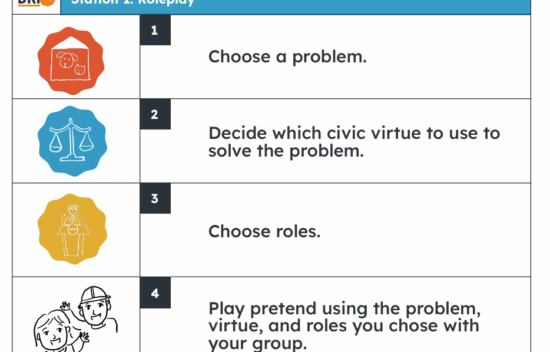 ActivityK–3Stations Instructions and Task Cards – Eckford’s Epic Courage
Stations. Hands-On Learning, Eckford, Skill Practice. Station cards guide students through sorting, primary source observation, reflection, and simple role play connected to Eckford's experience.
Download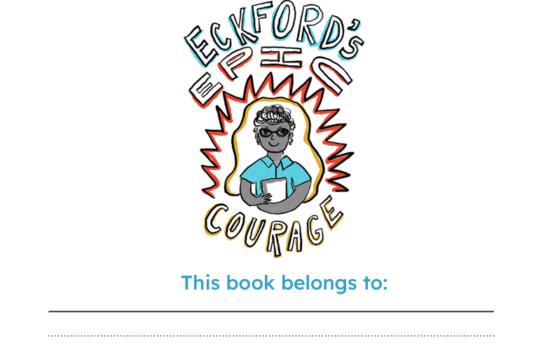 ActivityK–1Mini-Book Option A – Eckford’s Epic Courage
Mini-Book. Early Readers, Courage, Eckford. A K-1 mini-book with simple sentences and clear illustrations that introduces Elizabeth Eckford's story and the meaning of courage.
Download Activity2–3Digital Mini-Book Option B – Eckford’s Epic Courage
Mini-Book. Grades 2-3, Civil Rights, Courage. A more detailed mini-book with richer vocabulary and historical context showing how Eckford's brave actions helped desegregate Little Rock Central High.
Download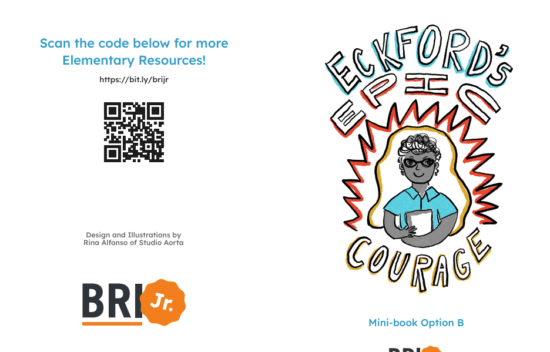 Activity2–3Printable Mini-Book Option B – Eckford’s Epic Courage
Mini-Book. Grades 2-3, Civil Rights, Courage. Use this version if you are printing mini-books for student use. A more detailed mini-book with richer vocabulary and historical context showing how Eckford's brave actions helped desegregate Little Rock Central High.
Download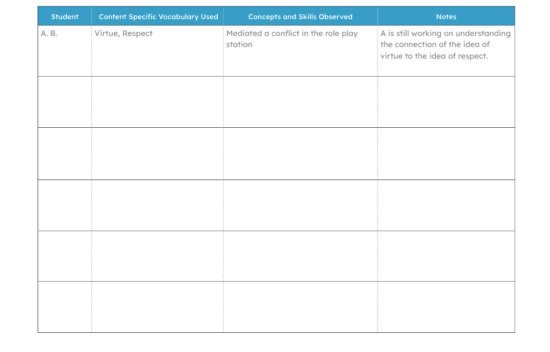 Educator ResourceK–3Teacher Observation Recording Sheets
Assessment Tool. Observation, Assessment Indicators, Easy Tracking. Simple checklists help teachers record student participation, understanding, and collaboration during lessons and stations.
Download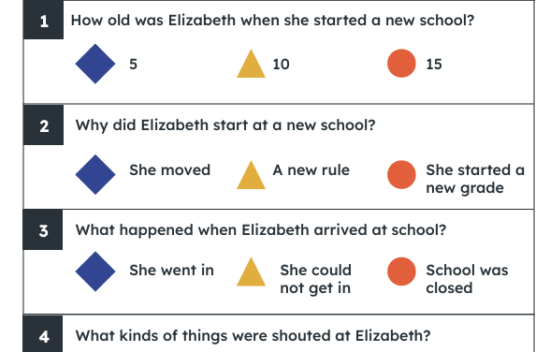 ActivityK–1Group Assessment Option 1 – Eckford’s Epic Courage
Assessment. K-1, Understanding Courage and Elizabeth Eckford. A whole-group assessment using visuals and teacher read-aloud prompts to assist teachers in checking students' understanding of courage.
Download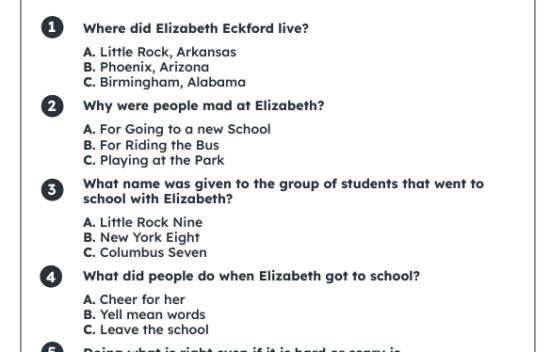 Activity2–3Group Assessment Option 2 – Eckford’s Epic Courage
Assessment. Grades 2-3, Understanding Courage and Elizabeth Eckford. A short 10-question quiz that helps teachers measure students' understanding of Eckford's courageous actions and key vocabulary.
DownloadMaterials
Resources
Teacher Materials
- Eckford’s Epic Courage Song Courage to Stand Tall
- Anchor Chart Materials
- Poster or chart paper, markers
- Stations Materials
- Station 1: Tough Situation Roleplay
- Materials: Role cards, situation cards, civic virtue cards, props like stuffed animals, dress up clothing, or name tags
- Station 2: Sequencing Handout
- Materials: Handouts (printed), scissors, glue, pencils
- Station 3: Read-to-Self
- Materials: Eckford’s Epic Courage Mini-books, Library center or selection of books at student reading levels
- Station 4: Primary Source Investigation
- Materials: Eckford’s Epic Courage Primary Source Set and Find It! Cards (printed, laminated, and cut), magnifying glasses, pencils
- Station 1: Tough Situation Roleplay
- Teacher Observation Sheet
- Collaborative Courage Timeline materials
- Butcher paper or sentence strips, printed/drawn images of Elizabeth Eckford, markers, crayons, glue
- Optional: Courage symbols for timeline decoration
- Optional: Teacher-created “moment cards” for timeline scaffolding
- Optional: Modes of Reading Teacher Support Document
Student Materials
- Eckford’s Epic Courage Mini-book
- Two versions of the mini-book are available based on the lexile level of your learners. Option A features clear, simple sentences, large easy‑to-read print, and a dedicated reflective writing page. With fewer total pages, it’s an ideal choice for younger learners or those who benefit from a streamlined, accessible format. Option B features more complex sentence structures and a longer page format. Skills boxes appear throughout to reinforce key literacy concepts including phonic spelling patterns (sounds), Fluency and Vocabulary practice words, and targeted phonemic awareness skills. This option offers a more robust challenge for developing readers who are ready for increased rigor.
- Option A (K-1)
- To create: Print single-sided, staple on left side where indicated, then cut on the dotted line to create books.
- Print-Ready Option B (2-3)
- Print double-sided, along short edge. Fold along center line and staple to create a book.
- Digital Option B (2-3) – meant to be accessed via a device
- Option A (K-1)
- Two versions of the mini-book are available based on the lexile level of your learners. Option A features clear, simple sentences, large easy‑to-read print, and a dedicated reflective writing page. With fewer total pages, it’s an ideal choice for younger learners or those who benefit from a streamlined, accessible format. Option B features more complex sentence structures and a longer page format. Skills boxes appear throughout to reinforce key literacy concepts including phonic spelling patterns (sounds), Fluency and Vocabulary practice words, and targeted phonemic awareness skills. This option offers a more robust challenge for developing readers who are ready for increased rigor.
- Group Assessment
- Two options of the assessment are available to choose from based on the needs of your learners.
The lesson, step by step
Open each stage as you teach it, or expand them all to read straight through.
Standards
Related for little learners

Democracy in Action explores how the Constitution has guided Americans from its writing in 1787 to pivotal moments in history. From the Supreme Court’s decision in Brown v. Board of Education to Elizabeth Eckford’s courageous walk as part of the Little Rock Nine, this story highlights how individuals have lived out the Constitution’s principles of equality and justice.