Unit
Neil Armstrong’s Amazing Courage for K-3
Guiding question
Bring Armstrong’s Amazing Courage into your K–3 classroom with a variety of instructional pathways.

Essential Questions:
- What is the civic virtue of courage?
- How did Neil Armstrong demonstrate courage by going to the Moon?
Unit Overview and Pathways
Bring Armstrong’s Amazing Courage into your K–3 classroom with a variety of instructional pathways. Choose from a week‑long knowledge‑building lesson plan, a social studies skill mini‑lesson, a reading skill mini‑lesson, and supplemental resources that help you tailor instruction to your students. Mix and match to build a routine that fits your schedule, no matter how much time you have for social studies each day.
Lessons
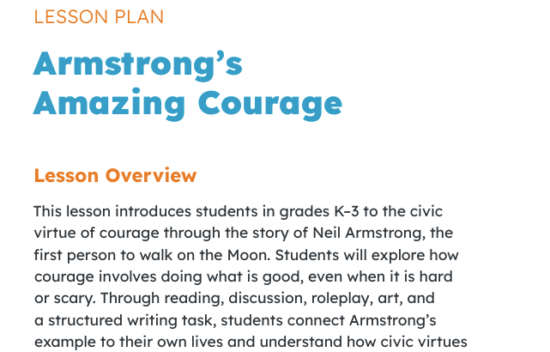
Lesson Plan. Courage, Exploration, Perseverance. A multi-day lesson where students explore courage through Armstrong's story using reading, discussion, role play, art, and writing.
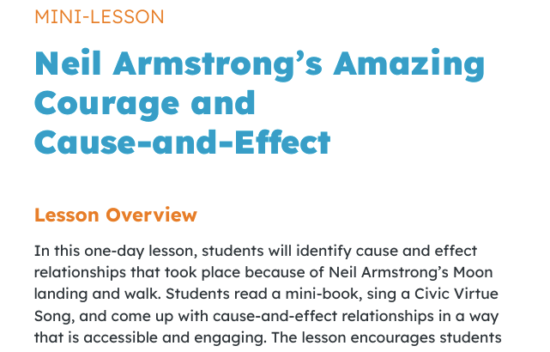
Mini-Lesson. Observation, Inquiry, Exploration. Students read a mini-book, sing a Civic Virtue Song, and identify cause-and-effect relationships connected to Armstrong's Moon landing.
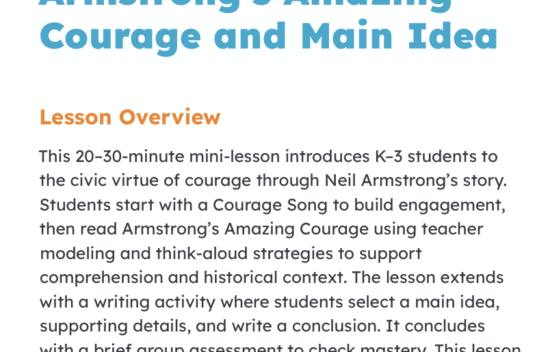
Mini-Lesson. Reading Comprehension, Vocabulary, Courage. Students read Armstrong's story, identify a main idea, choose supporting details, and write a conclusion.
Unit resources
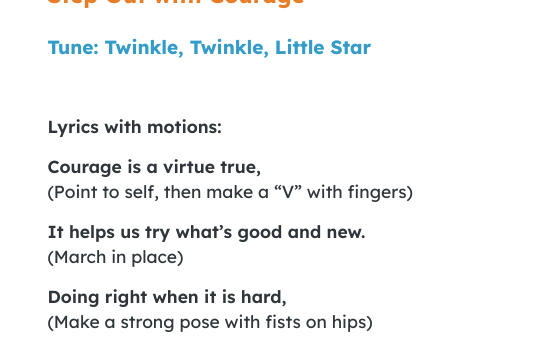
Song. Courage, Exploration. A lively song introducing Neil Armstrong's courage and determination. Repetition and movement help students learn key vocabulary.
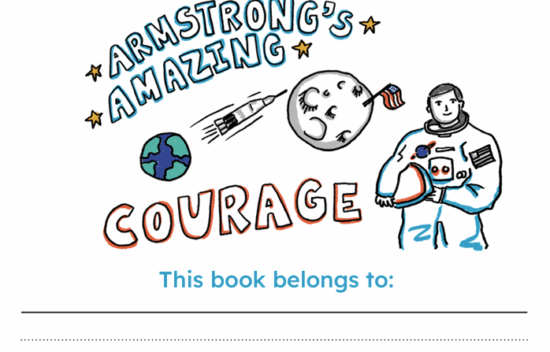
Mini-Book. Early Readers, Courage, Armstrong. A printable mini-book with simple text and clear illustrations showing how courage, curiosity, and hard work helped Armstrong achieve something extraordinary.
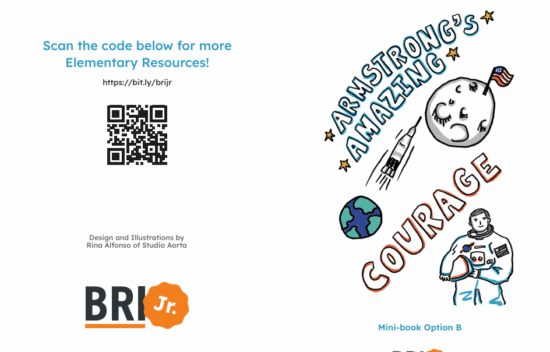
Mini-Book. Grades 2-3, Space, Courage. Use this version if you are printing mini-books for student use. A more detailed mini-book with richer vocabulary and historical detail about Armstrong's journey and the courage behind the Moon landing.

Mini-Book. Grades 2-3, Space, Courage. A more detailed mini-book with richer vocabulary and historical detail about Armstrong's journey and the courage behind the Moon landing.
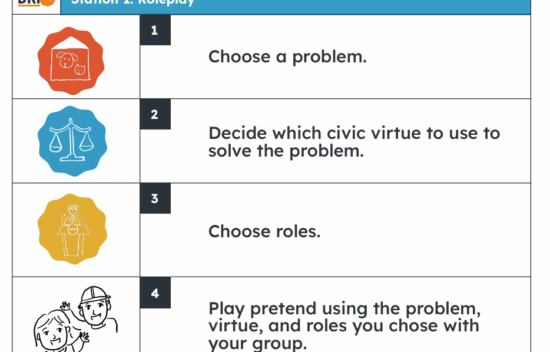
Stations. Hands-On Learning, Primary Sources, Skill Practice. Station cards guide students through role play, reading practice and primary source observation connected to Armstrong's journey.
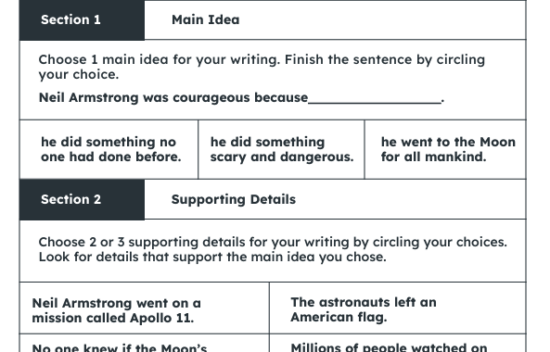
Handout. Writing, Forming Paragpraphs, Main Idea. A structured writing activity that helps students craft a paragraph using sentence stems and prompts to guide each step of the process.
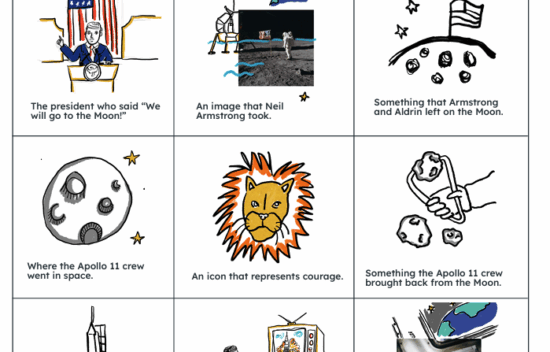
Game. Vocabulary, Listening, Story Review. A playful bingo game that reinforces key vocabulary and concepts from Armstrong's Amazing Courage lessons.
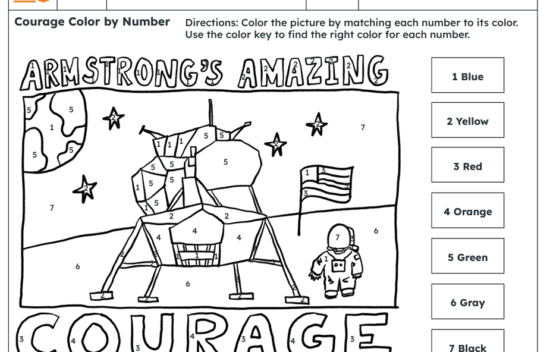
Coloring Page. Creativity, Vocabulary, Visual Reinforcement. A joyful coloring sheet featuring Armstrong and space-themed imagery.
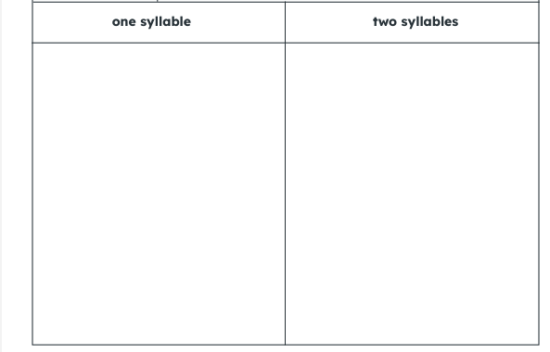
Student Handout. Phonological Awareness, Vocabulary, Fine-Motor Skills. Students sort vocabulary from Armstrong's story by syllable count.
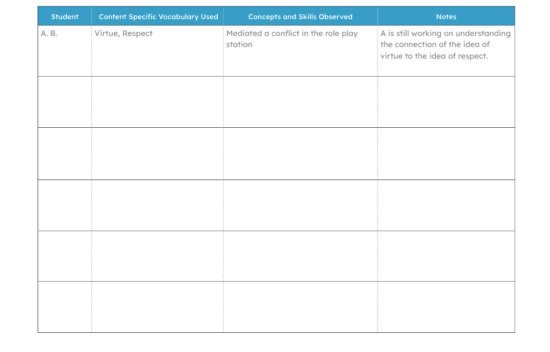
Assessment Tool. Observation, Assessment Indicators, Easy Tracking. Simple checklists help teachers record student participation, understanding, and collaboration during lessons and stations.
Standards
Related content
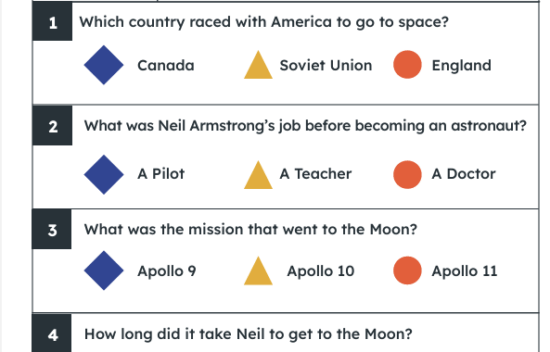
Assessment. K-1, Understanding Courage and Neil Armstrong. A whole-group assessment using visuals and teacher read-aloud prompts to help teachers check understanding of Armstrong's courage and achievements.
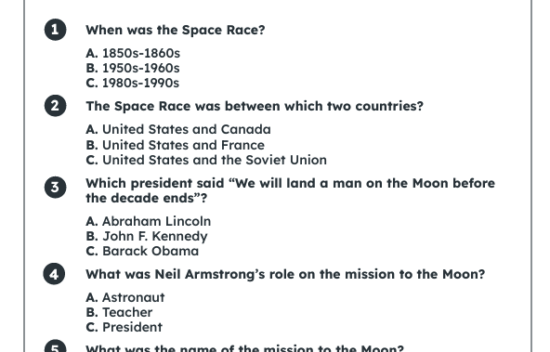
Assessment. Grades 2-3, Understanding Courage and Neil Armstrong. A short 10-question quiz that helps teachers measure students' understanding of Armstrong's courage and key vocabulary.