Video
Grievance #27 of the Declaration of Independence
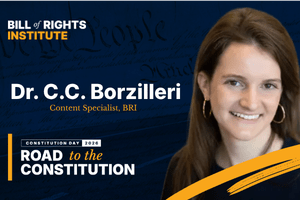
Watch
Founding Principles
About this video
What finally pushed the colonies to declare independence?
In the 27th and final grievance of the Declaration of Independence, Dr. C.C. Borzilleri examines the colonists’ belief that Britain had failed to protect them and had instead deepened instability across the colonies.
This grievance references two major fears in the Revolutionary era: the threat of frontier violence and fears of insurrections among enslaved populations. It also contains language about Native Americans that is offensive today and reflects the prejudices and attitudes of the 18th century.
The video places these issues in historical context, including Lord Dunmore’s 1775 proclamation offering freedom to enslaved people who joined the British side during the war.
At the heart of the grievance was a larger question: what is government supposed to do? Colonists believed governments existed to provide protection and security. By 1776, many Americans believed Britain had failed to uphold its side of that relationship.
For the colonies, this grievance represented the final breakdown of the imperial relationship and the final step toward declaring independence.
This is the final part of our 27-part series breaking down every grievance that led to the American Revolution and the Declaration of Independence.
0:00 The 27th and final grievance of the Declaration of Independence addresses two perceived threats to the American colonies and the British Empire’s role in protecting them. He has excited domestic insurrections amongst us and has endeavored to bring on the inhabitants of our frontiers the merciless Indian savages whose known rule of warfare is an undistinguished destruction of all ages, sexes, and
0:21 conditions. This grievance uses some clearly offensive language to approach some issues that we look back on and of course don’t agree with. It gives us a chance to separate out some of the language and attitudes of the founding era from the overall principles that can still remain relevant when thinking about just governance. So, let’s get into some historical context here. The threat of rebellions of enslaved people during the early American period was
0:42 ever present and British authorities took advantage of that situation as a tool of control over the rebellious colonies. In 1775, Lord Dunmore, royal governor of Virginia, issued his namesake proclamation offering freedom to any enslaved persons who fled their revolutionary masters to fight on the British side. Now, this was less an active altruism than a strategy of war
1:04 to deplete their enemy’s sources of power, but nonetheless the effect was felt. With the proclamation, Dunmore had anticipated enslaved men arriving to British forces ready to fight, but instead the British found themselves receiving entire families including women and children who sought refuge behind British lines. The other threat mentioned in this grievance is the violence of Native Americans along the western border. Following the French and
1:25 Indian War, the Proclamation Line had prevented colonial settlement west of the Appalachian Mountains, but that didn’t eliminate all of the skirmishes between Native Americans and European colonists. They remained at odds throughout the 18th century and colonies saw the empire as shirking its duty to protect colonists from all foreign threats, Native Americans included. The insurrections of enslaved people within
1:46 their borders and the threats from Native adversaries both presented security challenges that the colonies wanted their imperial protectors to defend them against. Otherwise, what was the government for if not to at least ensure that the people within its territory were safe. Well, that lack of protection was seen by colonists as a British refusal to participate in the give and take of just government, making a declaration of independence the next
2:07 logical step to formalize that breakdown of this imperial relationship.
Standards
Related Resources
What happens when your own government starts treating you like the enemy? In Grievance #24 of the Declaration of Independence, Hannah Nolan, PhD Candidate at the University of Maryland, explains how Britain cut off trade, seized American ships, and removed protection from the colonies. For years, colonists had benefited from being part of the British Empire, especially protection from the Royal Navy. But after tensions escalated, Parliament passed the Prohibitory Act, ending trade with the colonies and declaring American ships fair game. To many colonists, this felt like a complete reversal. Instead of protecting them, the British government was now targeting them. Leaders like John Adams argued that this move effectively made the colonies independent before the Declaration was even signed. What was meant as punishment only pushed colonists further toward separation. This is Part 24 of our 27-part series breaking down every grievance that led to the American Revolution, building toward Independence Day.
What happens when a government brings in outsiders to fight its own people? In Grievance #25 of the Declaration of Independence, Savannah Johnston @SavyPolitics from Utah Valley University explains how King George III hired foreign mercenaries to fight in the colonies. These troops, often called Hessians, were brought in from German states to support the British war effort. For colonists, this crossed a line. It wasn’t just about military strategy, it felt like a ruler turning against his own people. The presence of foreign soldiers made the conflict more intense and more personal. It pushed many colonists who were still undecided to take a side. At its core, this grievance raised a serious question: if a king is willing to use foreign forces against his own subjects, can he still claim their loyalty? This is Part 25 of our 27-part series breaking down every grievance that led to the American Revolution, building toward Independence Day.
What if you were forced to fight against your own country? In Grievance 26 of the Declaration of Independence, Michael Guy, Public Historian at George Washington University, explains how British forces captured American sailors and forced them to serve in the Royal Navy. This practice, known as impressment, meant colonists taken at sea could be compelled to fight against their own people. What had once been a protected right for colonial sailors disappeared as the Revolution began. For many colonists, this crossed a serious line. It wasn’t just about war, it was about loyalty, identity, and basic rights. Being forced into service against your own country felt like a direct betrayal. This grievance captured a growing belief: Britain no longer saw Americans as subjects to protect, but as enemies to control. This is Part 26 of our 27-part series breaking down every grievance that led to the American Revolution, building toward Independence Day.

Primary sources, videos, essays, lessons, and more about what led to the Declaration of Independence
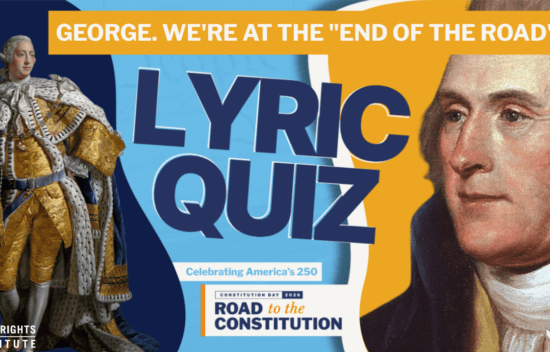
What were the grievances laid out in the Declaration of Independence? Help students define each grievance through modern song lyrics in our interactive quiz leading up to Constitution Day. This Constitution Day, BRI is highlighting the years between the signing of the Declaration of Independence in 1776 and the Constitution in 1787.