Lesson
Woodrow Wilson and the Treaty of Versailles
Guiding question
What impact did President Woodrow Wilson’s approach to “advice and consent of the Senate” have on the fate of the Treaty of Versailles?

Objectives:
Students will:
- Understand how the Constitution’s separation of powers influenced writing and debate on the Treaty of Versailles.
- Analyze constitutional principles in primary source documents.
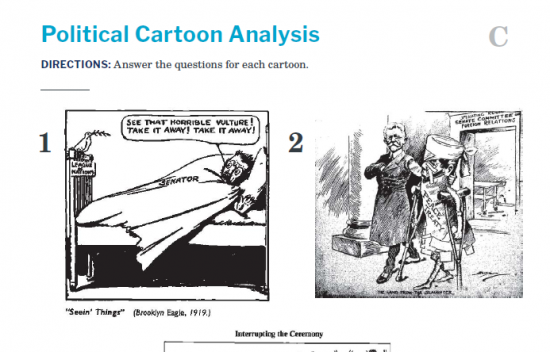
- Evaluate political cartoons about the Treaty of Versailles ratification debate.
- Assess Wilson’s approach to “advice and consent of the Senate.”
Materials
• Handout A: Woodrow Wilson, the Great War, and the Fourteen Points
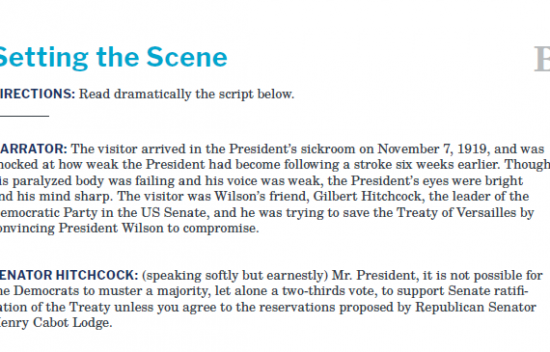
• Handout B: Setting the Scene
• Handout C: Political Cartoon Analysis
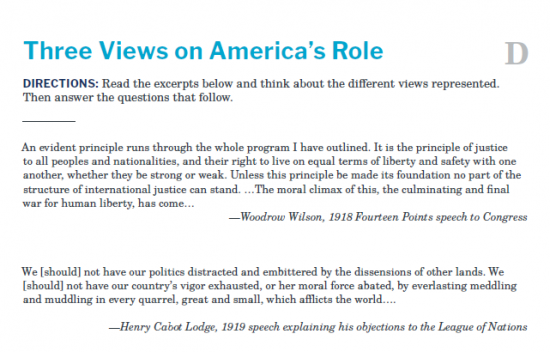
• Handout D: Three Views on America’s Role
Lesson Components

Lesson plan
More Information
To create a context for this lesson, students complete Constitutional Connection: The President as Chief Diplomat.
Standards
Related materials

How did Henry Cabot Lodge practice integrity during the debates regarding the Treaty of Versailles and the League of Nations following World War I?

What is the proper role of the United States in the world? How has it changed over time? In this BRIdge from the Past video, Mary explores “Interrupting the Ceremony” by John T. McCutcheon, a cartoon from 1918, to understand President Wilson's view on foreign entanglements, and how the Treaty of Versailles changed America's role on the world stage.