Lesson
The Structure of the National Government
Guiding question
What are the Constitutional powers of each of the three branches of government?

The Framers thought the best way to protect the rights of citizens would be through a government powerful enough to fulfill its constitutional obligations yet limited enough to prevent it from encroaching on the rights of individuals. A large national republic that divided power horizontally (within governments) and vertically (among different levels of government—local, state, and national) seemed the best way to achieve their goals.
Founding Principles
Guiding Questions
- What are the Constitutional powers of each of the three branches of government?
- To what extent do the respective powers of each branch limit the powers of the other branches?
Objectives
- Students will list and describe the major formal and informal powers of the three branches of government.
- Students will analyze the extent of executive power.
- Students will evaluate the value of checks and balances.
- Students will compare the roles of each house of Congress.
- Students will describe the process by which a bill becomes a law.
- Students will explain how the courts check the other branches of government.
Materials
Lesson Components
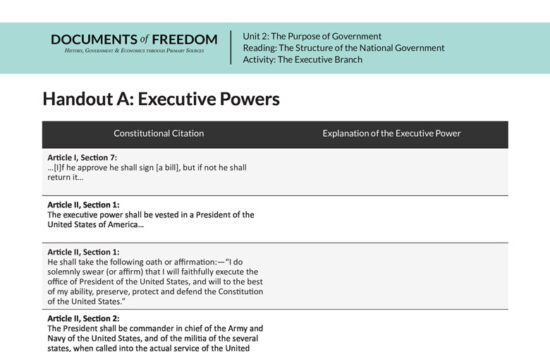
ActivityHandout A: Executive Powers

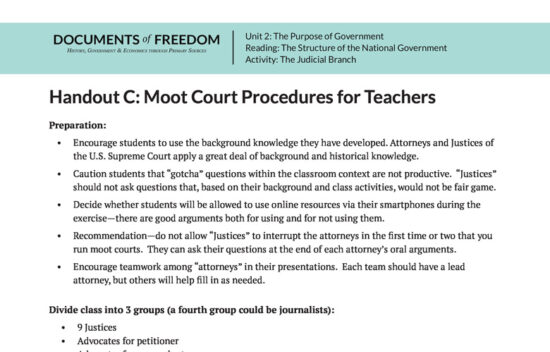
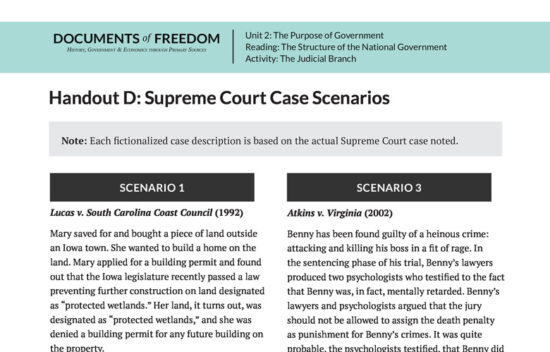
EssayEssay: The Structure of the National Government
The Framers thought the best way to protect the rights of citizens would be through a government powerful enough to fulfill its constitutional obligations yet limited enough to prevent it from encroaching on the rights of individuals. A large national republic that divided power horizontally (within governments) and vertically (among different levels of government—local, state, and national) seemed the best way to achieve their goals.
Lesson plan
305 minClick a phase to open it
Key Terms
- republic
- Constitution
- Founders
- arbitrary
- Seventeenth Amendment