Lesson
The Origins of Our Commercial Republic
Guiding question
What is property?

The American Founders set out to establish a modern, liberal, commercial republic. Their political theory derived primarily from Enlightenment theories of social contract and natural rights, which stressed the value of economic progress. But their idea of a commercial republic did not abandon ancient concepts of republicanism, which emphasized the need for virtuous self-sacrifice for the common or public good. They believed that a free economy would promote the moral character needed for republican self-government, and that if people were going to govern themselves politically, they had to govern themselves in their families, churches, local communities and economic markets.
Guiding Questions
- What is property?
- How should property be protected?
- How did the Framers of the Constitution protect property rights and commerce?
- Why did the Framers include economic rights in the Constitution and Bill of Rights?
Objectives:
- Students will understand and explain the constitutional principles related to property, liberty, and self-government.
Materials
Educator Resources
Student Handouts
Lesson Components
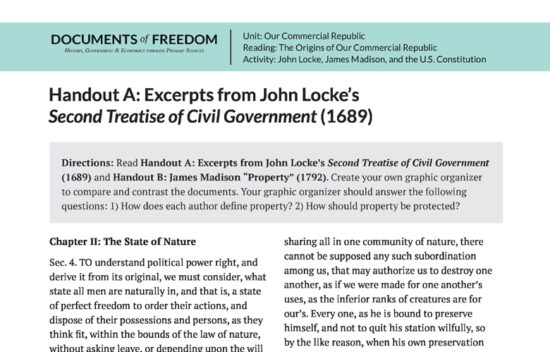
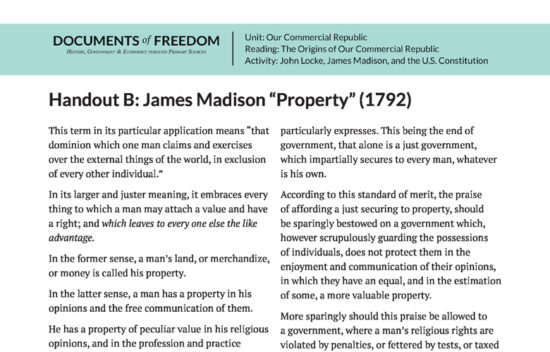
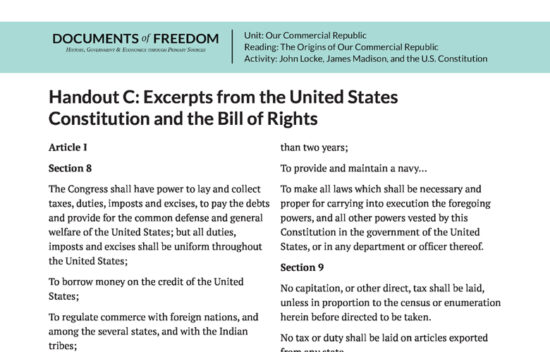
EssayEssay: The Origins of Our Commercial Republic
The American Founders set out to establish a modern, liberal, commercial republic. Their political theory derived primarily from Enlightenment theories of social contract and natural rights, which stressed the value of economic progress. But their idea of a commercial republic did not abandon ancient concepts of republicanism, which emphasized the need for virtuous self-sacrifice for the common or public good. They believed that a free economy would promote the moral character needed for republican self-government, and that if people were going to govern themselves politically, they had to govern themselves in their families, churches, local communities and economic markets.
Lesson plan
125 minClick a phase to open it
Key Terms
- checks and balances
- justice
- John Locke
- property
- separation of powers