Lesson
Grace Coolidge’s Public and Private Responsibility In Pursuit Lesson Plan
Founding Principles
Virtues
Guiding questions
Essential Questions
- How does the life of First Lady Grace Coolidge demonstrate that upholding personal and private responsibility can contribute to civic life?
Guiding Questions
- What personal responsibilities did Grace Coolidge have in her private life?
- As First Lady, what public responsibilities did Grace Coolidge have to her country?
- How does being responsible in your own life help contribute to a strong community?
Learning Objectives
Students will:
- Synthesize information about First Lady Grace Coolidge from a variety of different sources and media.
- Assess the role of the First Lady during the 1920s.
- Consider their own obligations to be responsible citizens of character in daily life.
Materials
Lesson resources
Examine images of Grace Coolidge with her family pets to understand her character and responsibility to others.
Analyze a poem written by Grace Coolidge commemorating the anniversary of her son's death.
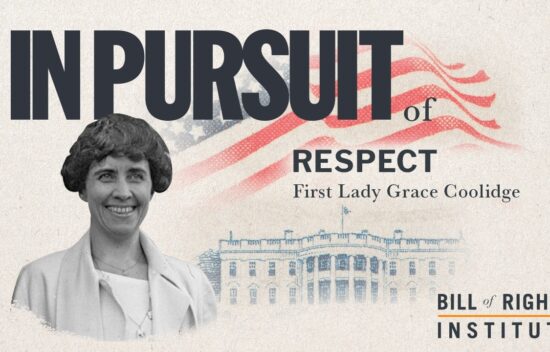
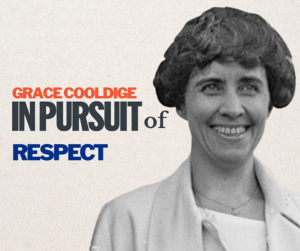
In this video, students learn how Grace Coolidge demonstrated respect through her public service, advocacy, and personal example. As First Lady, she welcomed visitors to the White House, championed educational opportunities, and promoted accessibility for people with disabilities. Her kindness, authenticity, and commitment to treating others with dignity helped her connect with Americans across the country. This video was based on an essay for In Pursuit written by Colleen Shogan. Check out this video and other free teaching resources on BRI or In Pursuit websites at billofrightsinstitute.org/bri-x-in-pursuit/ or inpursuit.org/educators. This video was made in conjunction with In Pursuit. In Pursuit is a landmark initiative of More Perfect, a bipartisan alliance of 44 Presidential Centers, National Archives Foundation, American Academy of Arts and Sciences, Karsh Institute for Democracy at the University of Virginia, and more than 100 organizations working together to protect and renew our democracy as we approach the 250th anniversary of the Declaration of Independence and beyond.
Lesson plan
More Information
Teacher/Facilitation Background
This video and lesson were developed in connection with the In Pursuit project: https://www.inpursuit.org/lessons. The essay for Grace Coolidge was written by historian Colleen Shogan. It can be read for additional teacher background on this topic, and it might be well-suited to classroom use for higher-level readers. The full essay is available here: https://www.inpursuit.org/lessons.
The essay provides an overview of Coolidge’s life – from her early days as a schoolteacher in New England to her public service as First Lady of the United States. The central lesson that Shogan’s essay imparts is: “Authenticity reminds us that being genuine in our actions and relationships is the foundation for public trust and a healthy democracy.”
This is one perspective on the life and work of Grace Coolidge. The video highlights another aspect of Coolidge’s legacy: the foundation of her actions in the practice of civic virtue, with a specific focus on the civic virtues of responsibility and respect. This lesson emphasizes how responsibility works alongside respect, showing how Grace Coolidge responded to personal and public challenges with care for others and a strong sense of duty. The Bill of Rights Institute defines these civic virtues in the following way:
- Responsibility: Acting on good judgment about what is right or wrong even when it is not popular. Individuals must take care of themselves, their families, and their fellow citizens/others in civil society and a republic and be vigilant to preserve their own liberty and the liberty of others.
- Respect: Regard for and defending the equal rights and inherent dignity of all human beings, including oneself.
Encourage your students to critically engage with the material in the video, the primary source, and other context you may be providing to come to their own conclusion and assessment.