Lesson · Elementary (BRI Jr)
Expansion for 3-5

About this lesson
How this lesson flows
Every stage is laid out below, so you can see the whole lesson at a glance. Nothing is hidden.
Guiding questions
- Lesson Plan PDF Essential Question How did the growth of the United States lead to challenges and opportunities for individuals?
- How did Manifest Destiny represent America’s desire to spread west?
- How does the Trail of Tears conflict with the Founding principles of the United States?
- What was the journey west like for settlers and Native Americans?
Learning Objectives
- I can write an opinion paragraph.
- I can identify, classify, and write fact and opinion sentences.
- I can analyze written primary sources and compare the opinions in them.
- I can investigate maps to determine historical locations of Native American tribes.
- I can write an op-ed piece to showcase my learning about opinion writing and westward expansion.
Content Objectives
- I can consider opposing opinions of the Indian Removal Act.
- I can articulate reasons Americans moved west.
- I can discuss the concepts of Westward Expansion and Manifest Destiny.
- I can describe the challenges of traveling along trails west.
- I can discuss the Trail of Tears and describe how it shows the United States has not always lived up the ideals of equality and respect.
- I can articulate my opinions about historical topics in writing.
Lesson components
Everything you need, in the version that fits your class.
 Activity3-5 Westward Expansion Fact vs. Opinion Card Sort
 An activity that asks students to sort primary source excerpts by fact and opinion.
Download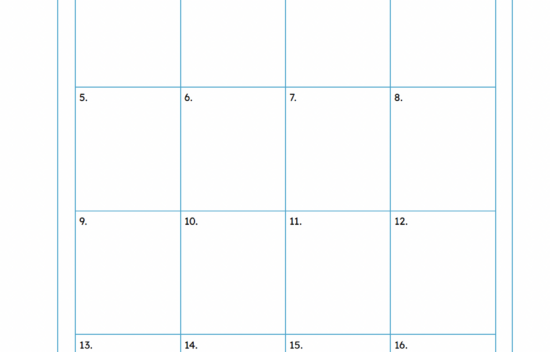 Activity3-5 Elementary Westward Expansion Task Card Answer Sheet
A handout to accompany the Westward Expansion Card Sorting Activity.
Download Activity3-5 Elementary Westward Expansion Reading
Text that explores Westward Expansion and Manifest Destiny.
Download Activity3-5 Elementary Trail of Tears Primary Sources
Four primary source resources from the Trail of Tears period.
Download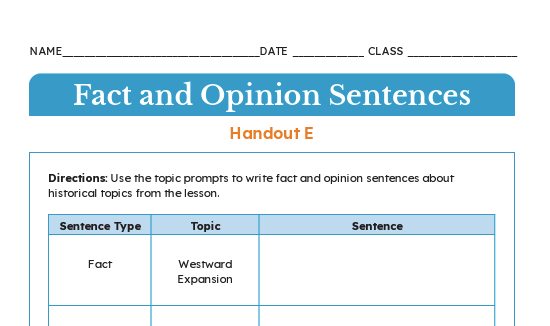 Activity3-5 Elementary Westward Expansion Fact vs. Opinion Sentences
Prompts that guide students to write fact and opinion sentences about historical topics from the lesson.
Download Activity3-5 Elementary Writing Activity: Opinion Paragraph
A guided writing activity that helps student develop a point, support it with facts and personal connections, and bring it to a conclusion.
Download Activity3-5 Westward Expansion Student-Self Assessment
A self-reflection activity that allows students to internalize their learning.
Download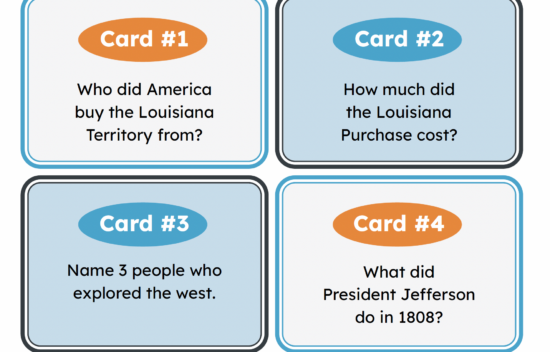 Activity3-5 Elementary Westward Expansion Task Cards
A card sorting activity to give students an understanding of major events during the 1800s that relate to Westward Expansion.
Download Activity3-5 Elementary Trails West Simulation Game
A dice game that allows students to understand the various groups that moved Westward and the choices they had to make along the way.
DownloadMaterials
Teacher Resources
- Vocabulary Cards
- Slide Deck
- Westward Expansion Task Cards
- Teacher Prep Resources
- Trails West Game Sheets
Student Resources
- Handout A: Vocabulary Word Study
- Handout B: Fact vs. Opinion Cart Sort Activity
- Handout C: Task Card Answer Sheet
- Handout D: Lesson Reading
- Handout E: Fact vs. Opinion Sentences
- Handout F: Primary Sources: Trail of Tears
- Handout G: Expanding on an Opinion
- Handout H: Student Self-Assessment
- Lesson Video
The lesson, step by step
Open each stage as you teach it, or expand them all to read straight through.
More Information
This lesson is designed around inquiry questions. There is one essential question, and several guiding questions around which the content is based. The lesson takes place in 5 stages:
- Anticipate- Students build background knowledge needed to be successful in the lesson.
- Engage- Students are ‘hooked” into the lesson.
- Explore- Students grapple with the main content of the unit (usually 2-3 parts).
- Assess- Students demonstrate their knowledge through a performance assessment.
- Reflect- Students reflect on their learning in the lesson.
- The sections below provide a brief overview of the unit’s structure. It offers a snapshot of the organization and flow of the entire unit.
The following detailed sections break down the five stages of the lesson. Each stage is discussed thoroughly with actionable steps to guide you through the teaching process effectively.