Lesson
Civic Virtue and Our Constitutional Republic
Guiding question
What is a virtue?

The United States Founders believed that certain civic virtues were required of citizens in order for the Constitution to work. Numerous primary sources—notably the Federalist Papers and the Autobiography of Ben Franklin—point us to the “Founders’ Virtues.” Before exploring the Documents of Freedom, it is important to understand civic virtue as an essential element of self-government.
Guiding Questions
- What is a virtue?
- Why focus on virtues and not “values” or “character”?
- How does virtue impact the function of government?
Objectives
- Students will define civic virtue.
- Students will learn and define some of the specific civic virtues that the United States’ Founders believe were required of citizens in order for the Constitution to function.
Materials
Educator Resources
Student Handouts
- Civic Virtue and Our Constitutional Republic Essay
- Handout A: Defining Civic Virtue
- Handout B: Clarifying Civic Virtue
- Handout C: Identifying and Defining Civic Virtues
- Handout D: George Washington and the Temple of Virtue
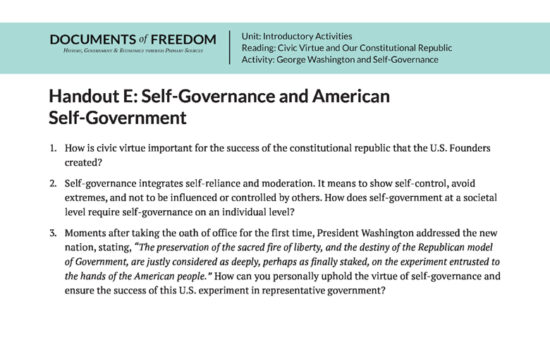
- Handout E: Self-Governance and American Self-Government
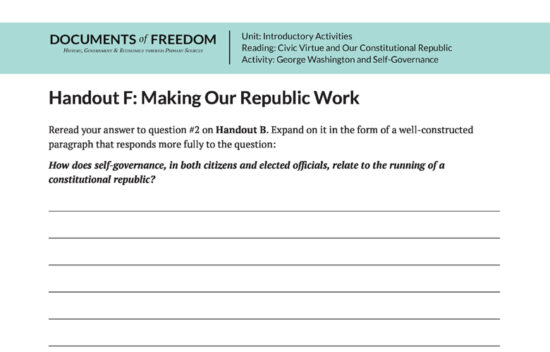
- Handout F: Making Our Republic Work
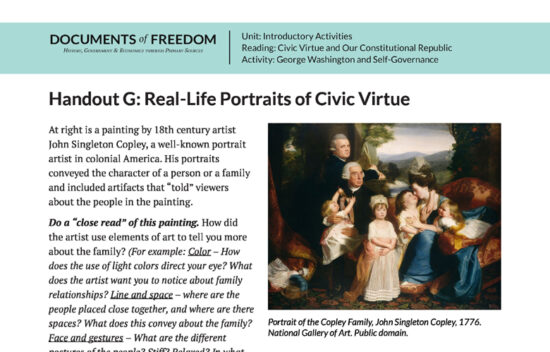
- Handout G: Real Life Portraits of Civic Virtue
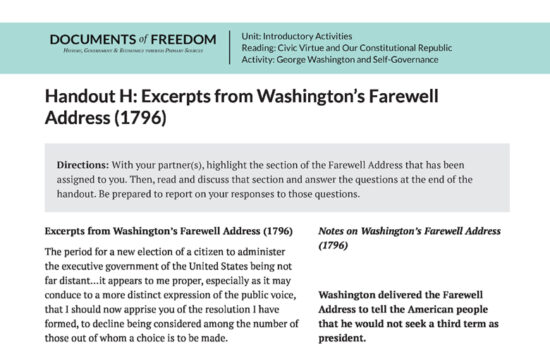
- Handout H: Excerpts from Washington’s Farewell
Lesson Components
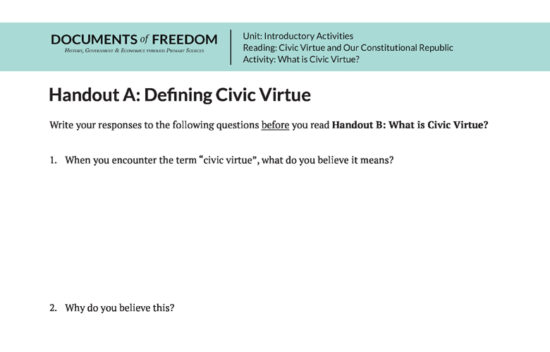
ActivityHandout A: Defining Civic Virtue
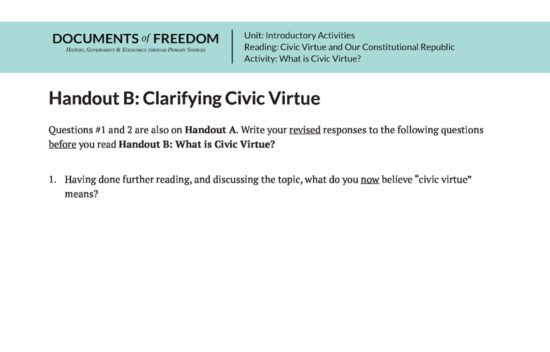
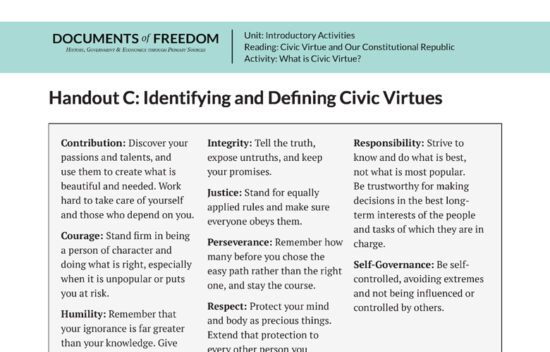
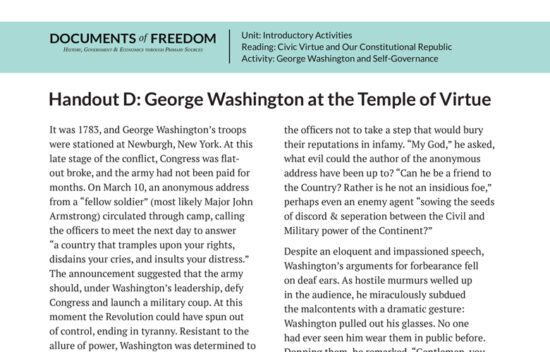
EssayEssay: Civic Virtue and Our Constitutional Republic
The United States Founders believed that certain civic virtues were required of citizens in order for the Constitution to work. Numerous primary sources—notably the Federalist Papers and the Autobiography of Ben Franklin—point us to the “Founders’ Virtues.” You will explore some of the following civic virtues as an integral part of Documents of Freedom.
Lesson plan
50 minClick a phase to open it
Key Terms
- Virtue
- Values
- Character
- Justice
- Self-Governance/Moderation