Video
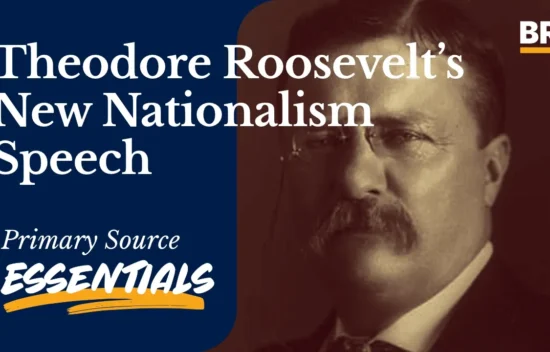
Theodore Roosevelt’s New Nationalism Speech | Primary Source Essentials
Watch
About this video
In this episode of Primary Source Essentials, examine Theodore Roosevelt’s 1910 “New Nationalism” speech and explore how his progressive philosophy proposed to expand the scale and scope of the national government. Delivered in Osawatomie, Kansas, as Roosevelt reentered national politics, the speech argued that big business and political parties had corrupted government and created special interests working against the will of the people.
This episode covers the historical context behind the speech, Roosevelt’s view of the executive branch as steward of the public welfare, and how his vision of positive rights guaranteed by government reshaped the relationship between individual rights and the national government
0:00 Welcome to Primary Source Essentials. In this episode, we are going to briefly examine Franklin Roosevelt’s 1944 state of the Union address and how he attempted to redefine rights and government responsibility. In 1944, President Roosevelt was serving his third term as president and would go on to be reelected for a fourth term later that year.
0:24 For 12 years, FDR had overseen the New Deal, which was a massive expansion of the scale and scope of the federal government to deal with the problem of the Great Depression. While World War Two and a coalition of opposition from Republicans and Southern Democrats had quelled further domestic reform during the war.
0:45 FDR envisioned a new reform agenda after the war, as the tide of the war was turning in favor of the allies. FDR looked ahead and proposed redefining the nature of rights and government obligations. In his 1944 state of the Union, also known as the second Bill of rights speech, FDR laid out his vision.
1:09 He made the claim that necessities men are not free, and that economic rights were self-evident. His new list of rights included a job with enough pay for adequate food and recreation, the right to adequate medical care, the right to a decent home, and adequate protection
1:30 from economic fears and old age and unemployment. Among several others. Whereas the rights of the founding were negative, meaning that no 1st May interfere with them. FDR, his list of rights was positive, meaning that the government must provide them. However vaguely defined, FDR won an unprecedented
1:53 fourth term but died in office in April 1945. His successors were able to get much of his agenda passed into law. Though his understanding of positive economic rights is still hotly debated today. Thanks for watching and check out the other videos in Primary Source Essentials.
Standards
Related Resources

In Roosevelt’s speech at a park dedication, he calls attention to the changing nation and the need for every individual to be able to put forth their best. He explores the government's interest in the welfare of the many, not just the minority of wealthy.

The text pf Theodore Roosevelt's "New Nationalism" speech from 1910 and questions to guide students in examining how it influenced American political thought.