Video
Reading Christopher Columbus’s New World Report to Ferdinand and Isabella in Spain

Watch
Founding Principles
Virtues
About this video
What do we truly mean when we refer to America as the New World? Join Kirk in this episode of Primary Source Close Reads as he explores Christopher Columbus’s letter to King Ferdinand and Queen Isabella of Spain after first landing in the Americas. He’ll examine excerpts to understand what “new” meant to both Columbus and the Native Americans that he encountered. What does the language of this letter reveal about Columbus’ thought process when first arriving in the Americas? Why is it important to read and discuss documents to develop historical reasoning skills?
0:04 The Americas are often called the New World. But it’s worth asking, what do we really mean when we say the word new? You can imagine a new school, a new class, perhaps even a new city. But what does new new mean in those cases? Is it a brand new building? Maybe. Is it new people? Well, in the sense that you may be just meeting them, probably.
0:26 Are you using new material and reading new books? Again, maybe. Or maybe it’s an old building with students you’ve known for years and you’re still using that backpack that’s barely holding together, and the books you’re handed are tattered and falling apart. But it’s still a new school year. It is new because it marks a beginning, a significant change, a new chapter.
0:46 So what does this have to do with the New World? Well, let’s try to answer that question by looking at a familiar figure Christopher Columbus. In August of 1492, Christopher Columbus set out on an expedition that searching for a shortcut to the continent of Asia. Trade and travel had been increasing in Europe, and competition and access to foreign markets was high.
1:06 After a short stay in the Canary Islands, Columbus and the three ships of his expedition pointed themselves westward and proceeded out into the vastness of the Atlantic Ocean. After more than 30 days of seeing nothing but turbulent blue waters, land was sighted. But it was not Asia, as Columbus had hoped for and even believed he had found, but a continent. A new world, at least to him, because looking out from the shore were
1:30 the native peoples of what is today the Bahamas. For the Lucayan people, part of the larger Taíno community living on the islands, the world was not new. It was their home. They had inhabited these islands for hundreds of years, living off the fruits of the ocean and defending their territory from their neighbors. But as they encountered the Europeans that landed on their shores, whether they knew it or not, their world had changed.
1:52 It was becoming a new world, one that would remake both native and European people and cultures in the following centuries. Historians must learn to spot varying perspectives on historical moments and in historical texts because it is only looking at these various perspectives that we can build an understanding of how history played out. In this case, that history is the remaking of the Western Hemisphere.
2:15 Through this study, historians can begin to understand what was new about the New World. With this context in mind, let’s take a look at a letter from Christopher Columbus and see what we can learn. So, looking at the exerpts, I have an image here of the letter itself or part of the letter. But let’s start at the beginning, like we usually do. I have determined to write you this letter to inform you of everything that has been
2:37 done and discovered in this voyage of mine. So what stands out to us? Well, again, it’s important to keep in mind we’re looking at this from Columbus’s perspective. He’s the one that’s reading this. And so when he’s talking about this discovery and we’re thinking about the New World he is seeing it from that European perspective that he discovered a new place. Of course, there are individuals living there.
2:59 There are things that are already happening. There’s culture, there’s people. But for him, it was new. That reveals something about the mindset of the Europeans who are going into this in seeing this New World that they’re seeing as a place where they are discovering it. It’s sort of in its native condition and it’s there for them to discover and to trade with and to profit from.
3:19 So now we look at the next paragraph, the letter on the 33rd day after leaving Cadiz, Cadiz is a city in Spain. I came into the Indian Sea where I discovered many islands inhabited by numerous people. I took possession of all of them for our most fortunate king by making public proclamation and unfurling his standard. No one making any resistance. All right, so what stands out to us
3:40 in this first portion here, I came into the Indian Sea. So here we’re already seeing he thinks that he has made it all the way to the Indian subcontinent where he was trying to get to. He’s writing here as though that was the place that he was heading to. What else stands out from this first section? I took possession. Right?
4:00 So this is sort of this idea of the right of discovery that he claimed the lands under the authority of the king and queen of Spain that he came in. And he notes here that no one made any resistance. The native peoples of the islands did not resist him in a way that was formidable to thwart him from claiming these for his own. And so he here says he is making claims to them.
4:22 He is now putting them under the authority of the Spanish Crown and considering them to be Spanish territories. Again, we’re thinking about this. You can see where Columbus is looking at that from his perspective. And it says something about the historical actor of Christmas Columbus how he’s seeing this moment, how he’s picturing it. And again, what is new about this New World?
4:42 The old world, of course. Is Europe, right? That is the established area where there’s already authority laid out, the lines were already drawn. There are territories there and different individuals here in this New World. He is taking possession. So he goes on to say that as well as the other in its neighborhood, it is exceedingly fertile.
5:04 There’s numerous harbors on all sides very safe and wide above comparison with any I’ve ever seen. And though it flow many very through it flow many very broad and health giving rivers. And there are in it numerous very lofty mountains. Right? So this section stood out to me through it flow very broad and health giving rivers. It almost sounds like he’s writing a travel log of some sort.
5:27 Right. He’s describing it as flowers for a very narrative language. Why might that be? Well, a number of reasons. It could be because that was how he observed it. It’s how he looks at the world, how he understands it and processes these things. It could also because he wants it to be sort of an attractive place for future investment or for other individuals to come and to follow him to that territory, to settle on it and to make of it when he wants to.
5:50 He’s also, again reporting back to his boss, right. He wants to have found something spectacular and useful. So he’s using this language to sort of draw that out, these health giving rivers. Right. He wants us to imagine it’s this new place, and now they can make something of it.
6:11 And he wants to capture the attention of all who are reading this document, which, of course, it was intended for the King and Queen, but it’s also in our possession for a reason. It would have been published widely for many people to read. And so they’re going to see this and they’re going to be inspired by what seemed to be these beautiful, bountiful new lands. Then he goes on in the letter, he keeps going.
6:31 In this island, which I have said before was called Hispania, there are very lofty and beautiful mountains, great farms, groves and fields, most fertile both for cultivation and pastorage and well adapted for constructing buildings. The convenience of the harbors in this island and the excellence of the rivers in the volume in salubrity surpass human belief.
6:53 Right. So again here, what are we seeing? Well, he’s again talking about there are lofty, very lofty and beautiful mountains, right. This idea that they are standing out and that they are really there for the Spanish or whoever is going to go there to be able to take advantage of it and build and there’s lots of opportunity, lots of possibility in this new world.
7:17 Now, he’s going to talk about the inhabitants. The inhabitants are all, as I said before, unprovided with any sort of iron, and they are destitute of arms which are entirely unknown to them and for which they are not adapted, not on account of any bodily deformity, for they are well made, but because they are timid and full of terror.
7:37 So here again, it’s important, as a historian to be thinking about, OK, how is Columbus looking at these individuals that he is coming into contact with and what does that mean for how Europeans are looking at the New World? And what is that going to mean for the history of this place? Right. So you can see by his description of the inhabitants that he is seeing them in a particular way.
7:58 Specifically, they’re timidity. Right. And Columbus goes on to enslave many of these natives that were here on the islands and take them back to Spain. And he sees them as an opportunity to enslave these individuals because he thinks of them in this context. Again, it’s a horrific thing to talk about and it’s horrible.
8:19 But understanding this context helps to understand how this history played out. And it’s important for us to read these texts and to see how it is that this interaction was set up and then what followed from it. And so here we can see Columbus writing again to the king and queen of Spain, talking about how he’s perceiving these native peoples and already putting them
8:40 sort of in a category below himself, which then is going to mean that there’s going to be some real true atrocities that result from this kind of interaction, that kind of understanding that took place between those peoples. I gave them many beautiful and pleasing things which I brought with me for no return whatever, in order to win their affection that they might become Christians and inclined to love our king and queen
9:03 and princess and all the people of Spain, and that they might be eager to search for and gather and give to us what they abounded and what we greatly need. So here he’s saying, he’s thinking about this in the context again of what it is that the Europeans are going to need when they come, how it is that they’re placing them sort of within their own social structure and social understanding.
9:24 And the other things that stand out to me here are that they might become good Christians, right? They might become Christians. So this idea of faith, this element of faith, which was extraordinarily present in Europe during this period, wars over religion, were not infrequent faith was at the center of court life in many
9:45 aspects and in many of the conflicts that were going on in Europe. And here you see that faith being brought by Columbus to this new world, seeing this opportunity for converts would have been something significant for him and for his men. And so there is something there, again, to see how faith is shaping the interactions that these Europeans are having with the native peoples,
10:06 and also that these people are then going to help provide for the king and queen. So by being under their authority, they are now going to give back. And the assumption is that in that interaction that Columbus is going to be helped and that together they are going to live under this political community that is the authority of the king and queen in Spain.
10:27 And that maintenance of that authority is something that’s important, right, for the king and queen, that he is there advancing their authority, representing it, and that these individuals are now going to be under that authority is of significance. So now, thinking back to our big question, what’s new about this new world? And really what things are going to make it new is probably a better way to think about it.
10:48 So we could see from a few different aspects here that increasing migration from people in Europe, right, that there’s this language, this travel language is trying to entice more people to come. The more people that come, the more of an impact they’re going to have in the Western Hemisphere. So that’s going to make it new. European government. So we’re talking about sort of the King and Queen of Spain. We’re already thinking about how
11:09 that governing structure is going to come over the Western Hemisphere and it’s going to be deployed on the continents of North and South America, right? And this is going to shape the future of these territories. Spain and France and England are going to bring over colonists and they’re going to set up colonies in the New World. That’s going to have a dramatic effect on how the history of the Western Hemisphere plays out.
11:31 And so we’re already seeing elements of that in references to the King and Queen of Spain. European culture too. So we’re talking about religious belief. That belief is going to shape the way that these individuals are interacting with one another. It’s going to shape their ideological positions. It’s going to shape how they understand the relationship between one another. And that’s going to be a significant factor.
11:51 And then, of course, trade and commerce. And here we can think back to that. The healthful rivers and the farms and the places for building buildings, all of that is alluding to trade and commerce, which was originally why Columbus was trying to get to Asia by sailing west. Here we’re seeing that same kind of thing playing out that the opportunity for commerce, the opportunity for trade is something that’s going to motivate more
12:15 Europeans to come to the Western Hemisphere. It’s going to motivate more action and interaction amongst the Europeans. And it’s going to have a tremendous effect on the native peoples that are living there. Because all of these things the increasing migration, the European governance, European culture, the trade and commerce and competition over trade and commerce, all of that is going to be played out in these new lands where these native people are living.
12:37 And so that’s going to dramatically change the way that they’re interacting with each other, the way that they’re interacting with the Europeans. And this is going to create this entirely new dynamic that it’s going to forever change the way that these lands are lived in and governed, often in tragic circumstances, in horrific ways. And this is starting to get to the
12:58 Columbian Exchange idea, which we have a lesson on the Bill of Rights Institute website. We’ll have it linked in the description. But seeing how those interactions begin to play out is what really begins to shape this new world. And so all of these forces combined with native cultures and beliefs and interests to create this new world. And with the passing of centuries. New waves of migrants, enslaved Africans and settlers,
13:21 fortune seekers and explorers each bring their own cultural elements with them. And all of that slowly combines to shape the western hemisphere as it exists today, increasing exchange with the west. Similarly, we made the old world of Europe, Africa and Asia. And so slowly these interactions help shape the history of the world.
13:41 Thank you so much for joining me. We’ll see you next time. Oh no, the video is over. Oh, come on, don’t be so sad. Don’t you know that the Bill of Rights Institute has tons of videos on American history, government, and civics? From primary source document breakdowns to historical image analysis? Whether you’re studying for a test or just interested in learning more, they’ve got something for you.
14:03 Oh, well, in that case, I better check out this video. And don’t forget to subscribe so you aren’t so sad again.
Standards
Related Resources

Use this primary source text to explore key historical events.

How did Christopher Columbus’ display diligence while voyaing across the Atlantic?
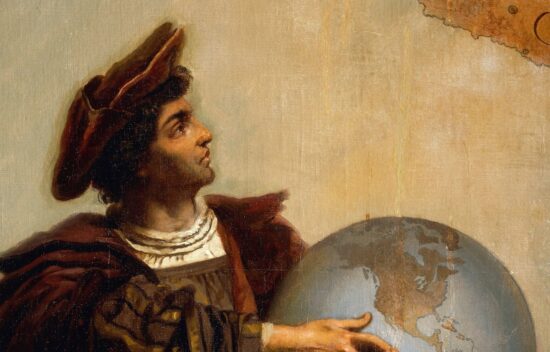
A prerequisite to this activity is the completion of the Columbus's Letter to Ferdinand and Isabella of Spain, 1494 Primary Source activity, which should immediately precede this lesson. This Lesson should be implemented after students have explored the motivations for European exploration and the consequences of the Columbian Exchange, through resources such as the First Contacts Narrative, the Columbian Exchange Narrative, and the Should We Remember Christopher Columbus as a Conqueror or Explorer? Point-Counterpoint. This Lesson should be followed by the Cortes's Account of Tenochtitlan Primary Source activity, the Las Casas on the Destruction of the Indies Primary Source activity, and/or the Life in the Spanish Colonies Narrative.
More from this Category
Has the American nation lived up to the ideals of its experiment in liberty? Invite your students to explore the rich tapestry of American history and actively participate in the ongoing experiment that defines our nation's identity. Help your students gain insights into the nature of the American experiment - the ongoing quest for a more perfect union.