Video
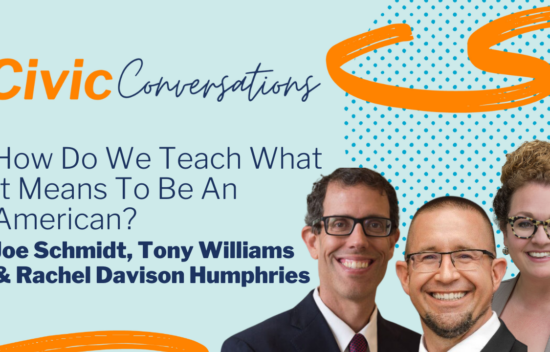
How Do We Teach What It Means To Be an American? | Civic Conversations w/ BRI
Watch
About this video
What are the constitutional powers and limits of the American presidency? In this episode of Scholar Talks, Lara Brown, professor and the director of the Graduate School of Political Management (GSPM) at the George Washington University, joins BRI Senior Teaching Fellow Tony Williams to talk about her book “Amateur Hour: Presidential Character and the Question of Leadership.” Together, they discuss important presidential character traits, notable and poor examples of these traits in contemporary presidencies, and how these traits can work to support constitutional principles and bring prestige and honor to the office of president.
0:03 hello and welcome uh everyone coming into this very special civic conversation um this is focusing on the question how do we teach what it means to be american today my name is rachel davis and humphreys i am director of outreach at the bill of rights institute and i’m joined here today with two of my fantastic colleagues uh mr joe schmidt joe why don’t you introduce yourself hello my name is joe schmidt i am the director of programs here at the bill of rights institute and joe i’m so excited as my co-host today we’ve been collaborating for the entire two months that he’s been working at the bill of rights institute joe just joined our team and we’re very excited to have him in his debut webinar with the bill of rights institute you can go find him on a lot of different platforms
0:49 and engage with us across all of the different social medias um including for this webinar so please we have q a open you can raise your hand introduce yourself in the chat we’d love to hear who’s here um and today we’re joined in his capacity as our resident scholar one mr tony williams tony welcome well thank you we’ve been collaborating for four years now i think ma six tony six oh my gosh time passes well uh it was coded it was a different time yeah yeah well great to be on and uh yeah i know i’m a senior fellow here at bri and uh happy to join you to discuss this really important new curriculum we’re launching so very excited well welcome to you and welcome to everyone joining us um again if you want
1:34 to kind of introduce yourself in the chat we’d love to know who’s here and if you have any questions you can either type them into the chat or put them in the q a at the bottom so the reason we’re here um is that the bill of rights institute recently republished re-um republished our being an american curriculum which was written in the early days of the bill of rights institute about uh about 12 years ago 14 years ago i believe was our first publication of it and when we published it we designed the being an american curriculum to really be a comprehensive introductory civics curriculum written at about an eighth grade reading level active pedagogies and engaged and at the same time we also published a spanish-language version of the resource it wasn’t scaffolded for
2:20 language learners but it was a spanish language version what we’ve now done is taken this resource which a lot has changed in america and how we teach history in the past 15 years so we’ve taken the resource and we’ve updated and that’s been under the direction of tony and the content team here at the bill of rights institute so we wanted to take a few minutes to ask this really important question of how do we teach what it means to being american today how do we do it well together and how can the bill of rights institute support you as you have those conversations among your classrooms and with your students uh bri is here to help we are having we are providing resources for you all the time that touch on these really important civic conversations that you’re having in your classroom we recently published
3:05 a landmark text called life liberty and the pursuit of happiness which is 400 different components across all of us history and and most of government standards you can find that on our website life liberty the pursuit of happiness it has a wealth of resources from across different perspectives over 90 scholars contributed to it uh tony was a lead lead author on that project as well and then most recently just so you know in case you’re not aware in february of this year we published plainest demands of justice documents for dialogue in the african-american experience which is a primary source-based uh look at the african american experience through like i said over 90 different uh primary sources from black voices or the conversation that was happening with
3:51 black voices throughout throughout american history so bri we’re having these conversations we’re helping you have these conversations um and we wanted to start off uh today with asking tony kind of what the what the ideas were behind um our our our our update of this resource and then joe and i will joe and tony and i will all talk a little bit about how to have these conversations uh in the classroom and again we want to hear from you so if you have any questions as we go through the uh the the conversation please type them into the chat or share them in the in the q a so first and foremost tony or actually i think joe go go ahead i think you’re you’re gonna you’re gonna
4:36 take it away with the questions yeah thank you rachel and think welcome everybody um tony rachel did a great job laying out like all the work bri has been doing right and there’s a lot of work in there so my question for you is around with all the work we’re doing why uh being an american why the update now what inspired uh the movement to update it um and again that’s that’s a lot of time and energy so why this why now all right well we are being an american always was a very vibrant resource for teachers and students and it’s focused on the declaration of independence the constitution and the bill of rights kind of these founding documents and
5:22 founding ideals and civic virtues that try to help us answer in the classrooms what does it mean to be an american now as we all know americans are are pretty divided today right over a lot of different things and we can talk about that um and i think one of the important reasons philosophically of of redoing this curriculum to to update it and and again sort of bring it into a little bit more modern period uh from 12 years ago is to uh provide the means by which again have those conversations about what it means to be an american this uh is sometimes up for debate and there’s kind of
6:09 contested uh issues that that divide us but we want to look at those basic things that unite us as americans that can bring us together that can help us restore those those civil conversations and sort of help us get back to having that common identity whatever our sort of differences over politics and culture are and those i mean okay let’s talk a little bit about those kind of guiding ideas so the the course is 11 lessons um they’re designed to be very modular they’re designed so that you don’t have to use the whole resource in your classroom you can pick and choose even the different activities in the lessons and what we did with the update and i think we’ll talk a little bit about that is make sure that we were using um
6:55 scaffolding for for learning differences and learning learning needs that was part of the update was to help help really understand these resources tony is there a particular resource that you think in the in there that um we should highlight right now so we have american principles and virtues is one lesson civic virtues is another then we go through again kind of the american history greatest hits right enlightenment and declaration of independence and and really looking at the nature of equality in the in the declaration we actually have three different lessons on the declaration the constitution the bill of rights the supreme court american heroes past and present and the capstone project about being an american but for
7:41 right now you know things are happening in the certain court what would you say would be one of the most important lessons that that came about through the redesign right well all those are important right it is you’re out there like wow how am i supposed to uh distinguish me because they’re all important you know i think that the declaration really kind of pops out i think as as really illuminating those basic ideals right that basic yearning for self-government uh and those those rights of liberty uh and equality and and having a just political order you know i think we all have a common uh yearning for these things and and again i think that by discussing these
8:26 principles and and ideals it can help restore civility right because we’ll have common ground for conversations right we may do forever politics uh one side or the other over policies uh but we’ll have that common ground and and as we start to dialogue about these things i think it’ll be easier for us to understand the other person’s point of view uh if we start with that shared set of ideals and principles well tony i i don’t think it was fair that rachel put you on the spot because there’s so much in there so i agree like picking picking the most important pick and favorite that’s tough so i’ll give you a different one that might be a tough question though so all of those things are really important to
9:12 um have a conversation about even when it’s a contentious tough conversation why do we have to have these conversations all of the ones you just listed why is it essential that we are having these conversations about what it means to be an american now right well i i think it’s because as i alluded to earlier you know i think we’re we are really deeply divided right we even see it just recently uh you know whether elon musk is buying twitter or this release of the uh supreme court uh abortion case uh uh draft decision um you know we see it right down to as i like to say our cars our coffee and our burritos i mean and the companies and so forth and what was happening to disney
9:58 in florida i mean there’s just a lot of contentious issues and the twitter mobs kind of go crazy uh and you know i think a lot of ordinary americans uh inside the classroom and outside the classroom are just kind of you know stuck in between you know and and they hear all these contentious voices and i i think that what we’re trying to offer here is [Music] is a way of of looking at what it means to be an american to restore civility to the conversation to restore maybe a little bit of sanity to maybe see some more common ground than we are right now because i don’t think we are listening to the other person we don’t see that common ground
10:44 as americans but if we can see that we have a common spirit a common set of ideals and and a common purpose right in in governing ourselves and in in the common good uh you know related to all these founded upon these principles and virtues uh i think we can have a healthier civil dialogue and that’s what we’re trying to do is promote a healthier civil dialogue inside the classroom and hopefully broadly outside the classroom as well so that our policy debates our our culture wars can can be tamped down a little bit uh and we can just all see that we’re all trying to achieve the common good however we may have slightly different
11:29 ways to get there so i and i think that that’s really comes out in the resource right so as i said there are three different lessons on kind of the declaration coming at the promises of that declaration in a number of different ways and in the in the lesson on the fragment on the constitution in the union in the uh in lesson six which is an apple of gold in a picture of silver you have a we have an excerpt from lincoln where he says without the constitution in the union we could not have attained our great prosperity there is something back of these entwining itself more closely around the human heart and that something is the principle of liberty to all the principle that clears the path for
12:15 all gives hope to all and by consequence enterprise and industry to all and i honestly i had never i have never read i have to say i never read that excerpt from lincoln and as i was going through the resources in this redesign i was struck by the power of the unifying idea that liberty for all being a foundational principle however well or not well we’ve lived up to that ideal really is a is a central theme to the lesson so we have uh we have there are a bunch of new components that were in the resource can you talk a little bit about about
13:01 the thinking behind these components and how they were they were designed to facilitate these these essential conversations right so uh so we we pretty much totally redesigned it and and we have uh introductory essays really written at that middle to high school level uh that we uh tried to um make it very readable these some somewhat complex ideas of the enlightenment and and self-government and these constitutional principles but then also to have some really vibrant uh activities uh and lessons uh for the students and really to uh we not only have the three founding documents but then also the civic virtues which i think really can
13:49 help the students put themselves in the place of these well-known and also lesser-known individuals to see how they practice prudence how they practice moderation how did how did they demonstrate courage and resilience all of these civic virtues that promote a healthy civil society uh you know how can can they emulate them and then of course we have a the capstone project at the end so we really try to develop it along the way to have a lot of different components that teachers can go in and use however they see best fit in the classroom all right tony i need to know i’m sorry i let you off the hook the first time i’ll ask i was listening to you talk about all those pieces that we put in right and
14:35 the excitement there is obvious you’re very happy with that work you love the work rachel asked for the most important i will ask you what was your favorite you tony the scholar in doing this work we heard that great quote from lincoln that rachel gave us what was your favorite piece in there to work on and why did this catch your attention and maybe why even should teachers tune in and take a look to that one as well yeah again it’s really hard to narrow it down but you know i think that i i really enjoy it i i’m gonna do two i’m gonna fudge a little bit and do two real quick uh one is on how james madison created the bill of rights you know we have an essay and lesson on that and and really looking at madison’s dedication
15:22 to preserving the people’s liberties uh in that formal uh those formal amendments which became the bill of rights in the first congress when uh you know they had made a sacred promise in these ratifying conventions to pass a bill of rights when they got to the first congress there was a lot of other business going on that they wanted to just forget about it but madison wanted the people the american people to have that allegiance to the new government to fulfill their promises and also to protect their rights and he thought it was real would really promote amity and friendship and and moderation uh and promote sort of constitutionalism uh that affection for constitutionalism
16:09 among the american people so working on that was great and really working on all these uh civic virtues and and how uh individuals um demonstrated them in their own lives uh those sort of character sketches character cards are just so fascinating because they inspire me and and i think they’ll really inspire the students as well how uh you know elizabeth eckford and and the little rock nine going to school uh whether it’s george marshall or dwight eisenhower uh during world war ii uh john quincy adams fighting against the gag rule on anti-slavery petitions in the 1830s and 40s and and a number of others that could uh the the uh
16:56 win talkers in in in world war ii i mean all these are very very inspirational stories uh and so working on that was personally inspiring for me even while i was writing them was it tougher to answer favorite or most important uh both because again i think it’s just such a vibrant uh resource that i think everything in here is really important uh for students and teachers but then also uh also very interesting and and compelling as well um and i think as you as you dive in one of the things so i’ve been adding links in our chat as we’ve been going just to make sure that i’m touching on all the all the resources tony is is linking to um but actually one of the one of the
17:45 kind of most robust improvements that i would say we made with this resource is really the layout as we did the content update we also did a a learning design update on the resource so as as you look through the resource you can you can see we have guiding questions that have i can statements so so students can adjust their can um assess their own understanding so emily you mentioned that your high school sped teacher i want to tell you that this resource i think is a really great resource for students with learning differences because we have so much scaffolding built in so if you look i’m just going to drop even the link just to the pdf version in the chat in the chat but if you look at this pdf you can see
18:32 there’s the guiding question the introduction is very short the essential vocabulary oh go ahead and jump in really quick rachel you um you’ve been doing for hosts and panelists they haven’t been able to see any of the links i messed up i messed up thanks joe as i’m running through it i got all read i’m sorry um as i’m running through it jody my copying those and putting them in the in the regular chat um so you have the introduction you have this essential vocabulary which is very clear and cogent explorations with some questions about the uh the the essay that they just read or the short paragraphs that they just read and then when you get to the excerpts the they’re very clean on the
19:18 page so they’re chunked already so you can assign them independently they have note sections on the on the side and then there are comprehension questions right below and all of these are fillable pdfs so one of the things that we did throughout again the redesign of this resource was really making sure um that we are able to um that we’re able to uh serve the needs of lots of different learners with these most important ideas about what it means to be an american tony was there anything in that process that helped guide your thinking around how we’re having these conversations and that kind of redesign or scaffolding process that kind of you have thought about differently or
20:04 improved in your own kind of learning design as you went through the process of working on this project yeah i think so because what it did is it forced me and the other team members to be you know very concise in our thinking and and really take some of these complex ideas about the declaration and lockheed ideas and the enlightenment and ancient thought and the the declaration constitution bill of rights you know and we’re pulling in resources from james madison and you know the federalists and lincoln and frederick douglass and and all these great thinkers about you know the the american system and and it forces to be very concise and and select those primary sources which
20:50 really showed the essence of these ideals and to write very cogent very concise essays and so so all of our thinking was really geared towards students turns to saying well you know they might not read all 85 federal papers but but here are some of the essentials that we can help distill for them here are some of the essentials that will foster a beneficial conversation and and is is sort of a a chunk or an amount that that they could handle uh and and that would be enough for them to grapple with and so those conversations we built the resource to have them but
21:36 it’s it’s a different task to take those and have them in the classroom especially with the way that things are right now for so many of our students and our educators for our entire country um to try and have difficult conversations or conversations that you know have any contention within the idea any tension within the ideas is hard for teachers to do luckily we have a ringer at the bill of rights institute um joe just published a whole book on civil conversations um so i wanted to give you a few moments joe to talk about the conversations and the importance of having them in their community
22:22 well i always like to say when people are here starting to even just listen to talking about these conversations but that’s really such an important first step is acknowledging uh that they need to have them because as rachel’s alluding to there is a lot of tension politically there’s different bills being passed um in different states you have to you know think about who your students are who your families are where you’re living what is your own personal beliefs um you know what does that mean and it is tough and so we talk about like it really takes a little bit of courage on the educators part so thank you for being here to uh engage in this conversation to just even start down this path about like oh i might want to have a conversation
23:07 because it does matter it really does matter in a bigger sense not only just for you and for our students but i think just in our communities overall and that’s our school community the climate um that our students are walking or you know from classroom to classroom each and every day when they leave the walls of our schools and go out into our communities there’s that that public pressure and then the world you know they’re they’re living in outside of the school day and we’ll eventually graduate into and live into and there’s so much out there that we really do need to take some of this on because there isn’t a lot of places anymore where we have that shared space where you know all these different opinions do come to the table in a place um you know we’re
23:54 self-selecting so much in terms of who we hang out with on social media and in real life and different groups and news and stuff like that um so it really is this really important uh responsibility for educators now the great thing about being an american is that tackle some of the things we would advise for for teachers to do is make sure we have a shared understanding of what we’re talking about and so being an american provides you some of those ideas what are we actually talking about and you hear tony talk about you know some of those character cards and those different pieces it allows you to talk about those things here’s what it is and kind of i don’t want to say a controlled situation but a shared situation of oh
24:39 here’s what we’re talking about here’s the topic at hand and then it aligns in to why we’re doing this right it’s a curriculum piece it’s meant with certain outcomes there’s skills to be in practice in there we’re looking at primary sources we’re engaging in inquiry and that’s what we want to ground all this work in because that’s that’s the place where the educators role does come in it’s to build an understanding uh where we’re talking about an outcome that’s not dependent on you believing something or you having a certain take on something but it’s having the conversation where we explore i’ll continue the example if tony was talking about those character cards right we’re exploring the character
25:24 that’s the reason for the conversation it’s not about saying here’s here’s the here’s the end result that you have to get to and then when you have that curriculum in place right it guides you so as an educator if you say like okay so why are we doing this oh well we have these outcomes it aligns to these standards it’s really good quality learning and that helps build that place for you so i’m wondering tony if you’re hearing this and thinking about these places in the curriculum how do you see kind of that that progression of these essential skills that we build in the conversation right we don’t just have the conversation to have the conversation and move on we have the conversation because we want some learning to take place so how would you see the revised being an american really
26:11 helping educators have that clear purpose um when they’re having these conversations right you know i i think it actually relates to a little larger issue that rachel had alluded to earlier that you know whether it’s with plaintiff’s demands of justice or our life liberty in the pursuit of happiness u.s history textbook uh a lot of the work we’ve done with the civic virtue in our various curricula that these are not easy conversations to have but bri has always sort of courageously entered the fray and said no you should have these conversations don’t shy away from them these are essential conversations but i think the secret is we we don’t tell students and teachers what to think
26:57 right we provide resources uh particularly those primary sources and you know we ask i think good and and at times provocative questions to encourage thinking uh and deliberation but then also discussion and debate uh over over these topics right so uh whether it’s race with plaintiff’s demands of justice whether it’s it’s constitutional principles founding documents what it means to be an american uh character in civic virtue in in the being an american update or or the other tough questions we’ve tackled uh we’re encouraging we’re fostering conversation by providing those resources and and and some scaffolding right uh and essays
27:44 and and other materials just to provide some background but then we encourage the the teachers and students to deliberate over them we we provide the questions we don’t always provide the answers right because this is a conversation and i know rachel’s doing a great job she’s getting all those links and rachel i’m gonna give you a notice i’m gonna come back to you in a second because i’m curious you know your thoughts on being an american um and what it means for these conversations but i’m gonna give you a moment to think about it because i want to ask tony one more question as our as our resident scholar um the constitution right the founding documents that you’ve talked about have some inherent tensions in them that we still have 250 years later as as
28:30 strong of the documents as they are in the founding they do have the tensions in there that we can’t just say oh well we’re not going to talk about if we’re going to talk about the constitution we do have to talk about some of those tensions sure this is part of some new professional development we’re rolling out this summer around called constitutional conversations and i’m wondering tony in hearing that what are some of those tensions you see in the cons let’s pick any of the documents i’ll let you have your pick that you would see as like if you’re gonna teach this you do just have to recognize that the founders did build some of this in so what what document would you like to talk about and what are some of that tension yeah i i think uh broadly uh in in each of these documents there is tension you know uh and and they don’t shy away from
29:17 from that um for example you know uh all men are created equal well what does that mean even today what is the quality right and and we help foster our conversation around that we provide a few ideas but we also understand that you know in in these discussions about income inequality or political equality or you know in other situations in our society these are contested ideals right uh what does it mean to be free right uh what role should the government play uh in in in those ideals of liberty and inequality what is a just social order uh you know what is justice and and are in what situations are people enjoying or not enjoying uh justice um so these are all
30:05 questions swirling around our society today and in in recent years and those are the conversations that we want to help encourage uh in the classroom uh between you know between the students themselves and and with their teachers um so so so those those important questions and and intentions are embedded in the declaration in the constitution in the bill of rights itself and they and they have been right for for 250 odd years those debates have perennially come up throughout american history i can give any number of examples from from our past but they continue to animate our discussions and sometimes our divisions today as well
30:51 rachel your thoughts we’ve we’ve had you silent there for a little bit we’re gonna bring you back into the conversation thanks thank you one of our resident experts she always downplays ronaldo so yes absolutely so i think one of the things that i really appreciate about this is the um is the the centrality of the texts so something i think a lot about is that it’s really hard to have conversations about abstract ideas um without something that you’re all referring to and so one of the things that this resource does so well and i’m just constantly impressed every time i review the different parts of it is how well the the primary sources are
31:37 excerpted so that they’re still approachable to students but it’s the it’s the language that was used uh and there’s this really great lesson in the guiding star of equality which is lesson five which is a just an overview of the documents themselves and how the declaration of independence has been used as a touch point to advocate for equality throughout american history and world history is so we touch on what i also find really compelling about this resource is how much it puts in perspective the american project and i think that often uh you know we all do this we are history is anything that’s more than three years old for our young people right and so putting things in perspective for them
32:24 the 90s will always be 10 years ago i don’t care what anyone tells me but putting things in perspective for our young people is really hard in addition to having those really difficult abstract conversations about ideas like equality and liberty um we need to put things in perspective so i think the two things that really are highlighted well three number one the new lesson design with all the scaffolding and the excerpting is really really powerful the um the way that we use those primary sources to anchor the activities and the conversations in something that can be referred to so the thing about it is as much as those conversative civil conversations you have your self-reference the reference to your own experience and the
33:09 reference to what you said or what others said it’s hard to keep track of that um often throughout a conversation so having an anchor text that students can put their own understanding uh in comparison to is really helpful and those are just throughout the resource uh and then lastly making sure that students understand are helping students clarify their understanding of the us project towards liberty and equality in world history i think is is also sprinkled throughout this resource in a really compelling way that i that i really think students will will be able to um appreciate tony you almost like apologized earlier for having two answers rachel just gave
33:55 three so i can straighten that’s gonna strain us joe i think we have to go somebody’s gotta keep track here and so i’m just i’m just here to help just here to help just like bri is just here to help as well we’ll talk about that in a moment as well but tony bring okay so what is something you haven’t gotten a chance to speak to yet we talked about some really big overarching ideas of the why the project was redone we talked about um the thread throughs that make it go we talked about your favorite we talked about the most important what’s something that you want our attendees to know about being an american whether the curriculum itself which i’m thinking is going to go where you’re going to go but we’re also just asking the question what does it mean to be an american
34:40 so what’s something you want to add right well i i think that the philosophical point i think i i’ll trick you there and and i was going to say something about the curriculum but i think just philosophically i think that we can we can really i think be guided towards some greater unity if if we really recognize uh you know that that america you know our national identity our common identity is really one rooted upon these ideals right it’s uh you know being an american is not about being a particular race it’s not about uh following a particular religious persuasion or or no religion uh it’s not about a certain ethnic identity or speaking a certain language or what have
35:26 you it’s it’s about embracing an idea right of liberty and self-governance right uh and if we can i think recover some of that common identity as as a people around an idea of liberty and self-governance and equality and and these other principles and civic virtues i think we can go a long way towards restoring uh some sanity and how we understand politics and how we understand the vibrancy and our relationships in civil society as you said stop sort of living in echo chambers um and get out and meet your neighbor and talk to them and see that they share just a lot in common with you as americans and you may have you may
36:13 have voted for different people you know in the last election or what have you or maybe one person uh you know is uh on one side of the aisle or the other um but but we’re in in you know in the end where we have that spirit of a common purpose where we’re all united around you know heading towards supporting the common good so i’m gonna jump in there and build on tony i’ve been uh i’ve been able to have more i travel a lot for the bill of rights institute uh during our high seasons which as joe is learning are regular uh throughout throughout the school year and i had the opportunity to to chat with people more on the plane than i have in the past couple of years
37:00 and one of the things that’s come up when they learn that i’m involved in civic engagement is this this overwhelming sense of fear that they have um it’s come up in a number of different conversations from a number of different uh you know people of a variety of different backgrounds and i think that one of the things that is so powerful both about this curriculum but about the approach that bri takes when talking about what it means to be american is to build on what tony said this idea that that fundamentally america is an is a propositional nation we are a nation built on the proposition that all men are created equal and men meaning all people are created equal that that is a powerfully transformative idea and it’s an idea that
37:46 all americans should be able to galvanize around to discuss openly how we go about that equality that’s part of the tension of being in a democratic republic but the idea of equality is is a unifying idea uh and that idea that we are a a propositional nation a nation built on a proposition as opposed to the list of of uh of categories that nations had been built on in the past right tony listed them out for all of human history that’s what a nation was until the united states and the united states said that’s not how this nation is going to be founded that’s how the states were founded that’s how the colonies were founded but
38:31 it’s not how this nation will be founded this will be a united states around a proposition an idea and that helping students understand that under everything everyone is often looking for more equality looking for more freedom uh is is a powerful tool lens through which to see how people are struggling uh and i think that that that helping them have that tool in their toolbox saying what is it that they’re actually asking for what freedom do they want do they want and sometimes they want freedom from want but what freedom are they yearning for um can help them clarify where the tensions are
39:18 you know there was a question i i’d like to address in the chat someone uh who uh was a jennifer asks about on the contention uh that america was founded on junior christian values it is something we talked about in in the curriculum uh the answer is is yes uh that was certainly an important part of uh creating founding ideals but so was ancient philosophy and history um so were the ideas of john locke and the enlightenment uh so was the english experience and uh and and traditions uh as well as the colonial experience and all these differing strains of thought and and traditions were united in the minds of the founders
40:03 the framers americans at the time as they built a new order for the ages right um and so they created something unique as as rachel said and and a society dedicated to certain principles and ideals of an aspirational quality right um perhaps never fully and and perfectly realized uh and yet um you know uh exceptional in a lot of ways in the world uh both done and now and we appreciate that question and i’m glad you just knocked it entered in the snuck it in there at the end um because that’s what we want to do we are here to help um our mission at bri bill rice institute is to teach civics
40:49 and to support you in the teaching of civics and whatever you need um so i know that we’re right up against the clock but i will uh thank tony and then for his time and i will turn it over to rachel for her uh whatever she has for her closing and really it’s the same joe you kind of you you took it right to where it needed to be we are here to serve you um all of our work rests on creating resources that are useful to you in our in your classroom so as part of this webinar you’re now part of our bri family and so you will be hearing from us about all the different resources that we have available we want to know what you’re struggling with what you need we regularly ask for your feedback on social media but if you want to send us an email we could send it to info and it will definitely we read all of those um and it will find us or reach
41:36 out to me or joe or tony on twitter we’re all on twitter and we’d love to talk to you about what your needs are what you’re struggling with how we can better serve you in your communities in your classrooms when it comes to teaching civics because that’s what we do citizenship is hard work we’re here to help so i want to thank joe for our first co-led webinar yay and i deeply want to thank tony tony is an anchor he is a tent pole in the community uh that in our design community here at the bill of rights institute we literally could not do our work without his insight and his enthusiasm for our mission so thanks tony for being on this webinar with us thank you and for those accolades and i’m just part of a great team so i’ll leave it at that so
42:23 and thank you all for for your commitment for taking time out of your precious precious days here at the end of the school year to think about these ideas with us um we really appreciate the work you do with your students and your commitment to improvement so if there’s any way we can help we’re here and that is another civic conversations uh webinar so thank you all we look forward to hearing from you next time and be in touch if you need anything thank you
Standards
Related Resources

How do the Founding documents connect to our civic values and the fundamental right of citizenship?

Dr. David Bobb, President of the Bill of Rights Institute, gives lessons learned on the importance of listening in civic education.