Video
FDR’s Second Bill of Rights | Primary Source Essentials
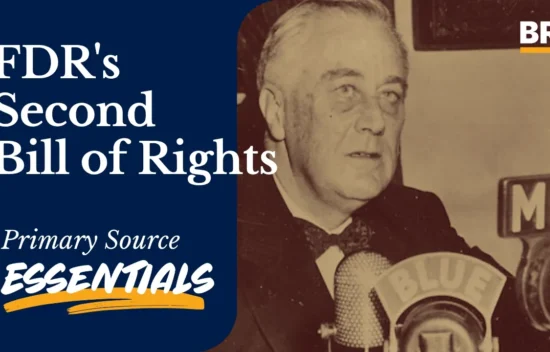
Watch
Founding Principles
About this video
In this episode of Primary Source Essentials, examine Franklin D. Roosevelt's 1944 State of the Union Address, commonly known as the "Second Bill of Rights" speech, and explore how it redefined the relationship between individual rights and the role of the federal government. Delivered during the final years of World War II, Roosevelt argued that political freedoms alone were no longer enough and proposed a new set of economic rights intended to provide greater security and opportunity for all Americans.
This episode explores the historical context behind Roosevelt's proposal, including the legacy of the New Deal and the nation's transition toward the end of World War II. It contrasts Roosevelt's vision of economic rights, including employment, housing, medical care, and economic security, with the Founders' understanding of natural rights as protections from government interference. The episode also examines how Roosevelt's ideas continue to shape debates over constitutional rights and the proper role of government.
Have you ever wanted to quickly grasp the most important aspects of Primary Sources? BRI's new 'Primary Source Essentials' series provides swift, 2-3 minute looks at the vital parts of key Primary Sources from American history! ‘Primary Source Essentials ’are the perfect introduction to large, daunting documents and sources and can easily be supplemented by BRI’s various 'Close Read' and 'Homework Help' videos.
Use BRI's Documents of Freedom Lesson on FDR's Second Bill of Rights in your classroom: https://billofrightsinstitute.org/activities/second-bill-of-rights-annotated/
Learn more about the New Deal: https://billofrightsinstitute.org/lessons/rights-and-the-new-deal/
00:00 Introduction to FDR's Second Bill of Rights
00:15 The Historical Context Behind the Speech
00:53 Roosevelt's Vision for Economic Rights
01:37 Negative Rights vs. Positive Rights
02:02 The Lasting Legacy of the Second Bill of Rights
0:00 Welcome to Primary Source Essentials. In this episode, we are going to briefly examine Franklin Roosevelt’s 1944 state of the Union address and how he attempted to redefine rights and government responsibility. In 1944, President Roosevelt was serving his third term as president and would go on to be reelected for a fourth term later that year.
0:24 For 12 years, FDR had overseen the New Deal, which was a massive expansion of the scale and scope of the federal government to deal with the problem of the Great Depression. While World War Two and a coalition of opposition from Republicans and Southern Democrats had quelled further domestic reform during the war.
0:45 FDR envisioned a new reform agenda after the war, as the tide of the war was turning in favor of the allies. FDR looked ahead and proposed redefining the nature of rights and government obligations. In his 1944 state of the Union, also known as the second Bill of rights speech, FDR laid out his vision.
1:09 He made the claim that necessities men are not free, and that economic rights were self-evident. His new list of rights included a job with enough pay for adequate food and recreation, the right to adequate medical care, the right to a decent home, and adequate protection
1:30 from economic fears and old age and unemployment. Among several others. Whereas the rights of the founding were negative, meaning that no 1st May interfere with them. FDR, his list of rights was positive, meaning that the government must provide them. However vaguely defined, FDR won an unprecedented
1:53 fourth term but died in office in April 1945. His successors were able to get much of his agenda passed into law. Though his understanding of positive economic rights is still hotly debated today. Thanks for watching and check out the other videos in Primary Source Essentials.
Standards
Related Resources
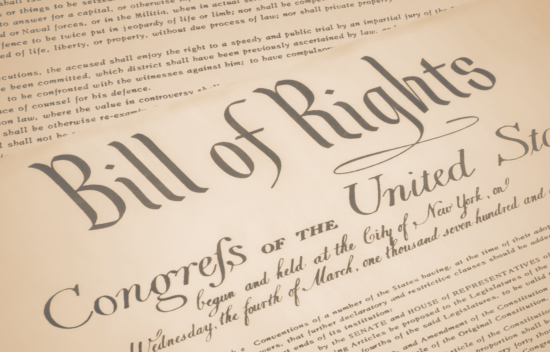
The first 10 amendments to the Constitution make up the Bill of Rights. James Madison wrote the amendments, which list specific prohibitions on governmental power, in response to calls from several states for greater constitutional protection for individual liberties.
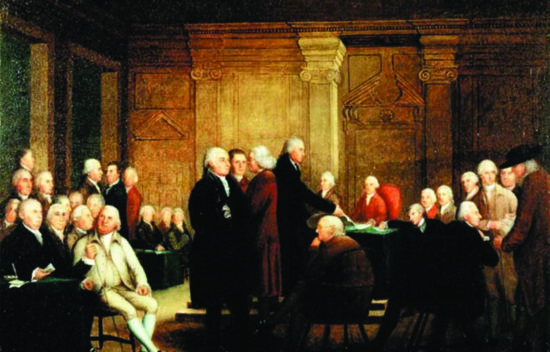
Primary sources, videos, essays, lessons, and more about the Bill of Rights and the first ten amendments.
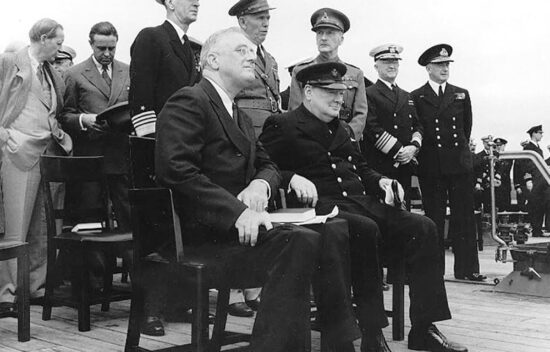
In this lesson, students will learn about the actions of President Franklin D. Roosevelt during the development of the Atlantic Charter. They will learn from Roosevelt’s example of how they can be responsible in their own lives.