Video
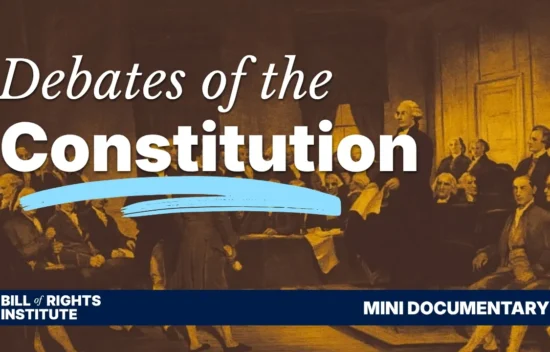
Ratification Debates of the Constitution Mini Documentary
Watch
Founding Principles
About this video
In the uncertain years after the American Revolution, the fate of the new republic hung in the balance. The Constitution—signed in Philadelphia after months of intense debate—was not yet the law of the land. Across the states, fierce battles erupted over its ratification. Would liberty be preserved or lost to centralized power?
Federalists and Anti-Federalists clashed in newspapers, statehouses, and convention halls. From the impassioned arguments of Patrick Henry and George Mason to the razor-thin victories in Virginia and New York, this mini documentary captures the intensity and stakes of one of the most consequential debates in American history.
0:04 On September 17th, 1787, the delegates at the Constitutional Convention in Philadelphia wrapped up their great debates. After a long, hot summer of deliberation. The two sides of the debate were the Federalists, who supported the new constitution, and the Anti-Federalists, who were opposed to its ratification.
0:24 They had shared beliefs about human nature, liberty, and the purpose of government, but disagreed on the best ways to achieve a lasting republic. The Federalists advocated a stronger, if limited, national government with separation of powers, checks and balances, and federalism to preserve liberty.
0:45 The Anti-Federalists feared centralized power in a larger public, and wanted a bill of rights and the preservation of state power to protect essential liberties. The debate took place in ratifying conventions, state legislatures, taverns, and especially pamphlets and newspapers.
1:07 The Anti-Federalists wrote critical essays to persuade delegates and public opinion, writing under the pseudonyms Brutus Federal Farmer and several others, Alexander Hamilton, James Madison, and John Jay wrote under the pseudonym Publius and their essays defending the Constitution
1:28 were collectively known as The Federalist. During the fall and early winter, five states quickly ratified the Constitution, and it seemed to be on an easy path to becoming the law of the land. The debate intensified in Massachusetts, and the outcome hung in the balance. Federalists promised to pass a Bill of rights
1:48 after the Constitution was ratified, and as a result, won enough Anti-Federalist votes for a narrow victory. When Maryland and South Carolina ratified, only one more state needed to ratify to reach the threshold of nine of 13. However, fearing defeat, New Hampshire Federalists delayed their vote.
2:11 Moreover, the outcome was very uncertain in the large, powerful states of New York and Virginia. Could a new government be considered legitimate or work without the participation of these key states? In Virginia, Giants James Madison and Patrick Henry faced off against each other and their allies in a titanic debate.
2:35 Anti-Federalists Henry and George Mason feared the destruction of the state’s centralized power and the absence of the Bill of rights. Madison Perry there arguments with compelling logic and Federalist barely ratified in Virginia by a few votes on June 25th.
2:55 Over the next month, an equally contentious battle of words was fought in New York. Alexander Hamilton led the Federalist to victory against overwhelming odds of Anti-Federalists outnumbering the Federalists 3 to 1. New York ratified and joined the Union by only three votes. Rhode Island and North Carolina held out until Congress passed the Bill of rights
3:19 as promised, and it was ratified by all the states on December 15th, 1791. The Constitution was a popular act of the people and their representatives, and the ratification debate showed the value of free speech and open discussion in a free society.
3:39 The great deliberative moment of constitutional debate, animated by the founding principles of free Republic and government, proved that a government could be founded by reflection and choice. The deliberations represented and defined the American character and shaped American ideals and debates throughout the country’s history.
Standards
Related Resources
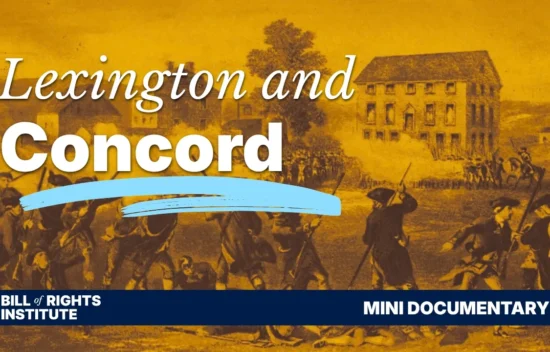
On April 19, 1775, the world changed forever. British troops marched on Lexington and Concord to arrest Patriot leaders and seize hidden munitions—but they were met by a determined militia and the rising spirit of American resistance. From Paul Revere’s midnight ride to the tense standoff on Lexington Green, and the fierce fighting at North Bridge, this mini documentary captures the explosive beginning of the American Revolution.
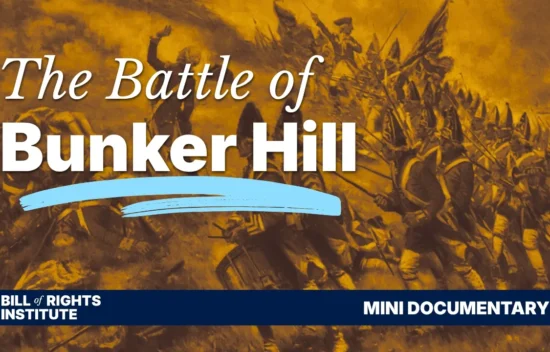
In the tense early months of the American Revolution, before independence was declared, British and American forces clashed in one of the war’s most brutal and revealing early battles. On June 17, 1775, thousands of British troops stormed a hilltop fortification hastily constructed by colonial militia overnight. Though the British would ultimately claim the ground, their victory came at a staggering cost. Through grit, missteps, heroism, and sacrifice, the Battle of Bunker Hill proved that the colonial resistance would not be easily crushed—and that the road to American liberty would be long and bloody. From secret intelligence networks to last-minute reinforcements, and from smoldering Charlestown to the rise of George Washington as commander of a newly formed Continental Army, this mini documentary traces the events of that fateful day and its place in the broader struggle for American independence.
Get ready to travel back in time to the early days of America and discover the thrilling events that led to the American Revolution! In this elementary lesson, we explore the key moments that paved the road to independence—from the end of the French and Indian War to the fiery debates over "taxation without representation." Our elementary lessons are primary source-based that focus on content-area literacy instruction and performance-based assessments. Designed for grades 3-5, these lessons use a modular approach for all learners and are ideal for helping elementary students explore American history and citizenship.

Learn about important dates events that lead up to the ratification of on the Declaration of Independence on July 4th, 1776 in Philadelphia, PA through our interactive timeline!

The Constitution was written in the summer of 1787 in Philadelphia, Pennsylvania, by delegates from 12 states, in order to replace the Articles of Confederation with a new form of government. It created a federal system with a national government composed of 3 separated powers, and included both reserved and concurrent powers of states.
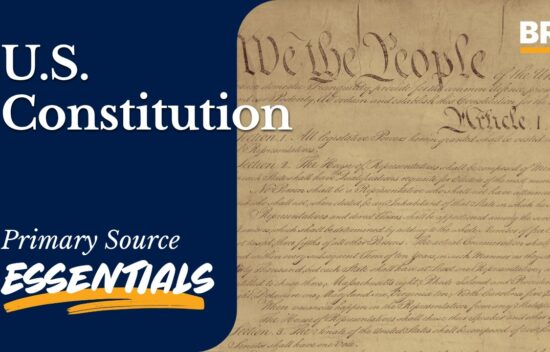
What does the Constitution do? What are the principles of self-government in the Constitution? In this rapid-fire episode of BRI’s Primary Source Essentials and United States Constitution summary, learn how the US Constitution was framed as a stronger, yet limited, government built upon certain principles. The US Constitution Explained | A Primary Source Close Read w/ BRI: https://billofrightsinstitute.org/videos/the-constitution-explained-a-primary-source-close-read-w-bri

An interactive that helps students explore their own beliefs and relate them to the Founders positions.