Video
Constitutional Amendments | Primary Source Essentials
Watch
Founding Principles
About this video
In this episode of Primary Source Essentials, explore the constitutional amendment process and its connection to the founding principle of popular sovereignty.
Learn how the framers designed Article V to balance stability with the ability to adapt, requiring broad consensus for change. Discover how amendments have shaped American history, from the Bill of Rights to the abolition of slavery, the expansion of voting rights, and limits on presidential terms. Understand why the framers made amending the Constitution difficult, how it ensures careful deliberation, and how “we the people” continue to exercise ultimate authority in shaping the nation’s fundamental law.
0:00 Welcome to Primary Source Essentials. In this episode, we will briefly describe constitutional amendments and how they relate to the founding principle of popular sovereignty and consent of the governed. The first framework of American government, the Articles of Confederation, failed to govern the new nation effectively.
0:21 Since the articles had an amendment process that required unanimity of the sovereign states, it was practically impossible to change. However, the new Constitution of 1787 was based upon a different principle and more prudent construction. The constitution was created as an act of the sovereign people
0:42 through their delegates at the Constitutional Convention. That means authority resides in the people. The document begins, after all, we the people, in order to form a more perfect union. Moreover, the constitution itself had to be ratified by the people and their representatives in popular ratifying conventions.
1:03 In nine of the 13 states to become the law of the land. The Constitution also allowed the people to amend or change it. Article five of the Constitution provided specific ways in which the people could consent to change the document. The process for amending the Constitution can proceed in one of two ways.
1:27 First way is for two thirds of both houses of Congress to agree to pass an amendment. The second way is for two thirds of state legislatures to call a convention to propose or consider an amendment. Once an amendment is passed, three quarters of either state legislatures or state conventions
1:47 must ratify the amendment for it to become part of the Constitution. As you can see, getting two thirds of Congress or the states to agree is not easy, and getting three quarters to ratify makes it difficult. Indeed. And that is the point. The framers of the Constitution wanted it to be hard to change fundamental law.
2:11 A large portion of the American people had to agree that the change was important enough to amend the Constitution. The founders quickly passed the first ten amendments, the Bill of rights in the First Congress, and ratified them by 1791. They protected essential rights and liberties such as freedom of speech
2:32 and conscience, the right to bear arms, and the rights of the accused. Since then, the constitution has only been amended 17 times over more than 200 years. The American people ended slavery, expanded voting rights to black people. Women and 18 year olds, limited presidents to two terms,
2:55 and defined presidential succession, and started and ended prohibition and prevented Congress from giving itself a pay raise, among others. In each case, the sovereign people believed that there was a need for change, forged a consensus, and followed the amendment process to change the Constitution.
3:16 The Constitution forces people to deliberate and debate carefully, to discern whether changing the Constitution is really necessary. It is difficult, but if they agree, they can do it. After all, under the Constitution, the people rule.
Standards
Related Resources

In this episode of Civics on the Street, Professor Matthew Green of the Catholic University of America answers real questions from students about the U.S. Constitution. From why it was written to the compromises made at the Constitutional Convention, the structure of government, the protection of rights, and the role of the Supreme Court. As part of our Constitution Day Live programming, celebrating “Democracy in Your Backyard”, this video dives into why the Constitution was written, the compromises that made it possible, and how its structure continues to shape our government.

The Constitution was written in the summer of 1787 in Philadelphia, Pennsylvania, by delegates from 12 states, in order to replace the Articles of Confederation with a new form of government. It created a federal system with a national government composed of 3 separated powers, and included both reserved and concurrent powers of states.
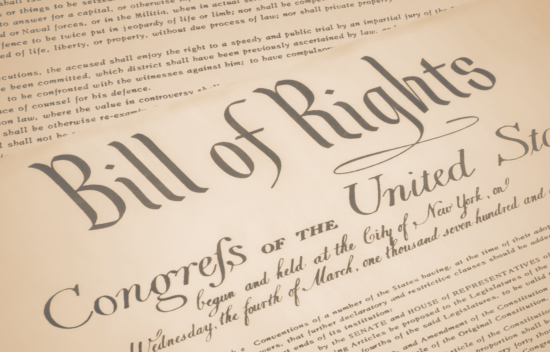
The first 10 amendments to the Constitution make up the Bill of Rights. James Madison wrote the amendments, which list specific prohibitions on governmental power, in response to calls from several states for greater constitutional protection for individual liberties.