
Why is Media Literacy Important?
Help students ask better questions about the news and information they encounter every day. BRI’s Media Literacy Digital Booklet brings together seven mini lessons built around current events to help students evaluate sources, recognize bias, and consider different points of view.
Teach Media Literacy with Confidence
How can you help students decide which sources to trust, recognize bias, consider perspectives beyond their own, and analyze media institutions?
Start with seven flexible mini lessons that fit into your existing curriculum. Each lesson includes a recommended teaching strategy to support learning and classroom discussion.
The booklet brings all seven lessons together in one convenient download. Create a BRI educator account to download your copy by December 4. .
Get the Media Literacy Booklet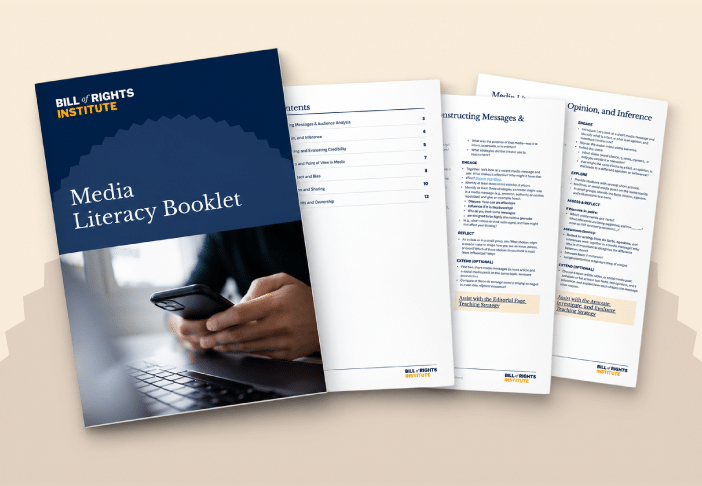
Preview the Booklet
Recognizing Bias and Point of View in Media
Essential Question: How do bias and point of view affect the way we understand news and information?
Learning Objective: Students identify bias and point of view in media and explain how these influence interpretation.
Anticipate: Display two headlines about the same event. Ask students: What differences do you notice? How do these headlines make you feel about the issue?
Engage: Review the definitions of bias and point of view. Model how to look for word choice, facts included or omitted, and tone.
Get the Media Literacy BookletFlexible Media Literacy for Your Classroom
Use the lessons as bell-ringers, current events activities, or starting points for deeper discussion. Help students practice evaluating evidence, asking thoughtful questions, and explaining their reasoning, habits that support informed participation in civic life.
Get the Media Literacy BookletComing in 2027: More Tools for Media Literacy
In 2027, BRI will introduce a new resource to help teachers build students’ information and media literacy skills.