Lesson
War and Constitutional Separation of Powers
Guiding question
How should the war powers be shared among the three branches of government?

The U.S. Constitution divides war powers between the president and Congress. The delegates to the Constitutional Convention were focused on creating a government powerful enough to protect liberty, but not so powerful that it would threaten liberty. They worked carefully to craft the war powers of the new government, knowing that history was full of examples of war, so that war powers were necessary, but also of rulers who had abused the power and endangered liberty in order to make war.
Objectives
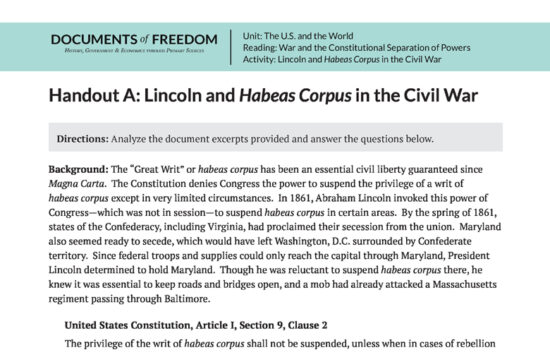
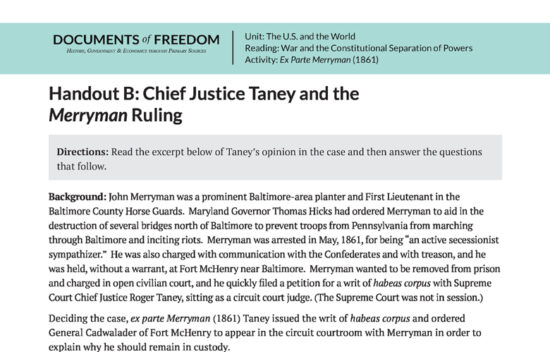
- Students will understand the struggle during the Civil War between Lincoln and the Supreme Court over habeas corpus.
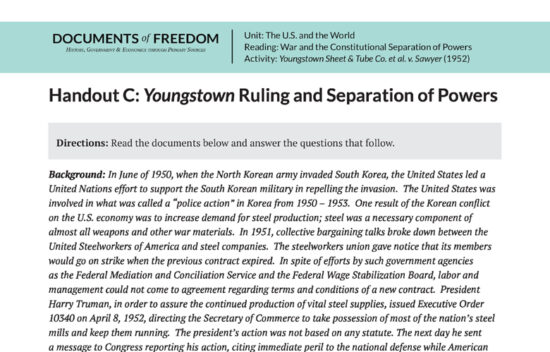
- Students will examine the struggle over war powers between Harry Truman and the Supreme Court during the Korean War.
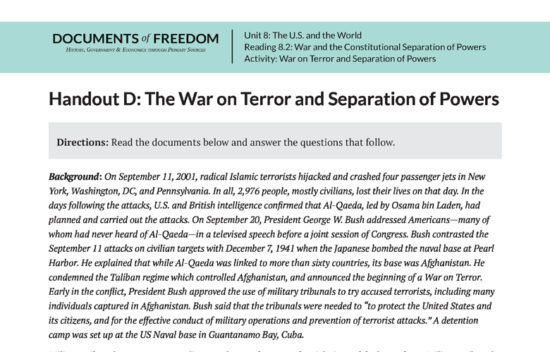
- Students will discuss conflicts related to the war powers during the War on Terror.
Materials
Lesson Components
Lesson plan
Click a phase to open it
Key Terms
- checks and balances
- habeas corpus
- ex parte
- due process
- unreasonable search and seizure
More Information
Students need to be familiar with the concept of checks and balances prior to engaging with this lesson.
Standards
Related materials

EssayWar and Constitutional Separation of Powers
The U.S. Constitution divides war powers between the president and Congress. The delegates to the Constitutional Convention were focused on creating a government powerful enough to protect liberty, but not so powerful that it would threaten liberty. They worked carefully to craft the war powers of the new government, knowing that history was full of examples of war, so that war powers were necessary, but also of rulers who had abused the power and endangered liberty in order to make war.