Lesson
From Toleration to Liberty: George Washington and the Hebrew Congregation in Newport, Rhode Island

Founding Principles
Learning objectives
- Understand the evolution of religious liberty from the colonial period to the Founding Era.
- Assess legal and historical documents as examples of toleration and/or liberty.
- Analyze George Washington’s 1790 Letter to the Hebrew Congregation in Newport, Rhode Island.
- Appreciate Washington’s letter as an example of the shift from religious toleration to religious liberty in America.
Materials
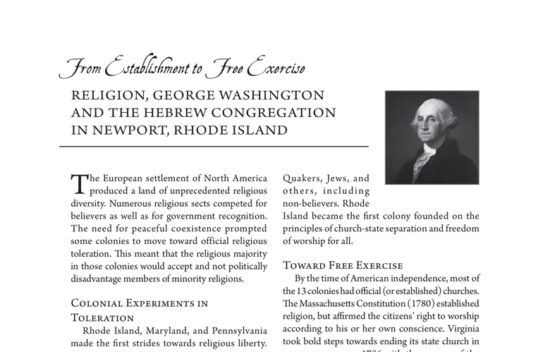
- Essay: From Establishment to Free Exercise: Religion, George Washington, and the Hebrew Congregation in Newport, Rhode Island
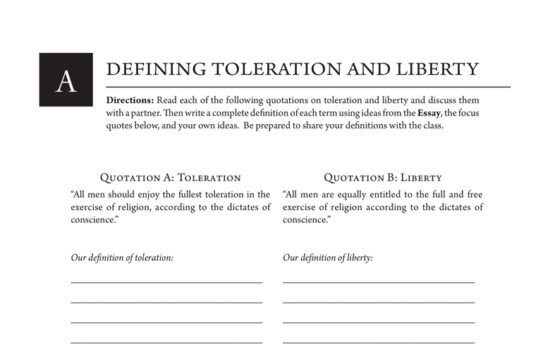
- Handout A: Defining Toleration and Liberty
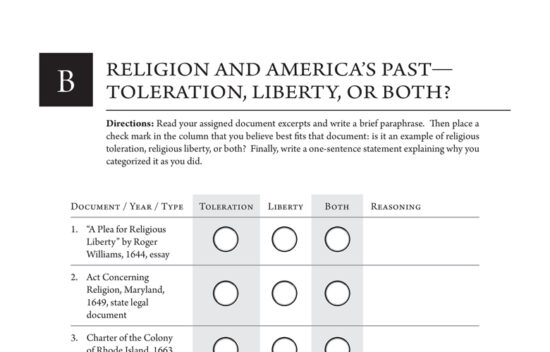
- Handout B: Religion in America’s Past— Toleration, Liberty, or Both?
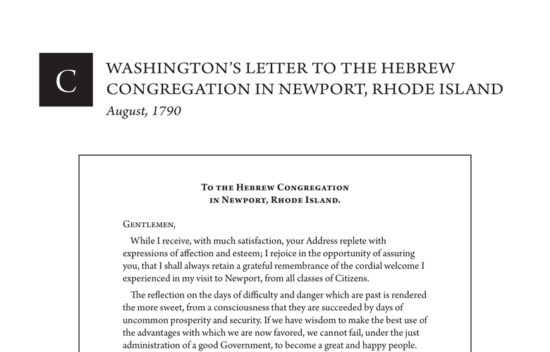
- Handout C: Washington’s Letter to the Hebrew Congregation in Newport, Rhode Island
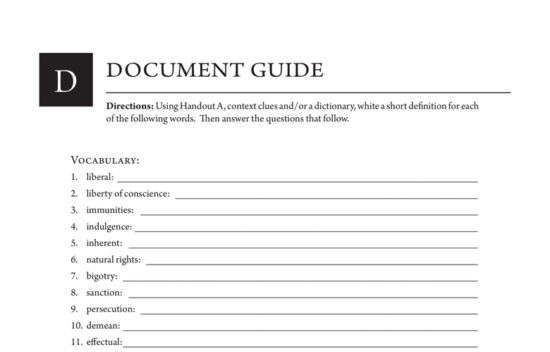
- Handout D: Document Guide
Lesson Components
Lesson plan
Standards
Related materials

What about Roger Williams’ identity drove him to found a new colony based on religious liberty?

How did Anne Hutchinson practice courage to support religious freedom in the American colonies?

In 1784, Patrick Henry proposed a general tax called the Bill Establishing a Provision for Teachers [Ministers] of the Christian Religion. Similar to some New England state laws, citizens would choose which Christian church received their support, or the money could go to a general fund to be distributed by the state legislature.


Virginia Statute for Establishing Religious Freedom was written by Thomas Jefferson and ushered through the state legislature by James Madison in 1786, banned government interference in religion and individual beliefs.