Lesson
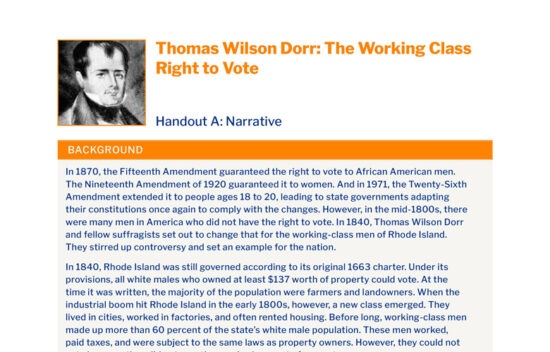
Thomas Wilson Dorr: The Working Class Right to Vote

How did Thomas Wilson Dorr led an effort to expand the right to vote in Rhode Island?
Founding Principles
Civil Discourse, Consent of the Governed, Equality, Freedom of Speech, Majority Rule / Minority Rights, Representative / Republican Government
Virtues
Guiding questions
Walk-In-The-Shoes Questions
As you read, imagine you are the protagonist.
- What challenges are you facing?
- What fears or concerns might you have?
- What may prevent you from acting in the way you ought?
Observation Questions
- What was Dorr’s purpose in leading the People’s Convention?
- What actions did Dorr take to achieve his goals? To what extent was he successful with each step along the way?
Discussion Questions
Discuss the following questions with your students.
- What is the historical context of the narrative?
- What historical circumstances presented a challenge to the protagonist?
- How and why did the individual exhibit a moral and/or civic virtue in facing and overcoming the challenge?
- How did the exercise of the virtue benefit civil society?
- How might exercise of the virtue benefit the protagonist?
- What might the exercise of the virtue cost the protagonist?
- Would you react the same under similar circumstances? Why or why not?
- How can you act similarly in your own life? What obstacles must you overcome in order to do so?
Learning objectives
- Students will analyze and evaluate Thomas Wilson Dorr’s purposeful behavior in leading the effort to expand suffrage in Rhode Island for working class men.
- Students will apply their knowledge of purpose to their own lives.