Lesson
Theodore Roosevelt and the Bully Pulpit
Guiding question
How did Theodore Roosevelt’s use of the residency as a “bully pulpit” transform the office of resident?

Founding Principles
Objectives:
Students will:
- Understand ways Theodore Roosevelt used his office as a “bully pulpit.”
- Analyze the constitutionality of Roosevelt’s actions as President.
- Evaluate ways that Roosevelt transformed the Presidency.
Materials
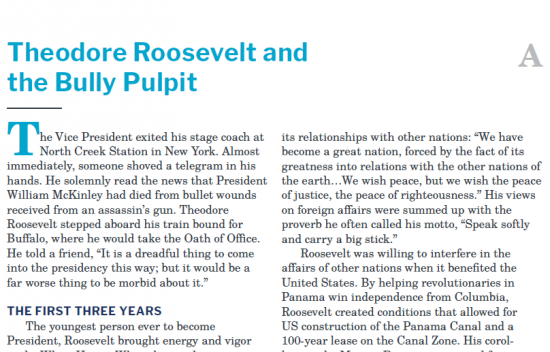
- Handout A: Theodore Roosevelt and the Bully Pulpit
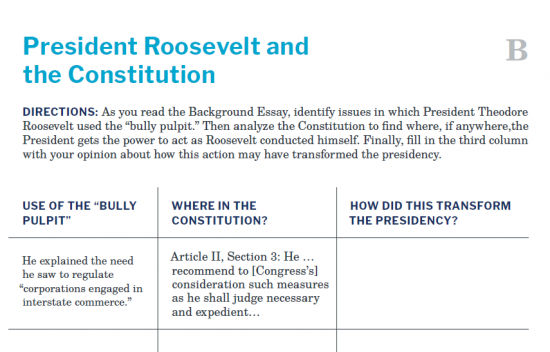
- Handout B: President Roosevelt and the Constitution
- The United States Constitution
Lesson Components
Lesson plan
More Information
To create a context for this lesson, students complete Constitutional Connection: The President and Federal Power.
Standards
Related materials

How did Theodore Roosevelt seek justice by reforming the meat packing industry? Explore Roosevelt’s dedication to justice and the general welfare of the nation and inspire students to be more focused on justice in their own lives.

What should the balance of government intervention and economic liberty be in a capitalist society? BRI Senior Teaching Fellow Tony Williams and guest Stephen Tootle, Professor of History at the College of the Sequoias, examine this question by looking through the eyes of Theodore Roosevelt in his speech, "The New Nationalism" (1910). They break down Roosevelt's views on government regulation of the economy and society against a backdrop of American industrialization, progressivism, and the rise of big business.

How did Theodore Roosevelt transform the office of the President? This lesson explores Roosevelt’s presidency and his impact on the presidency.