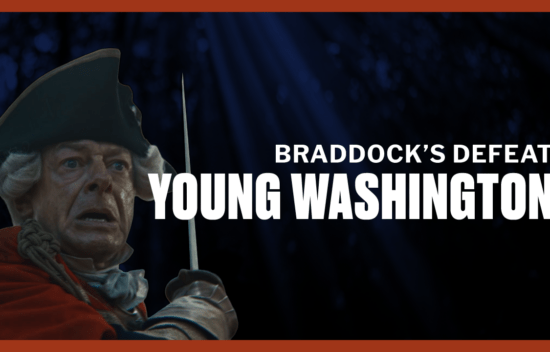
Teaching with Young Washington
Essential Questions:
- How do stories about George Washington’s early life shape our understanding of leadership, civic virtue, and American identity?
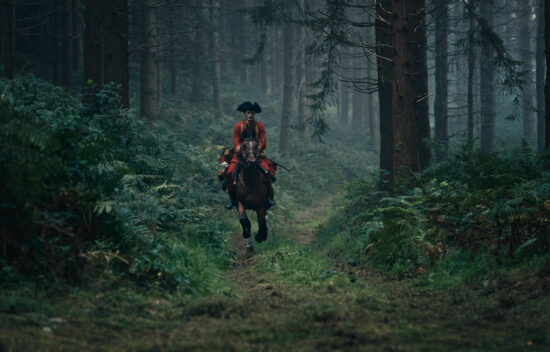
- How do stories of setbacks and self-discovery shape who we become?
Learning Goals:
Students will:
- Critically analyze film as a historical source.
- Apply historical thinking skills: sourcing, contextualization, and corroboration.
- Use Story Explorer Profiles to deepen perspective-taking.
- Connect film depictions to real primary sources.
- Reflect on civic virtue or moral lessons tied to the film.
Teacher Materials
- Strategies for Connecting Primary Sources to Film Clips
- Reflection Rubric
- Background Context for Young Washington
- Extended Discussion Guide
- Lesson Adaptation Guides
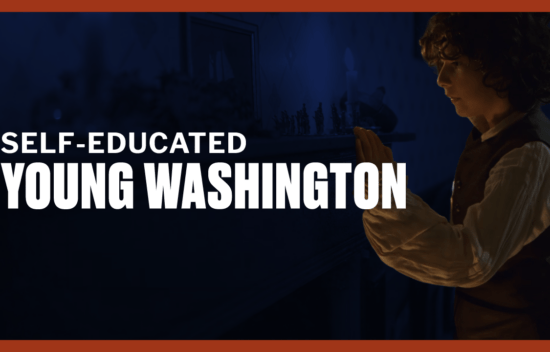
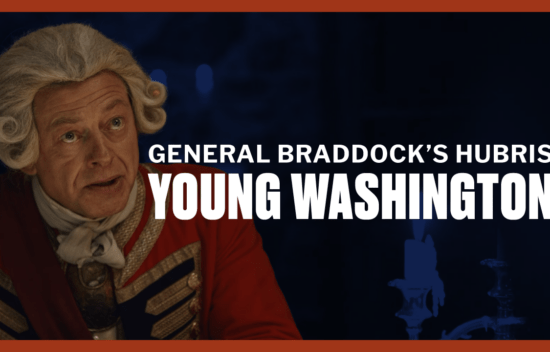
- Video Clips
Student Materials
- Story Explorer Profile Overview Sheet
- Story Explorer Assignment Cards (coming soon!)
- Watch, Pause, Reflect: Young Washington Graphic Organizer (coming soon!)
- Primary Source 1: George Washington Diary, 1754
- Primary Source 2: Letter to Mary Ball Washington, 1755
- Primary Source 3: Letter to Dinwiddie, 1757
- Primary Source 4: Rules of Civility
- Primary Source 5: Resignation, 1783
- Optional: Scaffolded Graphic Organizer for reflection (coming soon!)
- Character Biographies
Facilitation Note:
- For more information on George Washington and the historical context of the film, including the French and Indian War, see the Background on Young Washington document.
- Before class begins, view the movie clips and determine if students will all be watching the same clip, or if you will assign different clips to different students.
- Prior to class, print and cut the story explorer profile cards.
- For additional options for scaffolding and modification, see the Young Washington Lesson Adaptation Guides teacher resource
Anticipate:
- Quick write, poll, or turn-and-talk: Have students respond to one of the following prompts:
- Think of a time when you failed at something important. How did you respond?
- Answers will vary. Students may reflect on failing a test, losing a game, home responsibilities, or moral failings as examples.
- Monitor responses in your chosen method to ensure that students share responses appropriate for your classroom.
- What’s one way you’ve been “finding yourself” as you grow older?
- If students need clarification on what “finding yourself” means, encourage students to think about ways they are becoming their own person as they get older, or how they are learning more about the world.
- Answers will vary. Students may refer to spiritual, moral, intellectual, or social development.
- Monitor responses in your chosen method to ensure that students share responses appropriate for your classroom.
- Share a few responses. Then say: “George Washington was going through similar things as a teenager/young adult.”
Scaffolding note: If you are working with a young student population or your students need more support, add one or both of these additional steps:
- Ask students: “Who was George Washington?” Or share that Washington was the first president of the United States.
- Tell students: “Sometimes when we learn about important or extraordinary people, it can be hard to imagine how they got there. But every important person in history was young once, just like you. We are going to be watching clips from a movie called Young Washington. The film focuses on Washington learning from mistakes or failures.”
Engage:
- Introduce the Story Explorer Profiles using the Story Explorer Profile Overview Sheet Handout. This can be printed and distributed to students, projected on the classroom board, or turned into a classroom anchor chart for reference.
- Story Explorer Profiles are tools to help students look at a story from different perspectives. They encourage deeper thinking about themes, character choices, and storytelling techniques. Profiles are not characters or roles; they are lenses for analysis.
- Review each Story Explorer Profile:
- Phoenix: This perspective focuses on moments of challenge and comeback.
- Mirror Holder: This perspective helps us see how the story reflects our own experiences.
- Virtue Seeker: This perspective looks for lessons and values in the story.
- Media Decoder: This perspective examines how the storyteller’s choices shape what we see and feel.
- Distribute Story Explorer Assignment Cards; then assign or let students choose roles.
- Explain that each lens highlights a different way of “reading” the film.
Scaffolding note: If students need more support, offer an example of using the Story Explorer Profiles to “read” a story in different ways. For example, a common story like “Three Little Pigs” could be used.
- Phoenix: The pigs learn from their experiences. The first two pigs, though initially careless, survive and adapt by relying on their brother’s foresight. The third pig’s resilience and preparation are key to bouncing back and defeating the wolf.
- Mirror Holder: This story might reflect moments in our lives when we rushed into decisions without thinking them through, like the first two pigs.
- Virtue Seeker: The story teaches the value of hard work, planning, and perseverance. It suggests that shortcuts may lead to danger, while effort and foresight lead to safety and success.
- Media Decoder: The story emphasizes the contrast between the pigs’ choices to shape our perception. We admire the third pig’s wisdom and feel disapproval of the others.
Teacher note: You can use generative AI to help you create other examples with a prompt like “Apply these lens descriptions to Goldilocks and the Three Bears.” You can use any other stories you have on hand, or that your students know well.
Explore:
Watch:
- There are 5 clips that pair with primary sources:
- Primary Source 1: George Washington Diary, 1754
- Primary Source 2: Letter to Mary Ball Washington, 1755
- Primary Source 3: Letter to Dinwiddie, 1757
- Primary Source 4: Rules of Civility
- Primary Source 5: Resignation, 1783
- Video Clips
- Scaffolding notes:
- For younger students or students needing more support, watch the same clip as a whole group and assign all students the same primary source to investigate.
- For older or more advanced students, assign students’ profiles, clips, and primary sources for as much variance as possible. Just be sure students are assigned a primary source that can be used with their clip in the final assignment.
- Distribute a Watch, Pause, Reflect Graphic Organizer to each student. They will use this together with their Story Explorer Assignment Card and Story Explorer Profile Overview Sheet Handout while watching the movie clip.
- Students view a 5–15-minute clip focused on a key turning point in Washington’s early life.
Scaffolding note: If needed, stop the clip at key points during the clip to discuss, debrief, or draw attention to key details. As the clip plays, each student watches the clip through their profile lens and jots down moments or details that connect to their lens on the Watch section of their Watch, Pause, Reflect Graphic Organizer
Pause:
- After the clip, students meet in profile groups to share their observations and complete the Pause section of their Watch, Pause, Reflect Graphic Organizer
- Discussion or Reflection Questions for Profile Groups:
- The Phoenix: Where do we see setbacks and recovery? How do we bounce back from setbacks?
- The Mirror Holder: How is Washington figuring out who he is, and how do we do the same?
- The Virtue Seeker: How do his actions model civic virtue? What values guide our choices when no one is watching?
- The Media Decoder: How does the film frame Washington to shape our emotions? How do stories shape how we feel about someone’s choices and character?
- Then, students meet in mixed groups or in a whole class to compare perspectives and complete the Reflect section of their Watch, Pause, Reflect Graphic Organizer
- Discussion or Reflection Questions for Mixed Groups:
- What choices did the filmmakers make to tell their story?
- What civic virtue or moral lessons emerge from this comparison?
Reflect – Written Response:
- Students analyze 1–2 short primary sources to corroborate or complicate the film’s version.
- Hand out the primary source and have students answer the guiding questions.
- Students can read the primary sources individually, in small groups, or as a whole class.
- They produce a reflection that ties together their profile lens, evidence, and civic connections.
Scaffolding note: Additional resources are available to help you adapt this lesson to fit your needs. If your students need more support or a different task, consult:
- Strategies for Connecting Primary Sources to Film Clips
- Reflection Rubric
- Background Context for Young Washington
- Extended Discussion Guide
- Lesson Adaptation Guides
Assess & Reflect:
Option 1
- Collect reflections as a formative assessment (check for use of evidence and civic virtue or moral connection).
Option 2
- End with a class debrief discussion:
- What do we learn when we study Washington not just as a hero, but as a person whose story has been told in many ways?
- How does Washington’s story remind you of challenges young people face today?
- What civic or personal lessons can we take from this decisive moment in the film?