Lesson
Robert Moses and Immoderation (Extremism)
Guiding question
How does unchecked power, even in the name of the public good, undermine self-government?
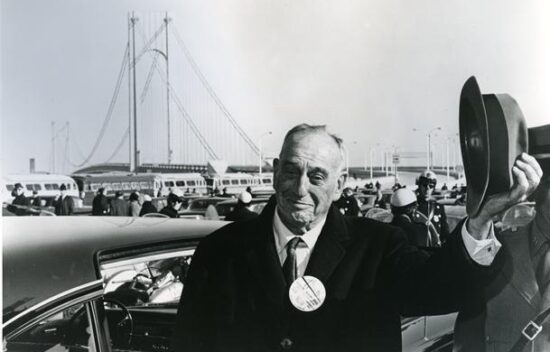
Objectives
- Students will be able to:
- Identify and explain immoderation as a civic vice that harms democratic self-governance.
- Analyze how unelected public officials can manipulate systems for personal power.
- Explore how failing to listen and avoiding accountability erodes public trust.
Materials
Resources
Lesson Components
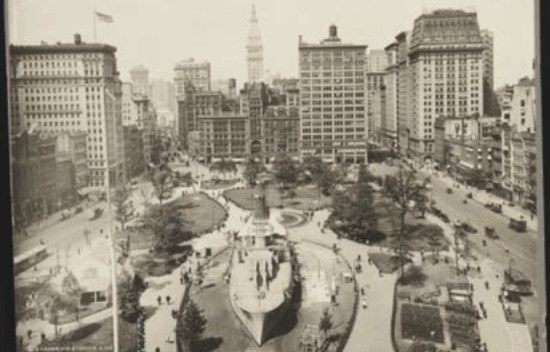
Primary source photographs and narratives that show what life was like in New York City, New York before Robert Moses began working on public works projects.
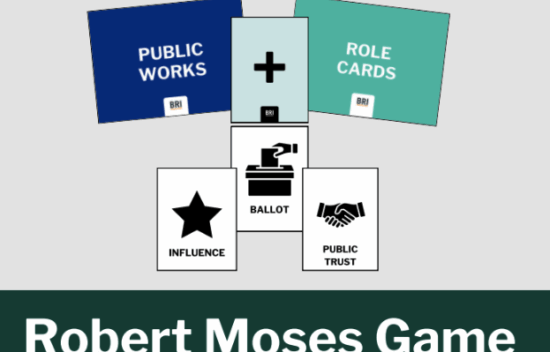
A role-based civics game where players navigate a fictional city governed by an unelected leader proposing public works. As City Council Members, Citizens, or Watchdogs (Media), players work to influence or resist the concentration of power.
Narrative content to help students identify the benefits of moderation and deliberation support self-government in a democracy.
Lesson plan
Key Terms
- Immoderation (Extremism )
- Acting in excess or to an extreme. Lacking restraint
More Information
Facilitation Notes
In this civic game, students take on roles in a fictional city where a visionary unelected leader proposes major public works and accumulates power by bypassing traditional democratic processes. Students act as a Visionary Leader, City Council Members, Citizens, or Watchdogs (Media) trying to influence or resist these proposals. The game reveals how systems can be manipulated—even under the guise of being for the public good. The goal is not to “win” but to analyze how power operates—and whether it can be checked.
This lesson draws inspiration from the award-winning game, Regime, from the Government and Politics: Civics for the American Experiment curriculum.
Standards
Related materials

How should leaders behave and make decisions in a democratic society? Explore these questions through narratives and activities that focus on Huey Long.