Lesson
The Nature of Representation in the U.S. Congress

Founding Principles
Civic Virtue, Representative / Republican Government, Separation of Powers
Objectives
- Students will identify the chief differences between the U.S. congressional system and a parliamentary system of representation, and evaluate the relative merits of each.
- Students will identify the chief characteristics of a single member election district and a proportional representation system and evaluate the relative merits of each.
- Students will distinguish between representation by trustee and representation by delegate, and evaluate the relative merits of each.
- Students will describe the different competing interests facing a member of the U.S. Congress, and evaluate which interest should supersede the other in different situations.
Materials
Lesson Components
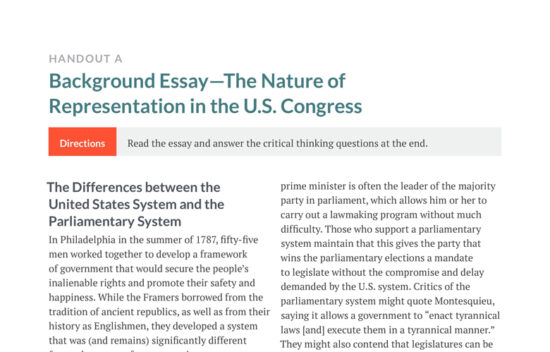
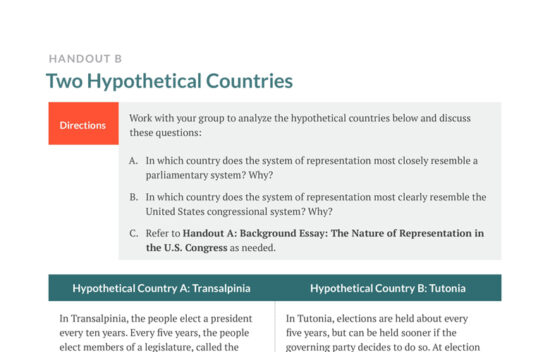

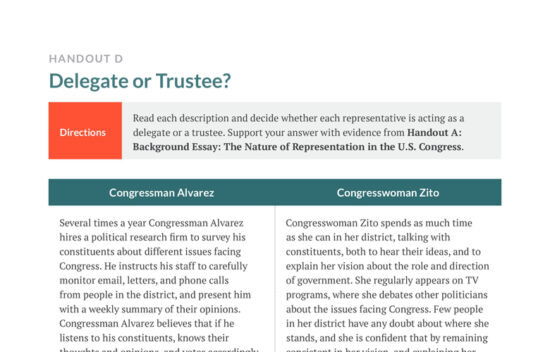
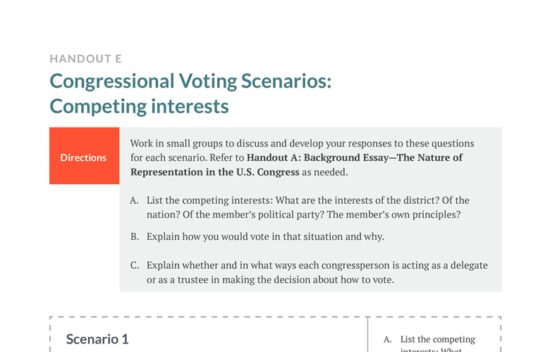
Lesson plan
Key Terms
- Parliamentary system
- Chief executive
- Prime minister
- Legislature
- Executive
Standards
Related materials

Do you understand the key differences between a Republic and a Democracy? The Bill of Rights Institute has created a short, engaging video for Constitution Day on the constitutional principle of representative government. Exciting visuals from current events, an engaging historical narrative, brief scholar interviews, familiar music, and memorable quotes will make this 5-minute video perfect for use on Constitution Day, and every day!

The Nature of Representation in the U.S. Congress Description: The framers of the Constitution set up a system of representation for the United States, which although informed by the experiences of other republics, was different from them.

April 1, 2020 is Census day! This once in a decade event serves many important purposes beyond just determining how many people live in the United States. In this eLesson, students will analyze the important role the Census plays in our political system, assess the changes the Census system has undergone throughout our history, and explore how individuals are represented through the Census.