Lesson
John Adams and the Alien and Sedition Acts
Guiding question
Was the sedition portion of the 1798 Alien and Sedition Acts, signed into law by President John Adams, a constitutional war measure?

Founding Principles
Objectives:
Students will:
- Understand John Adams’ reasons for believing the Alien and Sedition Acts to be a constitutional war measure.
- Analyze arguments for and against the constitutionality of the Alien and Sedition Act.
- Assess the constitutionality of the Alien and Sedition Acts.
Materials
- Handout A: John Adams and the Alien and Sedition Acts
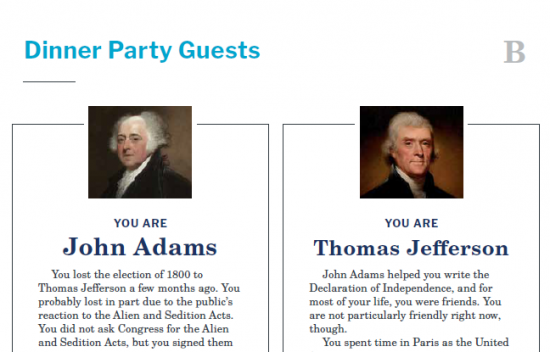
- Handout B: Dinner Party Guests
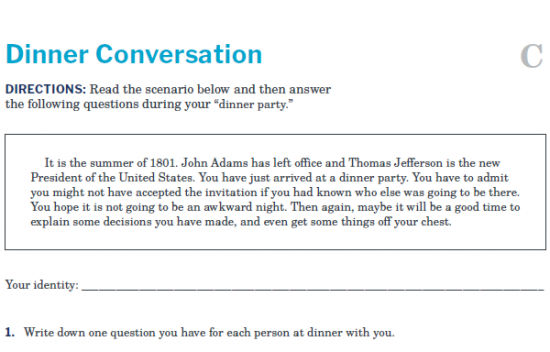
- Handout C: Dinner Conversation
Lesson Components

Lesson plan
More Information
To create a context for this lesson, students complete Constitutional Connection: War and the Constitution.
Standards
Related materials

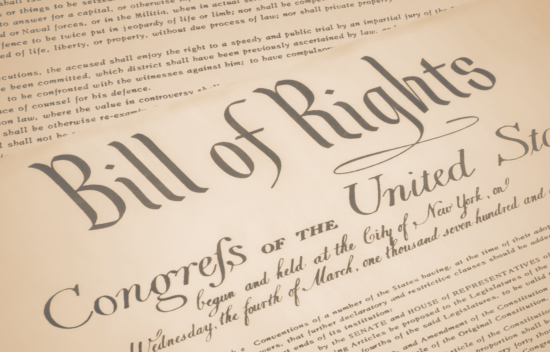
The first 10 amendments to the Constitution make up the Bill of Rights. James Madison wrote the amendments, which list specific prohibitions on governmental power, in response to calls from several states for greater constitutional protection for individual liberties.

The Constitution was written in the summer of 1787 in Philadelphia, Pennsylvania, by delegates from 12 states, in order to replace the Articles of Confederation with a new form of government. It created a federal system with a national government composed of 3 separated powers, and included both reserved and concurrent powers of states.

In the first installment of this two-part close reading on Sedition Acts, BRI staff members Joshua Schmid and Tony Williams discuss the highly controversial Sedition Act of 1798, which arrived at a particularly tumultuous time in American history. In light of growing diplomatic tension between the United States and France, President John Adams and the Federalists feared that if war were to ultimately break out, the Jeffersonians would be disloyal towards America. For this reason, the Sedition Act severely limited people’s ability to freely and publicly criticize the American government. Join Tony and Joshua as they explore the important constitutional implications of this first Sedition Act for the young republic!