Lesson
James Armistead and Courage

How and when should an individual act courageously? Explore the story of James Armistead Lafayette.
Virtues
Guiding questions
Essential Question
- How does the maintenance of liberty and equality depend on individuals acting courageously?
Guiding Questions
- What are the elements required to act courageously?
- What are the risks of acting courageously?
- When is it necessary to act courageously?
Learning Objectives
- Students will identify how and when an individual should act courageously through the story of James Armistead Lafayette.
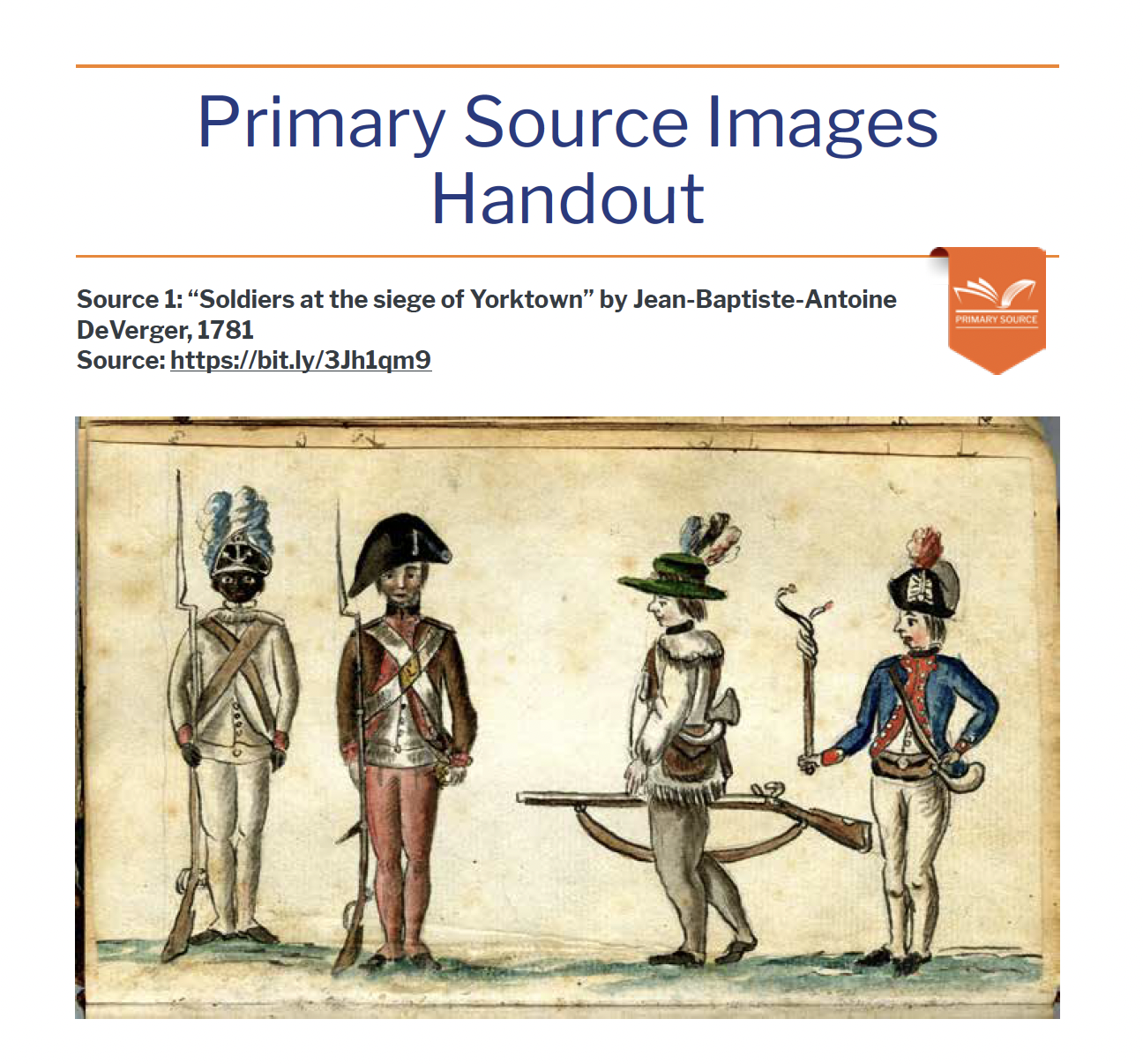
- Students will use historical literacy skills to analyze primary source images.
Materials
Student Resources
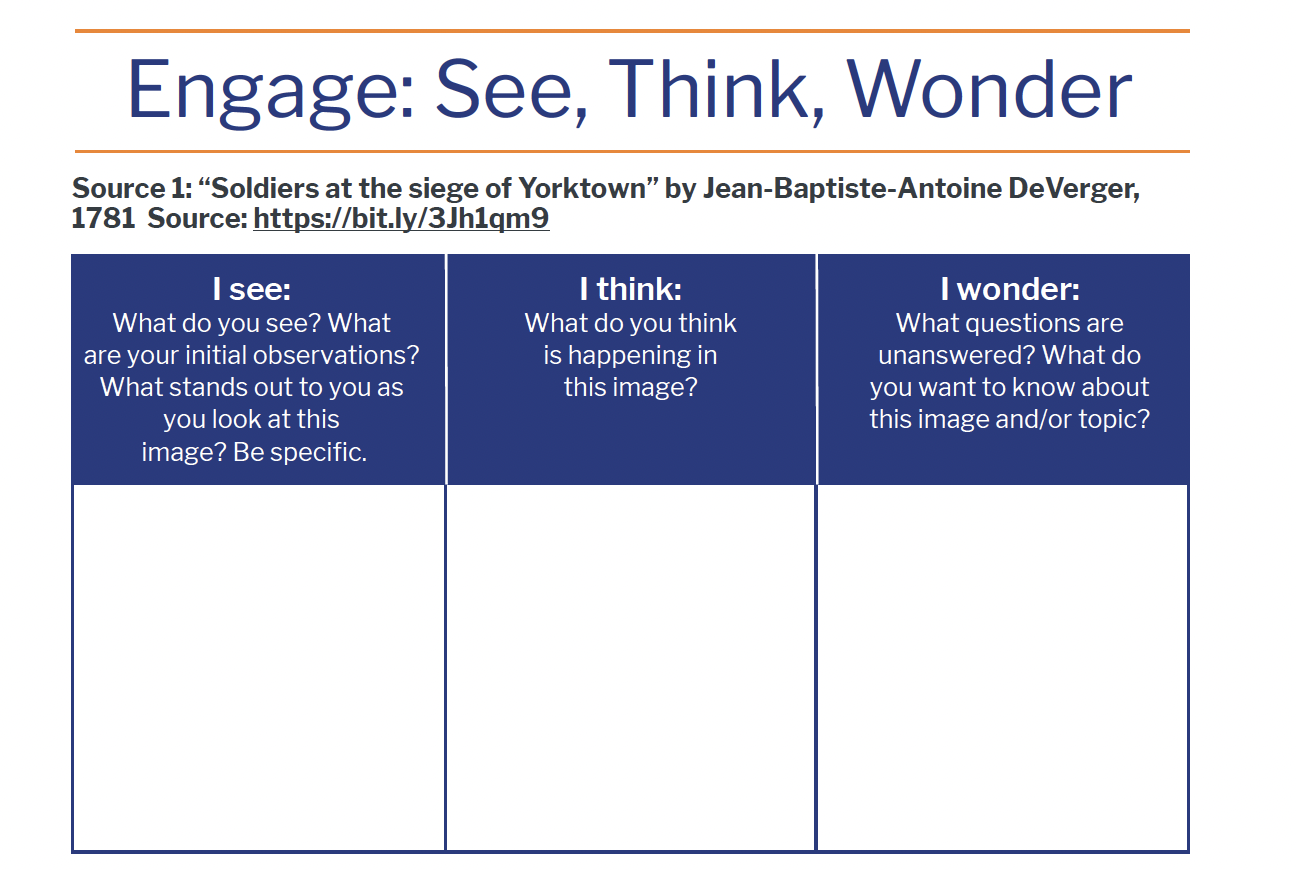
- Engage: See, Think, Wonder Handout
- Engage: Primary Source Images Handout
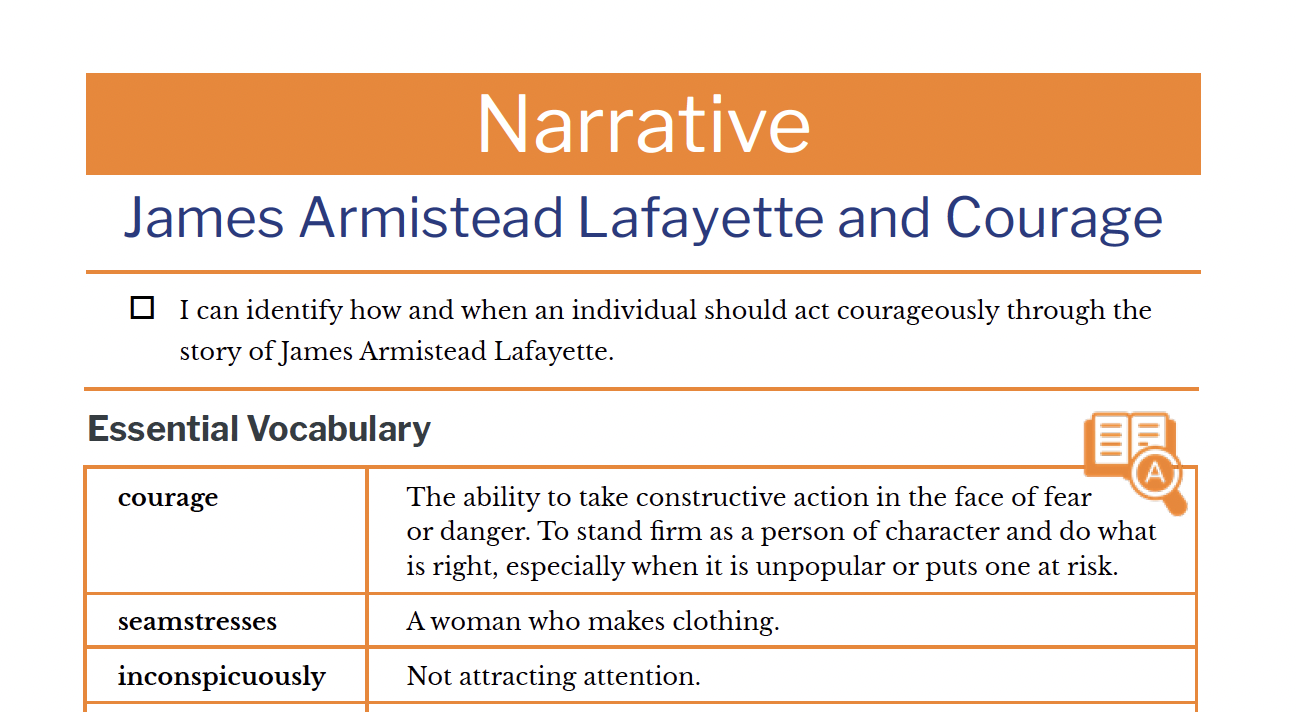
- James Armistead Lafayette and Courage Narrative
Teacher Resources
- Analysis Questions
- Virtue in Action
- Journal Activity
- Sources for Further Reading
- Virtue Across the Curriculum
Lesson Components
Lesson plan
90 minClick a phase to open it
Key Terms
- Courage
- The ability to take constructive action in the face of fear or danger. To stand firm as a person of character and do what is right, especially when it is unpopular or puts one at risk.
- Seamstresses
- A woman who makes clothing.
- Inconspicuously
- Not attracting attention.
- Infamous
- Having a reputation for bad reasons.
- Couriers
- People who deliver messages.
More Information
Procedures
- The following lesson asks students to explore the virtue of courage. Students will engage with the story of James Armistead Lafayette as an example of courage, as they consider the question: How does the maintenance of liberty and equality depend on individuals acting courageously?
- The main activity in this lesson requires students to read and analyze a narrative that explores how James Armistead Laffayette acted courageously throughout his life. Students may work individually, in pairs, or small groups as best fits your classroom. The analysis questions provided can be used to help students comprehend and think critically about the content. As the teacher, you can decide which questions best fit your students’ needs and time restraints.
- Additionally, students will use historical literacy skills to analyze primary source images.
- Lastly, the lesson includes sources used in this lesson for further reading and suggestions for cross-curricular connections.