Lesson
Due Process and Fair Trials

Does the Supreme Court still have a responsibility to abide by fair trials, due process, and the Constitution during wartime? Evaluate the contradictory viewpoints concerning liberty and security.
Founding Principles
Learning objectives
- Students evaluate contradictory viewpoints concerning liberty and security.
- Students evaluate Supreme Court decisions regarding fair trial, due process, and the war on terror.
- Students analyze components of a fair trial.
- Students evaluate whether the Constitution takes on different meanings during wartime.
Materials
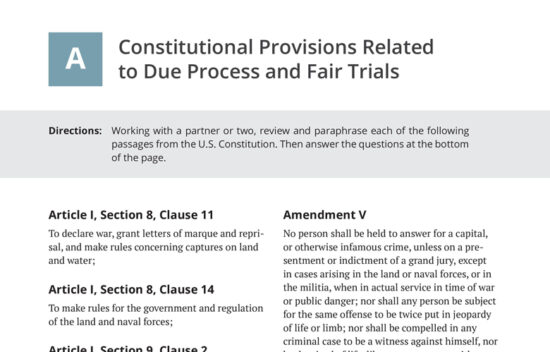
- Handout A: Constitutional Provisions Related to Due Process and Fair Trial
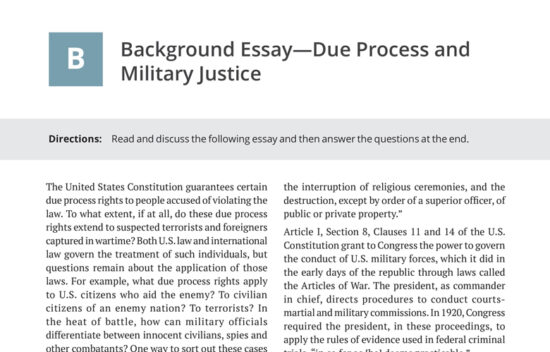
- Handout B: Background Essay—Due Process and Military Justice
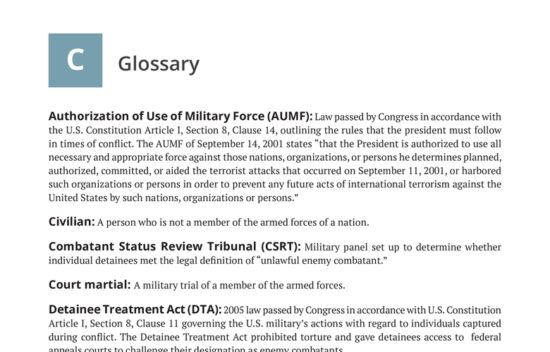
- Handout C: Glossary
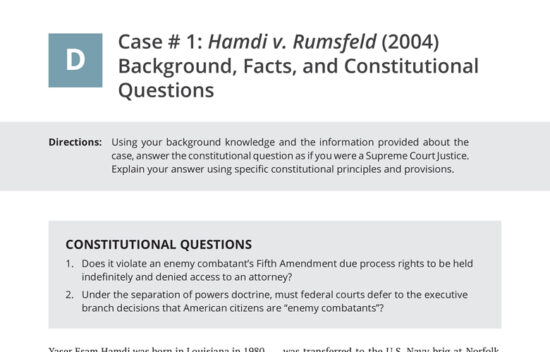
- Handout D: Case # 1— Hamdi v. Rumsfeld (2004) Background and Facts
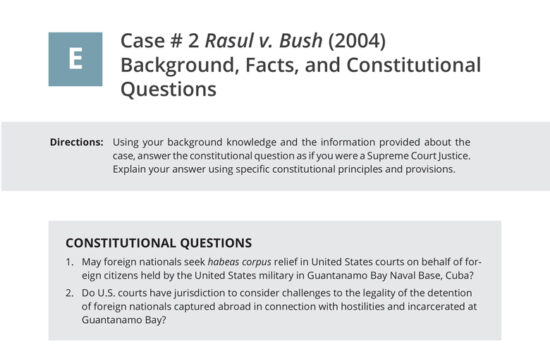
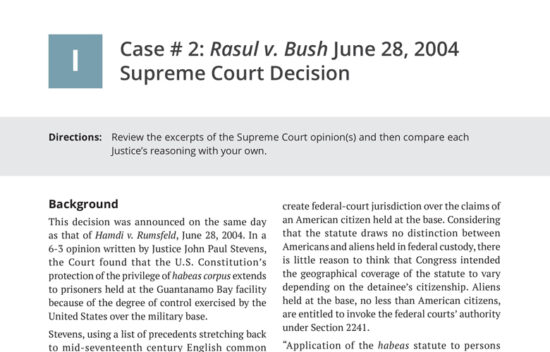
- Handout E: Case # 2— Rasul v. Bush (2004) Background and Facts
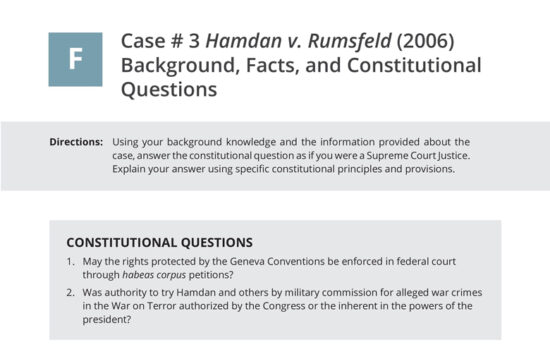
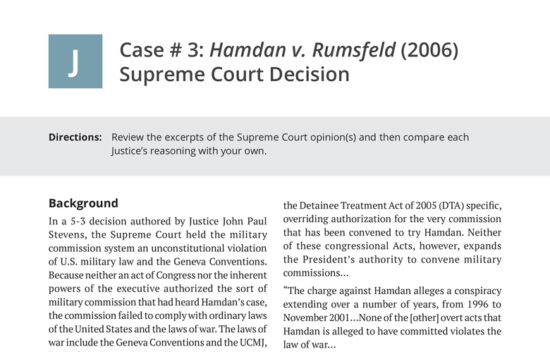
- Handout F: Case # 3— Hamdan v. Rumsfeld (2006) Background and Facts
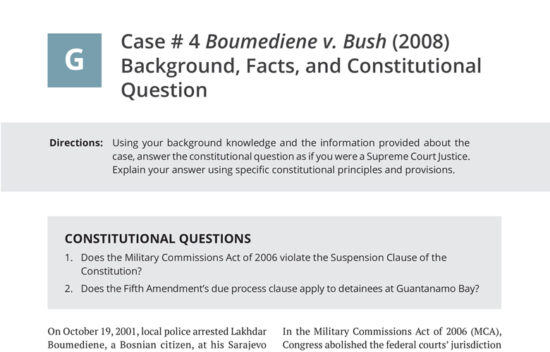
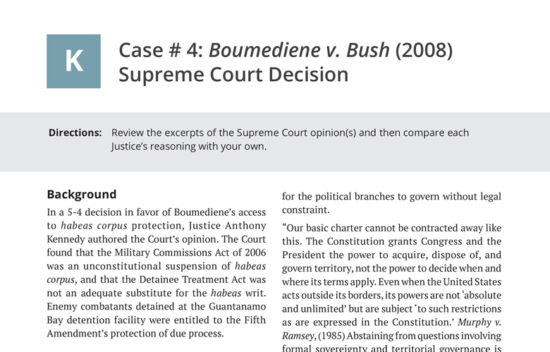
- Handout G: Case # 4— Boumediene v. Bush (2008) Background and Facts
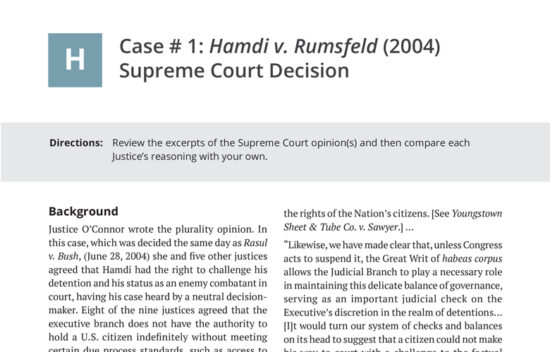
- Handout H: Case # 1— Hamdi v. Rumsfeld (2004) Supreme Court Decision
- Handout I: Case # 2— Rasul v. Bush (2004) Supreme Court Decision
- Handout J: Case # 3— Hamdan v. Rumsfeld (2006) Supreme Court Decision
- Handout K: Case # 4— Boumediene v. Bush (2008) Supreme Court Decision
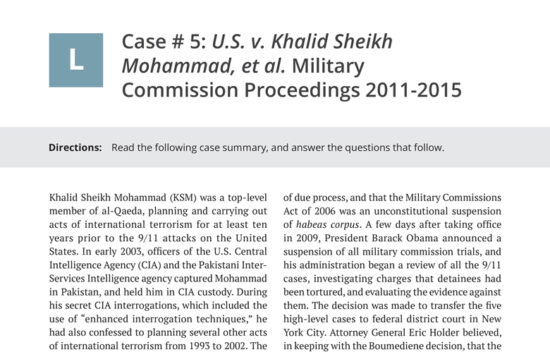
- Handout L: Case # 5— U.S. v. Khalid Sheikh Mohammad, et al. Military Commission Proceedings 2011-2015
- Handout M: Timeline— Military Justice during the War on Terror
- Handout N: Comparing Supreme Court Decisions
Lesson Components
Load more
Lesson plan
240 minClick a phase to open it