Lesson
Civil Rights and Civil Liberties
Guiding question
In what ways have civil rights and civil liberties been protected and challenged in our nation’s history?

Objectives
- Students will explain and give examples of civil rights and civil liberties.
Materials
Resources
- Whiteboard, digital board, or another area to collect words for a word wall
- Image collection and a way to distribute images to students
Lesson Components

An interactive infographic that explain the Rights of the Accused.

Explore the constitutional protections for individuals accused of crimes; each card presents a real-world situation, explains the relevant constitutional basis, and references key Supreme Court rulings.

Case studies on landmark rights of the accused Supreme Court cases.
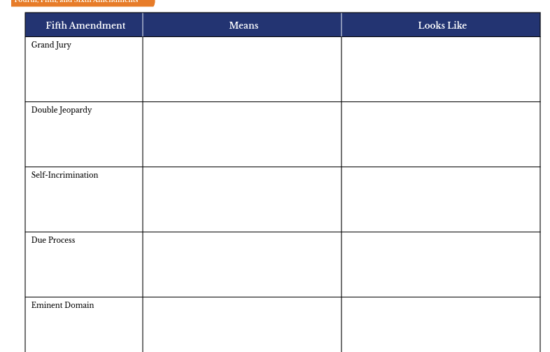
How do the Fourth, Fifth, and Sixth amendments protect the rights of the accused?

A visual resource outlines essential terms, foundational concepts, and critical clauses related to the Fourteenth Amendment, with a focus on substantive due process.

A graphic organizer that helps divide the key components of the Fourteenth Amendment.

A primary source activity analyzing the different sections of the Fourteenth Amendment.

The text of the letter, plus background information, and comprehension and analysis questions.

A card sorting interactive that helps students define the fourth, fifth and sixth amendments.

Is the Supreme Court the best branch of government to protect civil liberties?
Lesson plan
More Information
Facilitation Notes
- This activity features topics and images that can be difficult to discuss or look at due to their emotional nature. Follow your school or district protocol for preparing students and families for sensitive topics.