Skip to Main Content

#BRITeacherSpotlight

Educator Spotlight

Group photo of twelve people, smiling and posing together in a well-lit indoor setting.

The Bill of Rights Institute Spotlights Educators

<p class="has-text-align-center">The Bill of Rights Institute honors and supports educators around the country. </p>

<p class="has-text-align-center">Every month we honor one of our master teachers!</p>

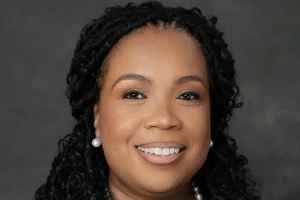
Woman with curly black hair and pearl earrings smiling against a gray background.
EducatorTeacher of the Year Finalist • Lowndes High School • Valdosta, Georgia

Alishia Gaston Stack

An extra class changed Alishia Gaston Stack’s career. While teaching English, she took on a government course during her planning period and liked it so much that she earned certification in the subject. She now teaches government and civics at Lowndes High School. Her “daily docket” gives students a question or activity to get them thinking. For a Constitution Day project, they research and propose a 28th Amendment, weigh its advantages and drawbacks, and make their case to classmates acting as Congress. Stack presses them to consider whether their proposal belongs in the Constitution or addresses something a state should handle. She chooses groups so students work beyond their usual circles, then gives them room to lead. When one student asked to model her 28th Amendment proposal, Stack gave her the opportunity to teach her classmates. Students who ask Stack to supply an answer may hear, “I need you to make an executive decision.” She wants them to practice thinking it through themselves. Stack takes as much pride in students volunteering at the local hospital or writing encouraging cards to school staff as she does in their exam scores. “It’s like they find their voice in this class,” she says of students who arrive shy or quiet. Their growing confidence matters to her, along with the responsibility they take for their work and for others.


EducatorHastings High School • Houston, Texas

Andi Maceo

Although Andi Maceo comes from a family of educators and has been teaching for 12 years now, she once questioned if she had what it takes to be a teacher. She was working as a recruiter for The Art Institute of Houston when that changed. “I felt I could do more to show kids the opportunities that were available to them,” she recalls. She moved on to teaching art, a position she held for six years. However, she eventually moved into teaching history full time after finding a job as an 11th grade U.S. history educator at her current school, Hastings High School in Houston, Texas. This proved to be a challenging shift as Andi’s background was in European and Latin American history. “I have spent the last 6 years learning everything I can to become effective in U.S. History,” Andi says. Andi has been married to her husband Karl for nearly seven years. They live with their two cats in Missouri City, a small suburb outside of Houston. In her free time, Andi enjoys reading, gardening, cooking, and baking.

EducatorTeacher

Brandon Barger

Brandon decided he wanted to be a high school history teacher when he was a high school student. Today, Brandon is an economics and American history teacher in Rose Hill, Kansas. He has been teaching for 19 years, during which he has been a regular attendee at BRI one-day and multi-day PD programming. He has also recommended our Constitutional Academy (BRI’s summer student program) to a number of his students. As a regular attendee at BRI programming, Brandon has seen to most of BRI’s resources first hand, but his favorite BRI resource is Documents of Freedom. He says its “primary source documents are my first go to when looking for resources in my classroom. They fit so easily into my plans and have great course content”. He appreciates that most of the material he receives from the Institute is immediately useful in his classroom. Thomas Jefferson and WWII are the two favorite parts of his curriculum. He admires Jefferson for writing the Declaration of Independence and enjoys talking about all its complexities with his students. He also notes he is very jealous of Jefferson’s library. WWII is also a favorite topic and he highly recommends the WWII museum in Kansas City to other educators.

Headshot of a smiling man with short dark hair, wearing a black blazer over a white shirt. Neutral gray background.
EducatorGreater Johnstown High School • Johnstown, Pennsylvania

Christian Wrabley

For Christian Wrabley, teaching civics is about cultivating citizens who see themselves as active participants in democracy. A 14-year teaching veteran, he believes that “a free and just society doesn’t happen automatically, it’s practiced, learned, and lived.” Christian teaches Civics, U.S. History, and AP History, blending real-world engagement with civic principles. His students don’t just study democracy, they practice it. From class discussions that model civil dialogue to weekly student votes on school issues, Christian shows his students that their voices and choices matter. He begins each year with lessons on civil discourse, emphasizing that the goal of conversation isn’t to “win” but to understand. One student even shared that those skills helped him repair his relationship with his father, proof, Christian says, that “what we learn in civics goes far beyond the classroom.” Deeply involved in his community and passionate about civic renewal, Christian sees civics as a hopeful discipline. “When young people believe they can make a difference,” he says, “they usually do.” His classroom embodies that belief, where every student learns not just the structure of government, but the power of their own agency within it.

A man with glasses and a beard smiles for the camera against a plain background.
EducatorTeacher of the Year Finalist • BASIS Scottsdale • Scottsdale, Arizona

Christopher Klugman

A graduate told Christopher Klugman that a comment on a test helped him choose public policy. Klugman had noticed the student’s interest and encouraged him to pursue it. He looks for those opportunities as he teaches ninth-grade AP U.S. Government at BASIS Scottsdale. “You have to have that base of knowledge in order to then go do the amazing things,” Klugman says. His students read the Declaration of Independence, Constitution, and Federalist Papers closely, compare Supreme Court decisions, and write arguments about how government works. He also coaches mock congressional debate and introduced a civics capstone course. Students return to constitutional questions in greater depth by researching, drafting, and revising their answers before practicing how to present them. Klugman points students toward civic essay contests and other opportunities to pursue an interest beyond class. His own experience as a state representative’s assistant shapes an assignment in which students form simulated interest groups and write to elected officials. He was inspired by receiving letters from BASIS Scottsdale students while working in the legislature. Now he helps his own students make their case to a representative.

EducatorTeacher

Craig Hanzel

Craig Hanzel has been teaching for fifteen years and has been using BRI resources in his classroom for most of that time, having attended his first BRI seminar in 2006. “BRI is my favorite professional development opportunity of the school year. I always walk away with new content knowledge, ready-to-use lessons and thorough instructional strategies that can easily be lent to my varied classes.” Relevancy is key, according to Craig, in working with high school students and finding new ways to unite them around a common goal. He is always looking for innovative strategies to bring this concept to life for his students. He not only teaches public policy, but also shows students how it plays out in the real world by taking his seniors to the county courthouse so they can job-shadow in various departments. Craig is lucky to share his passion for teaching government and U.S. history with his wife, Laura, who also teaches social studies at Atchison High. Laura and Craig often attend seminars together, and are able to share ideas for new lesson plans and teaching strategies with each other. In addition to his responsibilities as a teacher, husband, and father of four, Craig also finds time to teach karate at the local YMCA, serve as an adjunct professor at Benedictine College, and mentor new teachers in his district.

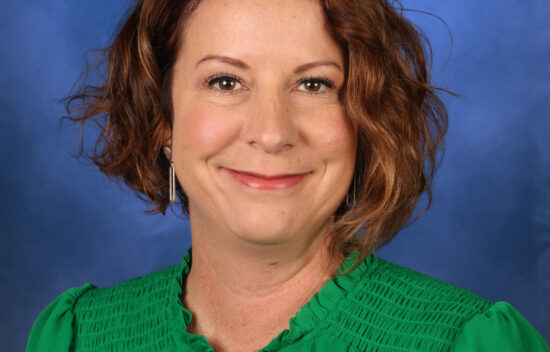
A woman with curly brown hair wearing a green shirt, smiling against a blue background.
EducatorArchbishop Mitty High School • San Jose, California

Dalane Bollinger

After a career in advertising, Dalane Bollinger returned to her first loves, history and political science, and has spent nearly 15 years teaching AP Government and U.S. history at Archbishop Mitty High School in San Jose. A campus leader in civic engagement, she organizes school-wide mock elections and voter-registration drives so students experience participation, not just read about it. “First and foremost, I’m trying to create voters,” she says. Dalane’s teaching is anchored in founding principles and constitutional literacy. A formative visit to the University of Virginia sharpened her appreciation for Thomas Jefferson’s belief in an informed citizenry and the necessity of the Bill of Rights. In her classroom, students grapple with federalism, separation of powers, and civil liberties, and connect those ideas to current issues with rigor and respect. Her students often write back from college and early careers to share how civil-dialogue skills and constitutional thinking continue to guide them. Dalane holds a master’s degree in history and believes the Founders’ charge still stands: “A republic, if you can keep it.” She helps students keep it by knowing how it works and by practicing citizenship every day.

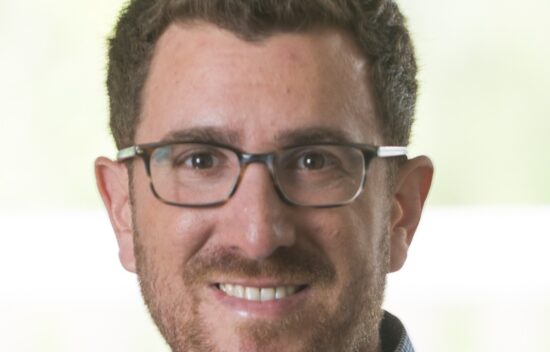
A man with short, curly hair wearing glasses and a blue checkered shirt, smiling at the camera.
EducatorUnion Square Academy • New York, New York

David Edelman

David teaches upper-level courses including Civics, Economics, and AP Government. For him, civic education is not just a subject but a mission: to make Justice Stephen Breyer’s description of schools as the “nurseries of democracy” a reality. He has transformed his classroom into a “laboratory for civic engagement” where students participate in caucuses, debates, and action civics projects. His innovative classroom caucus model lets students physically move to indicate agreement, disagreement, or uncertainty, then collaborate to refine arguments and reconsider positions. David’s students have been featured on PBS’s Preserving Democracy, showcasing how his methods bring civic issues to life and empower students to lead. He also designs units on contemporary issues like censorship and book banning, asking students to analyze Supreme Court opinions and write their own briefs, connecting constitutional principles to modern debates. For David, civics is about elevating student voice, fostering inclusion, and practicing democracy in the classroom. His hope is that students remember their time with him as a chance to ask tough questions, think critically, and engage with multiple perspectives in civil, meaningful ways.

EducatorTeacher

Eliot Waxman

Eliot Waxman has had a wide variety of experiences working both as a teacher and in politics, all of which have shaped his opinions on the state of education in the U.S. “If we really want students to be lifelong learners in an ever-changing world, we need to give them authentic and rigorous opportunities. They need to be able to learn in ways that are meaningful to them,” he states. Throughout his career, Eliot has worked as a public opinion pollster, in the federal government’s community service programs, and as a teacher of a variety of high school government and history classes. Eliot’s greatest influence during his career was his principal at Oakton High School. “He set a vision for the school that challenged the status quo and had us think about what education in the 21st century should look like. He then trusted his staff to implement the vision in the way they thought was best for the students,” Eliot recalls. One of Eliot’s proudest achievements was when he helped create a student debate during the 2008 presidential election that was aired on C-SPAN. Eliot especially enjoys teaching the Campaigns & Elections unit to his government classes. “I was a political consultant before I became a teacher and I like to share my experiences with the students. I particularly like to see students engaging with their elected representatives and discussing the relevant issues of the day, especially with their parents,” Eliot says. He is very interested in helping students become “effective citizens” and ultimately views it as one of his responsibilities as a teacher.

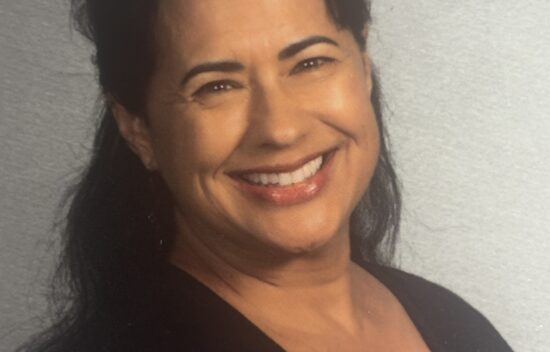
A smiling woman with long dark hair, wearing a black top, against a gray background.
EducatorHeritage Academy • Mesa, Arizona

Elizabeth Purtell

Elizabeth Purtell has taught across grades 6–12 since 1991, narrowing her focus over time to history, government, and, her passion, 8th-grade civics at Heritage Academy in Mesa, Arizona. In her classroom, students practice sourcing, identify bias and historical context, and learn to distinguish between fact and commentary. “I don’t want TikTok votes, I want well-thought-out votes,” she says, emphasizing evidence-based reasoning and civil discourse. Elizabeth models active citizenship for her students. She has volunteered in a U.S. Senator’s office and regularly writes to her congressional representatives about local and national issues. Her classes simulate roles across government to show how constitutional processes work in practice, and homeroom service projects, like letters for Operation Gratitude, connect civic knowledge to community action. She teaches that the Constitution’s design balances liberty between tyranny and anarchy and asks students to respond “constitutionally and respectfully” when they see drift toward either extreme. “Apathy is the death of democracy,” Elizabeth reminds her students, encouraging them to engage, gather evidence, and advocate with empathy. She holds a master’s degree in education and believes “to teach civics is to believe in the power of education to preserve liberty.”

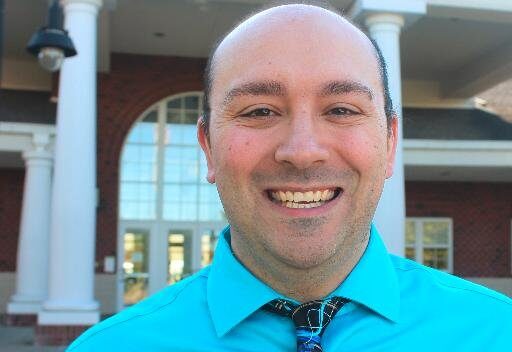
Smiling man in a blue shirt and tie poses in front of South Fayette High School.
EducatorTeacher

Felix Yerace

One of the central themes of Felix Yerace’s career is leadership and fostering leadership skills among the young people he works with is one of his passions. In addition to teaching at South Fayette High School in McDonald, Pennsylvania for the last fifteen years, he has also served as the assistant executive director and Advanced Gold Summer Camp co-director for the Pennsylvania Association of Student Councils since January of 2018. This year, in addition to serving on BRI’s Teacher Advisory Council, Felix is teaching AP U.S. History and AP Comparative Government and Politics, U.S. History, Leadership Studies I and II, and Applied Positive Psychology. The U.S. History and Leadership II classes are both College in High School (CHS) classes. In the middle of all of these responsibilities, Felix also finds the time to serve as a student government co-adviser, interact co-adviser, link crew co-coordinator, and graduation project coordinator at South Fayette High. Felix earned a B.A. in Political Science from the University of Pittsburgh, a Master of Education from Bloomsburg University of Pennsylvania, a Masters in Applied Positive Psychology from University of Pennsylvania, a Masters of Public Management from Carnegie Mellon University, and a PhD in Leadership Studies from Gonzaga University.

EducatorChanning Hall IB World School • Draper, Utah

Grace Struiksma

Grace Struiksma realized that she wanted to be a teacher when she was a young child. “I loved school, and when I wasn’t attending school, I would line up my dolls and stuffed animals in front of my chalkboard and teach them what I learned.” Grace was one of twenty teachers who joined us for our week-long Summer Institute here in D.C. last month. She has been teaching for 24 years, and currently teaches US History, Utah Studies, History Through Cinema, and The World Through Film at Channing Hall IB World School in Draper, Utah. Her proudest achievement is receiving the KSL Radio Teacher of the Week award because the award was based on a letter written by a student who felt that Grace had made a significant difference in her own life and the lives of other students. She loves teaching about the Constitution and the Bill of Rights because it’s an opportunity to remind her students that these documents and principles are relevant to their daily lives. “Students need to know,” Grace says, “That we are ‘we the people,’ and it is our duty, honor, and privilege to serve our fellow citizens through government work or simply being an active participant in our democracy.”

</p>