Video
Thomas Jefferson’s Character and Legacy with Andrew Burstein | BRI Scholar Talks
Watch
Founding Principles
Natural/Inalienable Rights, Liberty, Democracy, Consent of the Governed
About this video
In this episode of BRI Scholar Talks, historian Andrew Burstein joins host Tony Williams to explore the character, ideas, and legacy of Thomas Jefferson. Drawing on his scholarship, Burstein examines how Jefferson’s personality, intellectual influences, and belief in natural rights and self-government shaped his role in the American founding, including his authorship of the Declaration of Independence.
The conversation also unpacks the complexities of Jefferson’s legacy, from his vision of an agrarian republic to the realities of political leadership during a transformative era. Perfect for students, this episode connects Enlightenment ideas, republican principles, and Jefferson’s presidency to his lasting impact on American government and civic thought.
0:05 For this episode of Scholar Talks,
0:07 we will be discussing an intimate history of Thomas Jefferson.
0:12 Our guest, Andrew Burstein, is the Charles Phillips
0:14 Manship Professor of History at LSU.
0:18 He’s the author of 13 books, including The Passions of Andrew Jackson,
0:24 The Problem of Democracy, The Presidents
0:27 Adams Confronts the Cult of Personality.
0:31 And his new book.
0:32 Being Thomas Jefferson An Intimate History,
0:36 which is the subject of today’s conversation.
0:38 I am Tony Williams, senior fellow at the Bill of Rights Institute,
0:41 and I want to welcome you to another episode of
0:44 Scholar Talks in our America 250 series.
0:48 And Andy, thank you very much for joining me.
0:51 I’ve been looking forward to the conversation.
0:52 Tony.
0:53 I love your book, and I really want to hear the backstory on this one.
0:58 It’s a really unique approach.
1:00 And so let’s start how you came up with the idea for the book,
1:04 and maybe explain your approach to our viewers about,
1:08 what an intimate history of Thomas Jefferson looks like.
1:12 Sure.
1:14 I am a student
1:15 of 18th century American English,
1:18 and that’s if this is the consummation of a career
1:22 studying the life of the mind and early America.
1:27 Language was an intoxicating field of study.
1:32 The nuances, metaphor, rhetoric, going back to the ancients.
1:37 And so in trying to situate,
1:44 Thomas Jefferson in his world
1:47 and, and construct the boundaries of that world
1:53 to, to get inside his head,
1:56 requires an understanding
1:58 of the whole enlightenment picture.
2:02 We think of the enlightenment as a,
2:08 moral philosophy,
2:10 the language of rights, political rights.
2:13 And it is that.
2:15 But there’s so much more going on that involves the human condition.
2:20 And that’s how I get to intimate history.
2:24 There’s the medical enlightenment, which was just as important.
2:27 It was the language of passions, the language of appetites.
2:32 And it was as
2:34 critical as the moral philosophy.
2:38 So you can’t just look at the Age of Enlightenment
2:42 and the American Enlightenment, which gave birth to this country,
2:47 the language that we still hold dear,
2:50 particularly the Declaration of Independence.
2:53 We need to tease out emotional states in order to understand
2:58 how the people of the time received
3:02 those words of Jefferson that live on.
3:05 He had a seductive way with words.
3:10 That is the reason why
3:13 we still relate to Jefferson
3:16 or can quote Jefferson,
3:20 and we can’t quote George Washington
3:22 or even John Adams Hamilton Madison.
3:26 They didn’t have that power, that emotive power
3:30 that Jefferson did.
3:33 I’ll give you an example, a couple of examples.
3:37 Let those who flatter fear.
3:39 It is not an American art that he wrote that
3:45 boldly.
3:46 In a Summary View of the Rights of British America in 1774,
3:50 which preceded the declaration by two years.
3:54 His ability, the cadence, the rhythm,
3:59 as well as the emotional content.
4:02 He’s going up against the king
4:05 in a most particular way.
4:08 Let those who flatter fear it is not an American art.
4:12 He’s injecting the colonial pride
4:16 in a way that the standard documents of the time did not.
4:21 This is poetic, and this is the way
4:25 his language transcended
4:30 what we normally feel is the kind
4:33 of stilted language of the 18th century.
4:38 And that’s, that’s my entry
4:40 into or the window into the study
4:43 of what made Thomas Jefferson.
4:48 Write.
4:49 Yeah I really love that.
4:50 And so, talking about making
4:54 Thomas Jefferson, let’s go ahead and dig into those factors.
4:57 So what were some of those.
4:59 What are some of the most formative experiences?
5:02 There were a lot in, in in making Jefferson who he was.
5:08 Well, the College of William and Mary,
5:10 which he attended at the age of 17 and remained
5:13 in Williamsburg,
5:16 other than vacations, he did return home to the
5:20 what was then the western frontier of Virginia, Albemarle County,
5:25 where he began to build
5:27 at the top of the mountain,
5:29 the National Historic Site of Monticello in the end of the 1760s.
5:34 But from the beginning of the 1760s until he,
5:39 excuse me, became a lawyer,
5:42 where he studied with George with
5:45 who was also signed over the Declaration
5:47 of Independence, and Jefferson’s surrogate father.
5:50 In a lot of ways,
5:53 he lived with, with
5:55 and he held him up as
6:02 a moral exemplar.
6:04 And I say this as a way of of previewing
6:07 the very controversial
6:10 or hypocritical Jefferson on race and slavery,
6:15 because this was an early and ardent abolitionist,
6:19 and Jefferson had him as, as I say, a moral exemplar, mentor,
6:26 so that he never lost
6:28 the ability to see
6:31 that he was
6:33 in a difficult position as one who inherited
6:37 slaves from his father, from his father in law.
6:42 His father died when he was 14, and his father,
6:47 best, who was a member of the House of Burgesses,
6:52 really was very much the reason why Jefferson
6:56 was a member of the House of Burgesses from his mid 20s.
7:01 They were part of the elite class,
7:03 the political ruling class, the planter class.
7:08 But Jefferson
7:11 learned a lot on his own from his teachers.
7:14 And he before before George with there was,
7:19 he lived with other boys,
7:23 at the home several miles from where he grew up.
7:27 Of James Maury, who also figures, importantly,
7:31 because Jefferson’s interest in geography, in mathematics,
7:37 in history and language began there
7:41 when he’s a young teen, his father, the most we know
7:46 is that his father gave him a gun at the age of 14, age of ten.
7:50 And to go out in the mountains and, and hunt and, you know, go out on your own.
7:54 So there was an independent spirit that his father,
8:00 bequeathed to him.
8:02 But they were very infrequently in the same place at the same time. So
8:09 I don’t think Peter Jefferson’s influence on his son,
8:14 there was pride there.
8:18 Peter Jefferson combined
8:20 with a professor from William and Mary.
8:25 Named fry.
8:27 The Jefferson frying map of Virginia
8:31 and its borders
8:34 required that Peter Jefferson
8:37 travel for months at a time in the wilderness,
8:42 and he didn’t have
8:46 that much to do with his son’s education.
8:49 He owned about
8:51 40 or so books, which at that time was a considerable library,
8:55 especially out on the what was then the frontier.
8:59 And maybe that influenced
9:03 Jefferson’s lifelong, bibliophile,
9:08 practices.
9:10 But on the other hand, his mother
9:14 survived,
9:17 well into his adult years.
9:21 Yet at the cemetery that Jefferson constructed at Monticello,
9:30 he places his mother, and he’s a micromanager.
9:33 He’s controlling of his environment.
9:35 That’s one of his chief traits
9:38 as a human being.
9:42 Calculating,
9:44 he placed his mother’s grave
9:47 at some distance from the intimate,
9:52 square where he’s in the center,
9:55 surrounded by his wife, his best friend,
9:59 his two daughters.
10:02 He’s got this all planned out,
10:04 and he buries his mother
10:08 a good
10:10 ten, 15ft away, next to
10:16 distant cousins with whom
10:17 neither of them had much of a relationship.
10:21 I don’t want to over analyze,
10:25 you know, I’m not placing Jefferson
10:27 on the couch in this book.
10:30 But I do analyze his language for clues.
10:33 What he wrote, what he didn’t write, what he said, what he didn’t say.
10:38 And so, in terms of his,
10:42 foundational period,
10:46 he’s a self-taught architect
10:48 who decides to build on the top of a mountain,
10:51 which is not the most practical thing to do.
10:53 It’s his dream world.
10:55 It’s his fantasy world.
10:57 And he wants to bring people to the mountain
11:03 to engage with him
11:06 in a kind of, amusement.
11:10 That is both intellectual and nature loving.
11:16 You know, he to to hold up his telescope and say,
11:20 look out there at the Blue Mountains, and he’ll see a sort of phenomenon
11:26 like looming, he calls it,
11:28 where a distant mountain is.
11:32 It seems to have,
11:36 unusual characteristics,
11:39 like it fades in and out and
11:43 he’s an amateur scientist.
11:45 He’s an amateur linguist.
11:47 He he teaches himself languages.
11:50 And he does all this in this library
11:53 that by 1776 was already 1500
11:57 volumes
11:58 and contain the medical enlightenment.
12:01 So, as I mentioned that earlier, the ancients
12:05 modern poetry, literature,
12:09 just runs the gamut.
12:12 Right?
12:12 So so you mentioned George with and and the more, you know, more philosophy,
12:17 the moral sense.
12:18 So so my next question leads right into there.
12:20 So, so hand is, the Scottish Enlightenment in particular,
12:25 other forces of the enlightenment shaped Jefferson’s
12:28 drafting of the Declaration of Independence.
12:31 Yes, I, I do examine the role
12:36 of the Scottish philosophers
12:39 like Adam Smith,
12:42 and the theory of moral Sentiments is,
12:45 is a marvelous book that that still,
12:49 reads,
12:50 with,
12:52 with an emotive power.
12:54 And it’s about fellow feeling and Jefferson’s mantra, as it were.
12:59 And he injects this into his first inaugural address is,
13:04 harmony and affection in the in his in his,
13:09 it’s friendship, personal friendship and moral community as well.
13:13 And this is part of the declaration as much as it’s part
13:17 of his first inaugural address when he becomes president in 1801.
13:22 Harmony and affection.
13:23 He he writes it in that first inaugural without voyage,
13:27 without which liberty and even life itself are
13:31 but dreary things again,
13:34 finding a way of injecting,
13:37 understanding who his audience is or his reader, and injecting a kind of
13:42 not just cadence, but an emotional sensibility
13:49 in the Declaration of Independence,
13:54 he goes to the flip side of the moral philosophers
14:00 in creating
14:03 a legal statement.
14:06 Aside from the beautiful language.
14:11 It’s a divorce decree.
14:13 It’s a divorce instrument.
14:15 And the King George the Third is unfeeling,
14:20 in Jefferson’s words, he’s abusive.
14:24 And if you read the declaration
14:26 from this perspective, you see that
14:29 he feminized the colonies in a way
14:34 that the king has abandoned his colonies like a
14:38 like a bad husband would abandon his family
14:42 so that the emotionally abandoned
14:44 colonies acquiesce again using Jefferson’s word,
14:48 acquiesce to the self saving separation from Britain,
14:54 he writes,
14:57 after the whole list of
15:00 I think that were 27,
15:03 paragraphs that that list all of the reasons
15:06 why America is forced into this situation to save itself
15:11 from abuse.
15:15 And it was the last stab
15:18 to agonizing affection.
15:21 And I, I write in the book that his,
15:27 context for
15:30 for Washington’s ear
15:32 when he and Hamilton are up against one another in the 1790s,
15:36 when Jefferson’s secretary of state and Hamilton’s secretary of the Treasury
15:41 and Washington is listening to both of his
15:45 top advisors in the cabinet,
15:49 Hamilton accuses Jefferson here.
15:51 He he,
15:54 combines Jefferson and Madison.
15:55 He says they have
15:58 a womanish resentment of England,
16:03 and a
16:03 womanish attachment to France during the French Revolution.
16:07 Well when
16:10 when Washington sides with Hamilton,
16:15 Jefferson has to justify this.
16:18 So he he does a medical diagnosis of
16:23 Washington and thinks that Washington is senile.
16:28 He’s in his early 60s,
16:31 which from my perspective is it’s not.
16:33 Yeah.
16:36 But this is this is his way of justifying
16:40 his whole grammar of politics.
16:45 I write that Hamilton
16:48 and Jefferson were both Machiavellian,
16:51 and that Hamilton proved himself the better Machiavellian,
16:55 and Jefferson typical of him.
17:01 Runs from when he sees his.
17:04 He no longer can influence Washington.
17:07 He runs.
17:08 He runs back to Monticello, where he’s healthy,
17:11 where he’s in control of the environment, where he’s the boss
17:16 and can write letters justifying his positions.
17:23 He also wants the men
17:26 in political life
17:29 who have been reading the newspapers, who see what’s going on.
17:33 He writes to Madison, the motion of my blood
17:36 no longer keeps time with the tumult of the world.
17:40 He puts it in this again, this
17:44 this kind of neurological,
17:49 you know, medicalized language
17:52 to to state that he can only feel,
17:58 once he’s removed from political context
18:01 from, from the,
18:04 the disruptive world of there.
18:08 It was Philadelphia.
18:10 Only then can
18:12 he restore that proper balance.
18:16 And then he went about trying
18:18 to find biographers,
18:21 who would utilize his vast collection of every scrap he ever wrote on.
18:27 He, he kept and filed in, in a very orderly manner.
18:32 And, in the end,
18:37 he relied on his loving family, his grandchildren,
18:42 to see to it that, Jefferson’s,
18:48 message to posterity was preserved and,
18:51 that he won the war
18:56 against Hamilton
18:58 and against John Marshall, who was
19:01 multi-volume biography of,
19:04 Washington using Washington’s papers which were
19:09 given to him alone.
19:12 Jefferson bested his enemies in the end, but he didn’t live to see it.
19:17 He went to his grave fearing,
19:20 a return to monotheism
19:22 or a moneyed aristocracy that would rule America,
19:26 and that his democratic dream would be in unfulfilled.
19:32 All right.
19:33 So excellent.
19:36 On, on and with, give a little peek at the 1790s.
19:40 So maybe step back a little bit, in, in the 1780s.
19:45 So, so what did Jefferson’s years in Paris as a diplomat
19:49 reveal about him?
19:53 I find that these years, 1784 to 1789,
19:58 were the most consequential
20:01 in Jefferson’s evolution as a human being.
20:04 Because he became a cosmopolitan,
20:10 he was welcomed into the salon culture.
20:14 He saw intelligent women
20:19 who were not the domestic goddesses that he preferred.
20:24 Women should be in his provincial Virginia,
20:29 mindset.
20:33 He inherited, in a way,
20:34 not just Benjamin Franklin’s position as minister to France.
20:39 Essentially Ambassador
20:42 at a critical time when France, the liberal nobility,
20:45 was in charge of the direction
20:50 of the state,
20:52 and Jefferson was there long enough to see the fall
20:56 of the Bastille and the rise of men like Lafayette.
20:59 And another, more key, the marquee to Condorcet,
21:05 who figures heavily in my book as an influence
21:08 on Jefferson.
21:12 Of all the people in France that I think
21:15 had the most impact on him, and that introduced him
21:19 to the progressive values that he could have embodied, and then
21:25 come down to us today as a true progressive.
21:31 He understood
21:34 from Condorcet
21:37 how this could be possible in their world,
21:42 but he didn’t have the guts to go up against
21:47 traditionalists
21:49 and became
21:51 socially more conservative as he aged.
21:54 Whereas Condor Say, who lost his life
21:58 during the terror in 1794
22:02 but left the world with books
22:07 that Jefferson read thoroughly.
22:09 In fact, Condor essays work.
22:14 Reflections on Negro Slavery.
22:16 That’s an English translation Jefferson proposed to translate
22:20 and did the first chapter.
22:23 He wanted others
22:26 to pick up the torch.
22:30 He was,
22:31 as I described him, a timid abolitionist.
22:34 But there was a very strong
22:38 anti-slavery,
22:41 movement.
22:42 And among thinkers in France
22:45 and England at that time,
22:48 and Jefferson had to defend Virginia,
22:53 but at the same time recognized
22:57 the superior logic.
23:00 He just didn’t think that it could
23:03 be effectively,
23:08 you know, read that, you know,
23:10 put into, put put into legislation in America.
23:14 So he had thought that Condor essays,
23:19 Reflections on Negro Slavery.
23:23 Would have an impact, just as I mean.
23:27 And he would certainly mention George with as an example of someone who could help,
23:32 carry those ideas into
23:36 the political circles
23:38 that that they traveled in the political elite of Virginia.
23:43 There was another man in England,
23:46 Richard Price, who
23:49 is, we would say liberal progressive.
23:54 And he, too, was in close contact
23:56 with Jefferson and his anti-slavery
24:01 pieces.
24:02 He was afraid, he thought
24:04 that the Virginians were, most
24:08 favorably
24:10 bent on doing away with slavery. So.
24:17 And Condorcet,
24:18 by the way, was also an ardent feminist.
24:22 I mean, this is even before Mary Wollstonecraft,
24:25 in 1792, vindication of the Rights of Women.
24:28 He was way ahead of his time.
24:31 And so
24:31 Jefferson and he were very close for those years.
24:34 Jefferson was in Paris.
24:38 I think
24:41 that.
24:43 Jefferson didn’t have
24:47 there was something I mean, he was he was a mild
24:50 mannered individual.
24:53 He didn’t confront or argue face to face.
24:59 He like to work through other people.
25:01 He liked in politics.
25:03 Throughout his,
25:06 adult career, but especially in his presidency.
25:09 And he worked through younger the rising generation of politicos
25:15 whom he could influence and keep my name out of the papers.
25:19 But that’s the way he practiced
25:24 that sort of political Machiavellianism.
25:29 So I say France was was critical.
25:32 It was critical because he saw a way of being bold,
25:38 as bold as he was in 1776 when he wanted to,
25:46 have the Declaration of Independence.
25:50 Attacked the king
25:52 for the persistence of slavery in America.
25:55 Or the at least the slave trade.
25:57 The Atlantic slave trade.
26:01 So that wasn’t
26:03 in the final version, of course,
26:05 because the southern states protested.
26:08 And this was about
26:11 harmony or not just a military alliance in the revolution, but
26:15 but harmonizing, speaking with one voice.
26:19 But Jefferson gave up on that. And.
26:25 To the end of his days,
26:26 he and Lafayette exchanged letters back and forth, back and forth.
26:31 Remember, Lafayette would say,
26:33 you know, we talked about this in 88, 89.
26:37 And, you know, you you have such an influence.
26:40 You could still do something to end slavery.
26:44 So on this level,
26:48 I think Jefferson.
26:54 He becomes, a dissatisfying figure.
26:57 He’s someone who gives us such beautiful language.
27:03 And yet doesn’t live up to
27:05 what he knows is morally just,
27:10 I have sworn on the altar of God.
27:13 It might,
27:15 eternal hostility, hug
27:17 every form of tyranny over the mind of man.
27:20 Right.
27:21 So I think covered, this the 1790s party war and so forth.
27:26 So maybe jumping a little bit ahead.
27:29 So, so why is a man of Jefferson sort of a common man,
27:34 virtuous yeoman farmer, Republican ideology?
27:39 Here’s a really energetic president as, as you describe it.
27:43 So so how does that come about that seeming contradiction?
27:47 Yeah.
27:50 Part of it is that he is a micromanager.
27:54 He is a man for whom control
27:57 is central to his being.
28:01 And. He’s
28:05 also a man who, in spite of his common man rhetoric,
28:10 is keenly aware
28:12 of class privilege, of his own class privilege.
28:15 He does believe
28:18 in meritocracy, in
28:21 the ability of ordinary Americans,
28:24 and he works toward that.
28:28 He’s he’s willing to democratize for the sake of education.
28:34 I mean, his his retirement project was the University of Virginia,
28:39 but the common Man Association,
28:43 I mean, Jefferson does consciously wish to be
28:48 not just a celebrity, but a America’s
28:51 first man of the people
28:54 that he should appear, at least in print,
28:58 as, someone who
29:01 who warmed up to the common man.
29:04 But that’s really a later association in American history.
29:09 It, a projection of Jefferson
29:13 more than the aristocrat that he
29:16 that he actually was.
29:20 So as a legislator.
29:25 From early on, from his 20s,
29:28 he was.
29:32 Easygoing,
29:34 desirous of contributing to,
29:40 the result to
29:41 to legislation that would do good things, like the rights of conscience,
29:46 the Virginia statute for Religious freedom.
29:52 He had his pet issues.
29:57 As president.
30:01 He easily
30:02 justified his actions or rationalized his actions
30:06 when it came to, for example, the Louisiana Purchase.
30:10 Not consulting Congress.
30:14 But consulting Madison, his secretary of state,
30:17 recognizing that he should have consulted
30:22 Congress, but fearing.
30:26 Napoleon’s,
30:29 fitness
30:31 that he would change his mind.
30:33 And it took three months, a month and a half each way for any communications
30:39 to cross the Atlantic Ocean.
30:43 So here.
30:46 That’s that’s
30:47 a good example of Jefferson asserting executive control.
30:52 But it’s also an example, an understandable example
30:56 of his nationalism, of his faith in
31:03 America’s expansion.
31:07 So as to remove the European powers
31:10 from the entire North American continent.
31:14 It wasn’t just his dream,
31:16 but he did what he could to further it along.
31:22 And the Louisiana Purchase obviously doubling the
31:25 the length and breadth of the continent up to the Rocky Mountains,
31:28 which then were not even known.
31:32 And sending out Lewis and Clark,
31:34 these kinds of things.
31:38 I would say
31:39 I have said that that Jefferson really introduces
31:42 the idea of American exceptionalism into the vocabulary.
31:46 He didn’t call it that, but effectively,
31:49 his nationalism.
31:53 His belief
31:54 that America had this bright
31:56 future, that it would avoid the pitfalls,
32:00 the urban squalor of London or the parts of Paris.
32:05 He thought that this agrarian republic,
32:09 without,
32:12 European competition
32:14 was America’s future and, that his purpose
32:20 was to,
32:22 see that, that he helped move it along.
32:28 I would say
32:30 that he considered himself the savior of the American Republic,
32:34 that he wanted to go down in history
32:37 accepting even the
32:39 Washington went to his grave, despising Jefferson,
32:43 that Washington was to be given the crown.
32:49 Well, perhaps the monarchical metaphor is inappropriate here,
32:53 but give Washington the responsibility
32:57 and the plaudits for having secured
33:01 America’s victory in the revolution,
33:04 but that the Republic itself
33:07 owed its very existence
33:11 and its character to Jefferson.
33:15 So that tells you something about his ambition.
33:18 It’s a national ambition for the country,
33:22 but it’s the country in his image.
33:24 And when in retirement he refers to his election
33:28 as the revolution of 1800.
33:33 That tells you a lot
33:34 about his sense of self-importance
33:38 and his basic impulse to control the narrative
33:42 of how American history is told to future generations.
33:48 Right? Right.
33:49 Yeah. Really fascinating.
33:50 So, so a big question,
33:53 Jefferson and slavery, right?
33:56 It’s a big topic.
33:57 But what is really the essential takeaway,
34:00 if you can can narrow it, focus.
34:04 Well. Yeah, there are so many,
34:07 great, great books on on this subject.
34:12 What I, what I’ve added here
34:15 in this book is. Yes.
34:18 Jefferson began as a staunch critic as I said earlier,
34:22 of the Atlantic slave trade, but he was unable to confront
34:28 the the his friends, the,
34:32 the political elite, the members of the southern planter class
34:37 he always had as justification for
34:41 for his involved lifelong involvement in slavery.
34:45 He used the justification of the debts he incurred
34:50 on inheriting the debts of his,
34:55 imprudent Improvident
34:58 father in law, John Wales, who died in 1773, I believe just a year
35:05 after Jefferson, married his daughter
35:09 and he was in
35:13 debt to British bankers,
35:15 and the interest kept rising.
35:19 And, Jefferson, you know, spent
35:21 his presidential salary on entertainment.
35:25 He wasn’t exactly a good money manager.
35:29 As important as balancing the budget was,
35:33 for him as president in his personal life.
35:36 He was like so many of the others of his ilk
35:40 who felt that they needed,
35:45 this this unfree labor,
35:48 in order to bail themselves out.
35:52 It’s really the saddest story that,
35:59 they knew
36:01 slavery would had to have to come to an end,
36:05 but they weren’t prepared
36:08 to make the personal sacrifices.
36:11 And and Washington, who didn’t owe money,
36:15 who was one, one of the wealthiest landowners.
36:19 Washington
36:21 had arguably even greater impact
36:25 on the American populace.
36:30 And he did not,
36:32 as president for eight years, lift a finger
36:35 or bring up the subject of slavery
36:39 and abolition.
36:42 So and even after, you know, he’s sometimes forgiven
36:47 because when in Washington’s final will
36:52 he. Emancipated the slaves
36:57 at Mount Vernon, but only after
37:00 his widow died.
37:03 She. Martha Washington died a few years later.
37:08 One of the individuals
37:09 that he owned they owned was Martha Jefferson,
37:13 Martha Washington’s half sister, who was enslaved on the plantation.
37:18 So to single out Jefferson is wrong
37:23 because he’s part of,
37:27 a society that
37:32 I mean, we should be we should be critical of of
37:36 so many of these
37:39 Southerners who.
37:44 Who were smart enough
37:46 and practical enough
37:49 to find ways to introduce legislation for a
37:54 compensated,
37:56 emancipation.
37:57 You know, the that that the, the, their human property,
38:01 they wouldn’t it wouldn’t just be a loss that, you know, but of course,
38:05 Jefferson and again, this is his scientific racism believed
38:11 that the only way black, black and white could,
38:16 enjoy their natural rights
38:20 was for the to
38:24 races to be separated
38:27 geographically separated and that,
38:32 and Madison too was a
38:36 a colonization ist
38:38 that that the blacks should be emancipated and then re colonize back to Africa
38:44 from West Africa, from whence they were kidnaped.
38:51 Jefferson didn’t believe
38:54 that African-Americans were
38:58 inherently,
39:01 intellectually culturally
39:05 equal to whites, and that this was part of the reason
39:08 why they weren’t welcomed into white society.
39:12 And he never changed.
39:13 He never
39:15 he was presented with evidence
39:18 to the contrary.
39:22 But he refused
39:24 to admit new evidence into his thinking.
39:29 In notes on Virginia,
39:33 published in the mid 1780s, he
39:37 famously,
39:40 attacked.
39:44 Phillis Wheatley, the revolutionary poet,
39:47 saying oh yes well
39:49 you know, her poetry reveals
39:52 religiosity, but not,
39:54 you know, but she’s she’s a copyist or, Benjamin Banneker,
39:59 whom he, he wrote to say about
40:03 saying,
40:05 maybe you’re right.
40:08 I’ve found a black mathematician.
40:12 And I’ve appointed him
40:14 to, the, the project of the building
40:17 the federal city and,
40:23 this maybe
40:24 I can reevaluate how I, how I feel now, you were right about,
40:30 the intellectual abilities.
40:33 Regardless of, of race of all people.
40:39 And that’s the conversation.
40:40 But he didn’t really mean it because a few years later he’s writing to,
40:46 a political ally.
40:51 And he says to him, you know,
40:54 Banneker,
40:56 I’m sure he had help from a white man.
41:00 So there’s that cold bloodedness in Jefferson
41:03 when it comes to his,
41:08 racial science pseudoscience.
41:13 That is, again, a major disappointment.
41:18 All right, so, final question.
41:23 Jefferson, a man of complexity, a man of contradictions, a man, perhaps,
41:28 I think as as you write in the book, a man of mystery,
41:31 who is the Jefferson in a nutshell?
41:34 You want to leave readers with?
41:38 Well,
41:40 he’s a sensitive human being.
41:44 He’s an extremely talented,
41:48 multifaceted man.
41:53 He rationalizes everyone, rationalizes.
41:56 No one goes through life without lying about one thing or another.
42:02 But you find in this book
42:04 that he resists being found wrong.
42:12 He has an unusual need to control his
42:17 physical
42:19 and psychological environment.
42:23 And to justify his vision for the future of America.
42:28 That harmony, affection
42:31 that he frequently invokes,
42:36 is his legacy.
42:37 But so is his persecution
42:41 of his vice president, Aaron Burr.
42:44 So is the vindictiveness
42:47 he showed toward Federalists.
42:54 Saying on
42:55 the one hand that, you know, the moderate Federalists could,
42:59 be forgiven their erring ways.
43:03 And we can all work together.
43:08 But only this is parenthetical.
43:11 Only, if they become
43:15 Jeffersonian Republicans.
43:19 So he fought against those who painted him as weak and cowardly.
43:28 And it didn’t matter if they had dogs.
43:29 Patrick Henry is a good example.
43:31 All tongue without head or heart.
43:33 You know, he he didn’t want the charismatic Patrick
43:37 Henry to be remembered as an important member
43:40 of the founding generation, but to see him as,
43:46 money hungry.
43:47 And he goes,
43:50 he, he does all he can to minimize
43:55 the importance of those whom he didn’t like
44:01 or to find them wanting in some way.
44:05 And as much as he fantasizes
44:10 an America of harmony and affection.
44:14 Where
44:16 we would never become so industrialized,
44:22 as to surrender the
44:26 the basic decency that’s exhibited
44:28 by the farming community,
44:35 So he, in a way,
44:38 is fantasizing from his view,
44:42 his telescopic view from Monticello,
44:45 an America that doesn’t grow old and America that.
44:49 And he says, you know, it would take
44:51 a thousand generations before the country is fully populated.
44:55 He does have this
44:59 giant imagination
45:01 that seeps into his political principles.
45:06 Which, again, is why it’s so
45:11 fascinating
45:13 to forensically examine
45:18 what he writes,
45:20 who he’s writing to, and why he’s writing the way he does.
45:24 He saved so many letters that in draft form.
45:30 So you can just see his cross outs and insertions
45:35 and exactly how his mind
45:38 worked moment by moment,
45:41 to make sure that when he sent off a letter to someone
45:45 that was important to him, either personally or politically, he knew
45:51 he knew exactly how he wanted to frame it or phrase it.
45:55 With that music musicality,
45:58 that emotional potency.
46:02 You know, I can’t think.
46:04 I mean, this is why I’ve written multiple books about
46:07 Jefferson and his times, and,
46:11 how he’s remembered.
46:13 Because in this vast
46:16 corpus, this vast body of literature that he left us,
46:20 he shows a multifaceted person
46:24 with very positive and very negative attributes.
46:29 And it’s the job of the modern historian
46:32 or the modern reader
46:35 to understand before we judge.
46:40 And that process is ongoing.
46:42 And that’s what
46:45 this study of history is and should be about
46:49 always learning.
46:52 Well put
46:53 on that note, Andrew Burstein, I want to
46:56 thank you very much for joining us to discuss your latest book.
46:59 It’s Magnificent, Thomas Jefferson, an intimate History As We Celebrate America.
47:04 250 great.
47:07 Thank you. Thanks.
47:10 And thank you all for joining us on this episode of Scholar Talks.
47:13 Please check out the other interviews in our America
47:17 250 series on our channel and press subscribe.
Standards
Related Resources

Thomas Jefferson hoped that he would be remembered for three accomplishments: his founding of the University of Virginia, his crafting of the Virginia Statute for Religious Freedom,

How did Thomas Jefferson identity shape the writing of the Declaration of Independence?
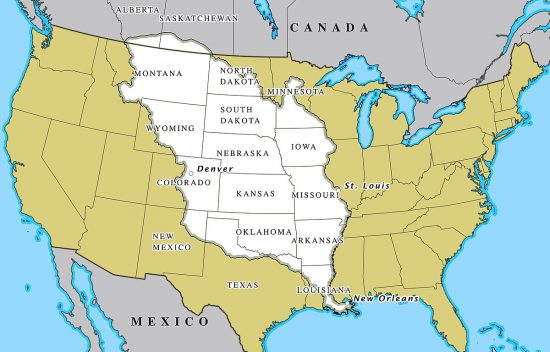
President Thomas Jefferson, elected at the end of the Quasi-War with France, faced domestic unease when Spain returned Louisiana to France at Napoleon’s insistence. Aware of the strategic importance of New Orleans and wary of Napoleon’s desire to build an empire in North America, Jefferson sent negotiators to France to purchase land east of the Mississippi. As time went on, though, France had other priorities and in the spring of 1803 offered the United States the whole Louisiana territory—more than 800,000 acres—for $15 million. Jefferson had always feared the costs of loose construction of the powers delegated to the national government in the Constitution, and the Constitution did not provide for the incorporation of news lands into the US. Jefferson urged bringing the issue to the people to approve with a constitutional amendment, but a special session of Congress disregarded his draft amendment. The Senate ratified the Louisiana Purchase Treaty in October of 1803. While Jefferson did his best to follow what he believed was proper constitutional procedure, not enough of his contemporaries agreed with him and he eventually assented.